Study Taxonomy

Articles

Longer, more structured essays and public-facing analytical pieces.

Studies & Essays in Articles

98 total
16 October 2019 • 7 Min Read Members Only

The Shadow and the Conundrum of the Luminaries

Précis & Overview

Expand
Using planetary rulerships to unpack the Jungian Shadow, I examine the inner tension between the Sun (our conscious Persona) and the Moon (our instinctual Id)...

Using planetary rulerships to unpack the Jungian Shadow, I examine the inner tension between the Sun (our conscious Persona) and the Moon (our instinctual Id) when they occupy conflicting signs like Capricorn and Aries. By contrasting the birth charts of actor Jon Voight and historian Robert Lacey -- both of whom share a Capricorn Sun and Aries Moon—I show how the deeper chains of dispositorship and mutual reception determine whether an inner conflict erupts into volatile outbursts or channels into measured, dignified expression.

9 October 2019 • 7 Min Read Free Essay

Mensa Munda

Précis & Overview

Expand
Examining the psychological tension between the solar Persona and the lunar Id, I explore how rigid adherence to childhood conditioning and parental transference undermines adult...

Examining the psychological tension between the solar Persona and the lunar Id, I explore how rigid adherence to childhood conditioning and parental transference undermines adult relationships, trapping partners in unconscious projections and inherited expectations. Framing the midlife transit as an opportunity to sweep away these outdated scripts -- clearing the *mensa munda* of the soul -- I consider the conscious choice required to abandon familiar defences and confront the Jungian Shadow.

8 August 2019 • 6 Min Read Free Essay

Pluto and the Riddle of Gold

Précis & Overview

Expand
One of the fundamental challenges of our lives is that we are habituated to living in existential dread. That is to say that we are...

One of the fundamental challenges of our lives is that we are habituated to living in existential dread. That is to say that we are all, to one extent or another, aware of the blissful consequence of living in the moment, and every one of us, at some time or another, has experienced those happy glimpses of eternity wherein there is no future and no past, and we find ourselves bathed in contentment, without a care in the world. As children, assuming a certain quality of care and comfort, we retain few memories, because trauma aside, our sense impressions are adequate testimony to that ability to just be, without anxiety about what happened last week, and what repercussions it might manifest come next week. As our ego accelerates to overtake our instinctive nature with the passing years, this fundamental state of wellbeing is gradually superseded by one of anxiety. The anxiety might be large or small, but it is there for every unenlightened being on earth. Perhaps one in every ten million is immune. Furthermore, this state of anxiety is a spectrum, and the greater the refinement of one’s personal consciousness, the more tranquil it becomes. I draw this conclusion not only subjectively, but also as an inference from extensive reading and discussion on the subject. It is a broad consensus that less spiritual perspectives - therefore more material perspectives - confer increasing levels of existential anxiety.

This anxiety is easily apprehended because if we were to envisage a future free of want, sickness, suffering and death, it would miraculously vanish!

Once we can appreciate this, we can further comprehend that so many human endeavours are specifically designed to mitigate this anxiety. Robbed of the easy vitality of youth, the middle-aged embark on healthy lifestyle makeovers, jogging and salad consumption for all they’re worth as insurance against the encroaching threat of age and its ravages. They give up the cigarettes and cut down on the alcohol intake (excepting that alcohol has some pedigree too in alleviating anxiety). Once again, if Djinn were to appear to us all and guarantee good health and good looks forevermore, these pursuits would lose their appeal overnight, and entire industries would founder.

Underlying the sense of anxiety, then, is an all-pervading contention with uncertainty. If things were certain, then our anxiety would be less. This is why apocryphal stories of sudden and unexpected death are always so compelling. (My favourite of these is that of Aeschylus, the great Athenian tragedian, who, according to legend, was killed by a tortoise dropped by an eagle that had mistaken his bald head for a rock suitable for shattering its shell).

It is here that our old friend Pluto enters the fray, for this is the bedrock on which his purview of both wealth and annihilation is founded. Think of it thus: in the world of material values, the best insurance against uncertainty is wealth. With wealth we might have to work less for others’ advantage and more for our own. With wealth, we can eat the most nutritious food, pay the best doctors, and otherwise offset the various ravages of ageing, whether through having time to exercise, getting a facelift, or paying for hypnotherapy to aid our quest to quit smoking. Our declining years might be padded out with a measure of comfort, and we might retire instead of having to work, we think, when our energy levels are at their lowest ebb. To say this in simple terms is to say that wealth confers an intimation of certainty, Aeschylus, notwithstanding, in a future devoid of very much at all.

But there is a terrible conundrum in this logic, and in order to see it, we must be immune to it. The problem with this equation only becomes evident if we concur that the purpose of human life (or indeed any life) is to grow closer to God, in whatever sense you understand that to be. If you become more spiritual, then your anxiety decreases, but in order to grow spiritually, you must experience suffering. The cure for suffering, therefore, is suffering.

Or, put another way that is perhaps easier to work with, the cure for anxiety is uncertainty. The key insight is that Pluto arbitrates both processes. Pluto is existential dread and anxiety, and he responds to that sense of threat by trying to control outcomes; one of the most effective means is accumulating wealth. The irony is that Pluto’s cure does nothing to alleviate the symptoms of the affliction; indeed, it worsens it.

In our society, wealth is a refuge from so much that would harm us, but also from so much that might heal us. Money itself is a neutral concept, so there is nothing bad about having it, but it becomes bad if we use it as a hiding place and fail to do the work. In truth, it is very difficult to do the work from a position of great affluence, a truth to which we are accustomed. After all, it is "easier for a camel to go through the eye of a needle than for a rich man to enter the kingdom of God." Jesus did not tell us it is impossible for a rich man to enter the kingdom of God, but he certainly intimated it would not be a walk in the park.

On an esoteric level, we are all doing the work of transforming Pluto, whether we know it or not. In my view, this is the key consideration of human life, and all other work is secondary. In a world that fervently believes that personal wealth is power, it is sometimes hard to turn this belief on its head and to live as though personal power is wealth, but this is exactly what Pluto requires. And we can develop personal power only by being exposed to uncertainty, a possibility that diminishes rapidly in an environment of privilege and ease.

This is not to say that we should abandon all comforts. A place of safety is essential for all of us, fragile as we are, and we require sustenance and security. Rather, we should learn to recognise the trepidation around want and the craving for material security as an echo of Pluto’s siren call, and that heeding it will not lead to emancipation, but only to further craving. Investors and speculators are inclined to talk about their “first” million after all. But neither should we condemn or judge it just because it is not our choice; it is not money, but the love of it that is the root of all evil. We are pursuing a different wealth, and while we do need some money to live, we need very little to live well in truth. Pluto’s authentic riches are enough to buy contentment no matter our challenges; we might otherwise lose sight of our goal if too dazzled by gold.

26 July 2019 • 6 Min Read Free Essay

Seven Habits for the Saturn – Pluto Year

Précis & Overview

Expand
If you read my last piece, then we will both agree it had a bleak tone. That is natural astrology, or astrology unvarnished, which is...

If you read my last piece, then we will both agree it had a bleak tone. That is natural astrology, or astrology unvarnished, which is different from new age astrology. Part of the conundrum of the evolutionary ideals of contemporary stellar mechanics is that it must, at least in some quarters, always have a positive tone. This is nonsense, because it ignores the missing component: you. A positive outcome cannot be guaranteed, but your approach to the prevailing conditions will greatly increase the likelihood of one. In miniature, this means the bleakness of Saturn Pluto is accurate, but you can still work positively with the energetic signature. This ought to be obvious, since we can control very little. Esoterically, we can control nothing beyond our own responses to reality. Once we have stepped up to this appreciation, part of its gift is that we can try to see reality from a range of perspectives, from entirely unconscious to fully aware. I say ‘attempt’ advisedly because it is not a matter of choice; rather, it is a personal interaction with our own unconsciousness, such that we can only have intention toward greater self-mastery, not mastery itself. It becomes, if you like, a practice. And because we live in a world teeming with individuals struggling with the same conditions and the same unconsciousness, and very often, no intention toward awakening, we must swim within the current of that collective unconsciousness, even if we reject it on its own terms. We might watch with amazement as those who are flailing in the same treacherous current, but we can do nothing about it. The esoteric cypher of Hades is to self-mastery. The fully self-aware human is entirely self-possessed, and, in this regard, they might be a point of stillness in the midst of the maelstrom. This does not lend them external authority, but their inner authority increases their weight in the world. They become like a rock around which the current must flow. In this sense, it is possible to see that inner mastery affects outer mastery, and this is the key to awakening.

Here then is the great opportunity of the Saturn-Pluto signature. It is not to change the nature of reality, but, in the process of changing oneself through the adept's intention and self-focus, to become an expression of fortitude and consideration that reality must take account of.

So, when I have said that ‘to fight is to win ’, this is the extrapolation of that idea. To fight means to strive, through your intention, to be awake. To make that commitment is to be an adept of the mystery. But it is not mysterious! It is only a mystery because so few grasp it. And so few grasp it because they live in a state of reactivity, where most of their energy is spent on a simplistic pursuit of pleasure and avoidance of pain. This way of living is easy to grasp and seems judicious, but in truth it is guaranteed to bring only unhappiness. This is simply because one can only live in perpetual anxiety by following such a method. If matters do not resolve to your satisfaction, then life goes badly. Rather, have no expectations of life, and all will be as it is; you cannot be disappointed. At this point, your only responsibility is to do your best, since you cannot be responsible for the results of your effort, and they matter little.

Indeed, if you follow this thread, you will quickly appreciate that your only responsibility to your own soul is to be awake. Everything else is mere baubles and ornaments.

Here are a few practices that naturally align with Saturn and Pluto. You can follow these principles in your own work as an adept. Your only requirement is to have the intention to awaken. When you make this decision, reality will begin to adjust and align to support your increasingly conscious objectives.

I. Take responsibility for your inner work.

This means making it your conscious objective to be awake as much as you can. One way to do this is to become the observer of the world, rather than an unconscious participant. Take a small step back and watch the spectacle. With practice, you will enjoy the spectacle within as much as the spectacle without!

II. Work at depth.

We live in a world which endorses the glib and the fleeting. Shiny baubles might distract for a short while until the next shiny bauble comes into view, but by their nature, these are distractions, not passions. We can bring this ethos to bear even on the most inconsequential endeavours. We can do the dishes well if we so choose. Try to cultivate a habit of working at depth, even in small ways.

III. Practise kindness.

To be kind is to be tolerant, and these are in short supply where Saturn and Pluto combine. The unconscious exposition of Chronos and Hades is to judge rather than to understand. Conscious kindness is an act of awakening under such blind edicts.

IV. Be aware of alchemy.

Consider the alchemical intention of this combination: the literal transformation of base matter (Saturn’s metal is lead). This is the true esoteric opportunity: working with depth transmutes Saturn's dense, base material into inner light (gold). This meditation provides insight. Dedication and effort are transmuted into freedom.

V. Reframe your difficulty.

As Dante said, “There is no greater sorrow than to recall a happy time when miserable.” The same principle works in reverse, so we can employ this dynamic to develop a greater sense of gratitude. In a world of hardships, it is easy to appreciate our blessings.

VI. Practise abstention.

Cravings are one of the primary manifestations of unconsciousness. Denying yourself, even in a small but conscious way, is a symbolic act of awakening. It is as though you strengthen a nascent quality that gives sensory awareness of the totality of your own unconsciousness. That is to say, if you forgo one bad habit, you develop a resistance to all bad habits. This is a homoeopathy of the soul.

VII. Commit to your awakening.

This is most important! Make the conscious decision to be an adept, a student of the mystery. You may already be an adept! But it is also likely you haven't formally acknowledged your commitment to your own self-knowing. Doing so is a powerful magickal device. It is making a compact with your own soul which, via the catalyst of intention, will accelerate your spiritual development beyond its current serendipitous pace. You are taking the power into yourself, rather than depending on signs and markers outside yourself. You are getting serious about your own transformation, and thus it is an act of enlightened consciousness.

The hard work of Saturn-Pluto means getting serious about our compulsions, working at depth, becoming conscious, taking responsibility for ourselves, learning self-control, committing to personal development and transformation, and ultimately becoming a student of the hidden world. Be the adept you already are! Blessings.

23 July 2019 • 6 Min Read Free Essay

Musings on Saturn-Pluto

Précis & Overview

Expand
Pluto's arc, as I have discussed many times before, is always toward unknowing. Like anything shut away from air and light for too long, it...

Pluto's arc, as I have discussed many times before, is always toward unknowing. Like anything shut away from air and light for too long, it might turn and become a blight that slowly poisons the host from deep within. For this reason, the darkness of Pluto’s domain must be broached to let the world in; this breath of fresh air can transform the fetid darkness and let the lightness of the world leaven the oppressed demesne of Hades. But such acts of trust and faith are against instinct and rarely risked. Better to leave it unknown, we argue to the ghosts of our long night hours, so they might slumber better. But they grow restless all the same, precisely because we leave them in our soul’s oubliette, terrified at what ravaged visage we might be forced to behold in the moment of their emancipation. And that is Pluto’s great trick, because fear of the dark is far more mortifying than anything the light might descry. Ah Pluto! Cheerless captain of the occult dominions. Lord of Ruin. Sombre gaoler of our heart’s desire…

Some brave few, though in truth more often than brave, desperate, turn into the darkness and feel their unsteady way into the night, for it is time to face the dread unknowing. An impossibility of choices. “The dark or death!” they might cry, for that is the dilemma, and once decided, they rush forward to have it done the sooner, and thus the great journey begins. Time passes inexorably while the battle rages deep below, out of sight of summer meadows, unheard by children playing in the evening sun, unknown to the busy bees. Time passes and then, eventually, for it is always done, no matter how interminable it seems from within the thick of the battle, the warrior emerges victorious. Victorious for having fought; whether the battle goes ill or not, no matter its atrocities and horrors, the warrior cannot be defeated. To fight is to win.

The arc of Saturn is to concretise, to diminish into form and matter. To formalise. The arc of Saturn tends toward the solid state, the least kinetic of energies, so movement and momentum are repressed, composite elements slow and congeal, and outer forms become set and averse to change. This sorcery operates on outer and inner forms alike, idealising structure and familiarity. Over time, as even form becomes formalised, these Saturnine expressions gravitate toward conventional manifestations of form, and become orthodoxy. Orthodoxy prunes outliers as aberrations and becomes a mere shell, abhorring all difference and spontaneity. The beloved architectures of Saturn, starved of all creative sustenance, dry out and crumble away. The dust of once great civilisations is carried away on the wind. Such is the arc of Saturn, for to seek safety is to deny creation, is to seek death.

And when these dread Lords combine, they create a complexity of fears and forms and oppressions beyond simple calculation. When approached from the perspective of dull matter, it is a dread, ponderous automaton born slavishly to the most conventional dogmas. The offspring of Chronos and Hades craves safety in materiality above all else. Whether it is named for Crassus or Caesar matters little; dominion over the earth can be bought equally with gladius or gold. Once enthroned, indentured sycophants are garnered as jewels in the peasant emperor’s heavenly crown. The admiring gaze of a few benighted uninitiates is mistaken for divine refulgence, and all progress ceases, until only the wind-worn bones of small men are left to be forgotten in the nameless dirt of long-demolished blackened brick empires.

Saturn - Pluto, progenitor of petty dominions and miserable doctrines, how pitiful you are. Goading men to aspire to the lesser dreams of countless failed forebears, your promise is a shabby, unhappy half-truth, a gospel of the already damned. Your legacy is bitterness and dust. It is the communion of fear and death that sustains only mediocrity, and you offer it jealously and only to enslave, never to emancipate, to undermine rather than uplift.

This is the impetus of Saturn – Pluto, for it nurtures the seed of its own demise. It concretises death. The encroaching immobility of energy confounds the very heartbeat of creation. Lust for life becomes lust for lucre, and the epicure becomes the oligarch. Then, at last, in a rheumatic effort against oblivion, desiccated dynasties are raised to become reviled regimes. But even men who would be immortals cannot cheat oblivion, and they return to dust.

In the eternal peregrinations of the old gods, these meetings of time and oblivion are few, but they inevitably challenge even the most profound and embedded of structures, whether within or without. For those unhappy few born under the stern auspices of Saturn and Pluto, eternal vigilance is the price of liberty. Pluto’s phoenix might only be conjured with Saturn’s work and more work. Else it is the tired old way. But let us not dwell there today. For the world, this conjoining of fate and karma is doubly foreboding, because, as is Hades' implacable purview, he seeks what is true. He examines to discard what is false. And these tests are applied to the most established and traditional of structures. All that society and the world hold dear is crash-tested. Whatever survives is true.

Hades’ base masteries are to mask, molest and magnify. Saturn’s authority, in the outer world, is thus made secret, malign, and potent in equal measure. Before your oppressors enslave you, they first befriend you. Safe in your rights and freedoms, you clamour for their curtailment, then their annulment, and all agree that it is just plain sense. The dark unease within becomes the enemy without, and another dog-eared dominion is founded in the black dust of the underworld. The oubliette in your own soul commands you, swallowing joy and vomiting pride because to fight is to win, and you chose to turn your back and let the shame lie.

So, here is a reminder for you to heed and to lend. It is a moment’s work to take up arms, for to fight is to win.

12 July 2019 • 10 Min Read Free Essay

The Story of Vesta: pt. I

Précis & Overview

Expand
Fire is embedded deep in our ancestral memory as the sacred centre of the tribe and the family hearth. In this first part of my...

Fire is embedded deep in our ancestral memory as the sacred centre of the tribe and the family hearth. In this first part of my exploration of Vesta, I look beyond the modern misconception of the goddess as a sterile emblem of chastity to uncover her deeper origins in ancient fertility rites. From the sacred fire-boards of Siberian tribes to the perpetual flame tended by Rome’s Vestal Virgins -- who simultaneously guarded the phallic cult of Fascinus and performed visceral agricultural magic -- I argue that Vesta’s chastity was never an end in itself, but a vessel for stored, procreative power and household fecundity.

1 July 2019 • 12 Min Read Free Essay

Aspects in Balance

Précis & Overview

Expand
Here is another perspective too on the nature of Jupiter and Saturn, and the received wisdom about those planets. Specifically, it allows us to reframe...

Here is another perspective too on the nature of Jupiter and Saturn, and the received wisdom about those planets. Specifically, it allows us to reframe the simplistic idea that Jupiter is good, and Saturn is bad. It is better to say that Jupiter is easy, and Saturn is hard. But as we all know, a smooth sea never made a skilled sailor, and it is commonly held by almost everyone, that while they did not choose the great hardships and challenges of their lives, they would invariably not choose after the fact, to have not lived through them. Often, the making of us is through the great upheavals that we endure. So, in truth, whilst most of us would vote for ease, we rarely applaud it in retrospect.

20 June 2019 • 10 Min Read Members Only

Vladimir Nabokov: No Rest for the Wicked?

Précis & Overview

Expand
In examining Vladimir Nabokov’s life and chart, I see a man defined not by ease, but by a profound array of tense squares and Grand...

In examining Vladimir Nabokov’s life and chart, I see a man defined not by ease, but by a profound array of tense squares and Grand Crosses. Displaced from his aristocratic Russian homeland by revolution, he spent his life in exile, burdened by the Saturnine weight of early loss -- including his father’s murder and separation from his youthful love, Tamara.

Rather than degenerating, his heavily aspected chart forged extraordinary resilience and genius, yielding monumental literary and scientific success. Ultimately, I view his controversial masterwork Lolita and his fixation on lost youth as manifestations of an exile dynamic where adolescent love became a poignant motif for his vanished world.

11 June 2019 • 10 Min Read Members Only

The Astrology of Healing

Précis & Overview

Expand
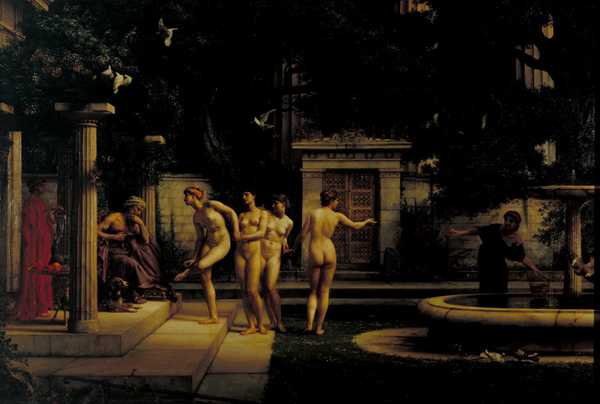
A Visit to Aesculapius 1880 Sir Edward Poynte: Aesculapius is identified by the snake curled around a staff. In a scene from a poem by...

A Visit to Aesculapius 1880 Sir Edward Poynte: Aesculapius is identified by the snake curled around a staff. In a scene from a poem by the Elizabethan Thomas Watson, Poynter shows Venus consulting him, with a thorn in her foot. Venus is identified by the doves, her attributes, and she is accompanied by her handmaidens, the three Graces, who personify grace and beauty. Poynter posed them in the traditional Classical manner, with two of the Graces facing the viewer, while one turns her back. The resulting frieze creates a subtle, elegant rhythm across the composition.

A statue of Asclepius at Epidaurus

Our story begins, naturally enough, in Ancient Greece, whose understanding of medicine and healing was considerably more holistic than the medicine we might recognise today. If a person was sick, and they had the means, they would take themselves to the nearest Asclepion, the equivalent of a hospital, but in practice, more of a healing temple, of which more than 300 were to be found in the varying city-states which made up the Greek nation. The first and most famous of these hospital temples was located at Epidaurus. The Asclepion was named after the god Asclepius, son of Apollo, student of Chiron and father of Hygiea, and the foremost healing deity of the ancient world. Once the patient reached the temple, he or she would undergo a series of purifying rituals designed to prepare the body and mind for what lay ahead. They would eat a simple diet and drink from the mineral-rich, spring-fed pools in the temple precincts. Then, when they were sufficiently rested, they would lie down in the temple itself upon a kline, a bed of sorts (from which we derive the words recline, and clinic), and the healing would begin.

Occasionally, the healing would require some rudimentary surgery, or the equivalent of psychotherapy - conversation with the priests - but the vast majority of the process of healing involved dream work. The Greeks believed that in order to fix the physical body, you first had to heal the ethereal body. After intense preparation, time spent in silence, cleansing the body, making offerings to the Gods, and listening to paeans (musical supplications to the Gods), you would lie down to sleep and, in time, you would receive dream guidance, and hopefully even a miraculous cure, from Asclepius himself.

John William Waterhouse: A Sick Child Brought Into The Temple Of Aesculapius

Many accounts describe such miraculous cures, and the Temple Hospitals endured for many hundreds of years, so we should not lightly dismiss the efficacy of their methods. Indeed, we as astrologers are likely already in sympathy with the method.

Any physical symptom is simply an expression of the astrology at the level of last resort. That psychic impetus that you have not manifested at some level higher-up in the totality of your awareness has – left with no viable alternative – found its way out into the body, and that is the cause of your symptom. Now, you might argue that you did not decide to drink the lead-poisoned water and that it was all the wicked power-company’s fault, but really, you did decide to drink it, because it was an esoteric response to a profound unconscious requirement that you apprehend some vanishingly precise and unique expression of human experience and the only way you could manage it was to move into an area where the water was poisoned by an unscrupulous corporate entity. This, in the astrology, is the cascade effect, which is my own description of it. A single planetary placement evinces a myriad array of vibrational tones, all completely harmonious one with the other, and yet, to the untrained eye, all separate and disconnected. The astrologer sees those gossamer thin filaments that are entirely interconnective however; from the rarefied realms of the peak objective meditational experience, to the most uncomfortable of physical pains, all are contained within the polarities, wellsprings and event-horizons of astrologic placements.

Beyond even this, we have many markers of healing potential beyond the simple manifestations of planetary cause and effect in the soul that, left unchecked, have begun to distort the body. A few of these points are as follows:

Asclepius (4581)

Askalaphus (4946)

Aesculapia (1027)

Hygeia (10)

Chiron (2060)

Hippokrates (14367)

Aegle (96)

Apollo (1862)

Panacea (2878)

Sirona (116)

Feronia (72)

Steve Buscemi, not blessed of Aegle.

The first three, named for Asclepius, represent the propensity toward holistic approaches to healing. Hippokrates seems to imply a more conventional style and is most closely related to doctors as we understand them in our culture. Hygeia has to do with habits, how you approach daily tasks of hygiene and self-care, which have repercussions for health. Chiron often describes a wound or weakness; Aegle is the goddess who bestowed a healthy glow (consider Steve Buscemi, who, to my mind, always looks pale and tired, with Aegle opposing his Sun – Saturn conjunction). Sirona was a later Gallo-Roman healing goddess with the same attributes as Hygeia.

These points tell us different things, although they do not necessarily describe our health issues. Hygeia might give us a clue about the habits that contribute to the eventual manifestation of health problems. Consider here James Gandolfini, whose Hygeia was at the apex of a T-square from Ur/Pl opp. Chiron was ruled by and closely parallel to Jupiter trine the Sun. His diet no doubt contributed to his sudden death. Chiron might give clues to congenital weaknesses in the physiology. Otherwise, the health issues we experience are more likely to be denoted by other placements, and myriad asteroids can relate these fascinating stories.

What these healing-specific points can do, however, is give a picture of healers' beliefs and styles, and how we believe healing should proceed. Where healing has become a vocation, of whatever sort, these placements tell a great deal. For example, Joseph Lister was the first surgeon to link germs and infection and insisted on absolute cleanliness in the operating theatre, especially that scalpels (Mars) be sterile (Hygeia), which are exactly opposed in his chart.

Case Study: Dr Edward Bach

Edward Bach invented the household brand, Bach Flower Remedies. Born in 1886, he spent the spring and summer of 1930, at age 43, discovering and preparing this new healing programme. He also left his wife and children, ditched his Harley Street practice and gave up conventional medicine for good, exactly at his Uranus half-return. The resulting remedies contained no part of the plant, only what Bach claimed was the flower's energy pattern. That winter he treated patients free of charge.

Bach's flower remedies were intuitively derived and based on his perceived psychic connections to the plants. If he felt a negative emotion, he would hold his hand over different plants, and if one alleviated it, he would ascribe to that plant the power to heal that emotional problem. He believed that early morning sunlight passing through dew drops on flower petals transferred the flower's healing power to the water, so he would collect dew drops from the plants and preserve them with an equal amount of brandy to produce a mother tincture, which would be further diluted before use.

While he recognised the role of the germ theory of disease, defective organs and/or tissue, and other known and demonstrable sources of disease, Bach wondered how exposure to a pathogen could make one person sick, while another was unaffected, when to all appearances and analysis they were in equal states of health. He postulated that illness resulted from a conflict between the soul's purposes and the personality's actions and outlooks. According to Bach, this internal war led to emotional imbalances and energetic blockage, causing a lack of harmony and, in turn, physical disease. Bach's remedies focus on treating the patient's personality, which he believed was the ultimate root cause of disease.

Edward Bach: 24 September 1886, 17:20 Birmingham, UK

The astrology is fascinating (selective aspects). You will notice almost immediately the Grand Trine of Flora (the Roman goddess of flowers) with Chloris (the Greek goddess of flowers), and Psyche/Apollo (healing of the spirit). With the inclusion of Chiron, which is precisely parallel to Apollo, this forms a Kite and a Yod with Mars as the apex planet. This denotes a very intense, independent quest, a mission from God, that was ultimately prompted by his close proximity to death in 1917, the year of his Chiron squares, when he had a tumour removed from his spleen and was given three months to live. This is where his quest for alternative approaches to healing began (he developed a prototype homoeopathic medicine in 1919), as 1917 was the year when transiting Uranus squared the Yod’s apex, Mars, and the midpoint of Flora/Chiron. Flora also lies at the midpoint of Pluto and the Ascendant (mortal threat to life). The spleen is sensitised at the 29th degree of Cancer, the exact midpoint of the Sun and Neptune, which is, by Ebertin, the point of sickness in a man. Bach was able to survive this ordeal through holistic self-care, which he carefully nurtured throughout his remaining years. He died at age 50, with Pluto applying to the Sun-Neptune midpoint and Chiron applying to the return.

Chiron the Shaman

Doctor Bach's case underlines the pivotal role of Chiron in his healing paradigm. As the fulcrum planet in two major aspect patterns. Chiron's importance in the chart of a gifted alternative healer should not surprise. If we consider – albeit rather philosophically – the condition of Chiron, we find important correlations that serve our understanding. Chiron is universally known as the Wounded Healer, and while this is commonly understood as a reference to his being struck by a poisoned arrow, causing the mortal wound from which he could not heal, but from which he also could not die due to his immortal nature; he was cursed, therefore, to live in an eternity of pain - I would argue that the woundedness of Chiron was not simply physical. Alone among the entire race of Centaurs, he was wise, self-aware and disciplined, which qualities set him apart from his brethren, to the extent that he lived alone, high up on Mount Pelion. No society was an easy fit, so he lived as one apart. Half man, half animal, he could live as neither one. This outside-ness, this apartness, as is well-known, is the initiating qualification for shamanism. In indigenous cultures, the village knew who the shaman was because he or she was struck by lightning and survived, but any journey into the wilderness (physical or metaphysical) from which one returns changed and deepened might cast one into the role. Chiron was the first astrologer, the first homoeopath and herbalist and used the medicine of the forest to heal the sick. The moment that, like Chiron, we learn to become reconciled with our suffering – whether it be physical, emotional or something else – we are set apart from the vast bulk of humanity who cannot comprehend such a shift. They might suffer, but they are not reconciled, and struggle instead with their ongoing victimhood. The only alternative: acceptance is the Chirotic awakening, the first step on the journey to becoming a shaman.

In Edward Bach’s life, his proximity to death in 1917 was the beginning. Faced every day after with the fragility of his own mortality, he began his Chirotic awakening, and his lifetime’s work – a fundamentally shamanic mission – was born.

14 May 2019 • 6 Min Read Free Essay

The Law of Karma

Précis & Overview

Expand
Life's true satisfactions are forged through struggle rather than ease, and astrology mirrors this fundamental law through Saturn, the Lord of Time, who limits us...

Life's true satisfactions are forged through struggle rather than ease, and astrology mirrors this fundamental law through Saturn, the Lord of Time, who limits us and ensures we pay the price for irresponsibility. Consequently, I argue that all astrological conditions function as squares. While 'benign' aspects like Moon trine Jupiter foster entitlement and eventual degeneration by making life too easy, hard aspects like Moon square Jupiter deliver early lessons that temper expectations and forge an authentic character later in life. Ultimately, astrology offers no shortcuts; accepting our squares allows us to bypass deceptive ease and find genuine depth.

12 May 2019 • 9 Min Read Free Essay

When Love is Not Enough: Venus-Pluto in the Male Chart

Précis & Overview

Expand
While astrology routinely scrutinises women with Venus–Pluto aspects, I argue that men bearing hard Venus–Pluto contacts often escape scrutiny while projecting their inner contradictions onto...

While astrology routinely scrutinises women with Venus–Pluto aspects, I argue that men bearing hard Venus–Pluto contacts often escape scrutiny while projecting their inner contradictions onto their partners. Driven by an unconscious craving for both public purity and private abandon, the untransformed Venus–Pluto man erodes his partner’s boundaries and self-worth -- a dynamic I illustrate through actor Sean Bean. Rooted in childhood shame where affection required performance, he withholds approval to coerce intimacy, yet fails to offer the emotional security a woman needs to feel safe. Ultimately, healing requires resisting his coercion so he can unlearn transactional love and mature into genuine devotion.

3 April 2019 • 7 Min Read Members Only

Final Thoughts on Planetary Ease

Précis & Overview

Expand
In this concluding piece on dignity and debility, I look past basic scoring rules to examine how planetary ease and blockage are actually felt in...

In this concluding piece on dignity and debility, I look past basic scoring rules to examine how planetary ease and blockage are actually felt in lived experience. While dignity denotes ease, I question whether Saturnian restriction or Jovial abundance is straightforwardly comfortable, propose point adjustments for mutual receptions and feral peregrination, and note how outer-planet aspects complicate traditional rules. Using Venus Williams’s chart as an illustration, I show how factoring in active feral Jupiter and Orcus—alongside psychic compensation for a debilitated Venus -- transforms a chart’s narrative. Ultimately, I argue that pairing technical scoring with biography brings genuine empathy to chart interpretation.

28 March 2019 • 9 Min Read Members Only

Poor Reception: Our Fatal Flaw

Précis & Overview

Expand
In this essay, I challenge the oversimplified view of mutual reception as an automatic benefit, examining the subtle power exchanges between planets and their dispositors....

In this essay, I challenge the oversimplified view of mutual reception as an automatic benefit, examining the subtle power exchanges between planets and their dispositors. Comparing harmonious "regal marriages" to asymmetrical, detrimented, and fallen receptions, I explore how uncomfortable planetary alliances require conscious effort rather than expedient shortcuts. When debilitated planets collude to bypass discomfort, they invite a tragic *hamartia*—a fatal flaw that undoes their gains. Through examples ranging from Jane Fonda to newspaper magnate Moses Annenberg, whose Aquarius Sun and Leo Uranus opposition culminated in a ruinous tax-evasion conviction, I show how poorly integrated receptions can trigger our downfall.

17 March 2019 • 6 Min Read Free Essay

The Retreating Sea of Faith

Précis & Overview

Expand
In this essay, I reflect on the darkening political climate through Matthew Arnold’s *Dover Beach* and the approaching January 2020 Saturn–Pluto conjunction in Capricorn. Speaking...

In this essay, I reflect on the darkening political climate through Matthew Arnold’s *Dover Beach* and the approaching January 2020 Saturn–Pluto conjunction in Capricorn. Speaking from my late-1960s Uranus–Pluto in Virgo perspective, I contrast the rare willingness to embrace uncertainty with humanity’s seductive retreat into rigid orthodoxy. Mapping this tension onto the archetypal clash between conservative Saturn and revolutionary Uranus, I trace how establishment forces, populists, and figures like Corbyn, Sanders, and Trump embody these competing currents. Ultimately, I urge readers to resist sleepwalking into authoritarian certainty by honouring inner inquiry and weathering the coming storm together.

6 March 2019 • 8 Min Read Members Only

Not Enough Pluto

Précis & Overview

Expand
In this discussion, I explore what happens when Pluto is severely weakened rather than overactive, leaving an individual defenceless against overwhelming forces. Contrasting peregrine Pluto...

In this discussion, I explore what happens when Pluto is severely weakened rather than overactive, leaving an individual defenceless against overwhelming forces. Contrasting peregrine Pluto charts like Anne Frank’s with purely debilitated placements, I explain how weak planets lack resilience under difficult transits. Searching 15,000 records for an acutely debilitated, non-peregrine Pluto -- retrograde in Virgo, in a succedent house, and in hard aspect to Saturn -- yielded a single chart: Rodney King. Examining his natal Saturn-Pluto opposition, Virgo stellium, and transits from Toro and Ixion, I show how measurable planetary debility manifests through devastating real-world vulnerability.

26 February 2019 • 9 Min Read Members Only

The Rising Sun of the Montmarte

Précis & Overview

Expand
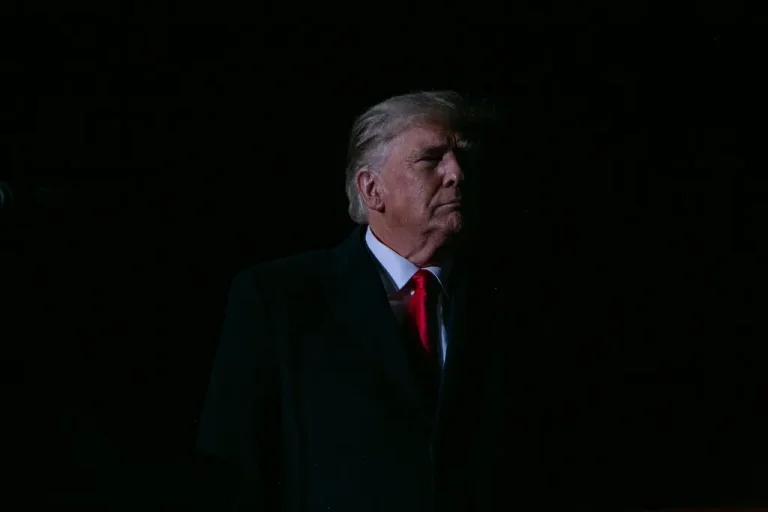
As we have seen in our recent study of US President Donald Trump, issues of paternity are central to understanding identity. Identity is an ever-evolving...

As we have seen in our recent study of US President Donald Trump, issues of paternity are central to understanding identity. Identity is an ever-evolving and ever-elusive construct that the astrologer must understand to help an individual refine and conceptualise their sense of self. Some argue that there is no greater mission in astrology.

Roman theatre masks.

Carl Jung first coined the term ‘persona’ as a psychological concept. Originally, it was a Latin word for an actor’s mask, presenting the audience with a predetermined face they could identify with and relate to. This definition aligns with Jung’s view that the persona is ‘the mask or appearance that one presents to the world.’

This is always and forever a work in progress, and it is generally acknowledged that from about the age of 21, we are involved in this process as a more or less full-time endeavour; refining, shaping and getting to know our own persona so that we might be more successful at projecting ourselves in the world. Broadly, psychologists view a healthy persona as easing social inclusion and effectiveness, but only up to a point. Once a person becomes overly reliant on their 'ideal self ', it can have adverse effects on their personality. Jungian psychologist James Hillman, for example, believed that once a person loses their identity to a persona, they become an archetypal figure. This raises an important distinction: whilst our persona can elevate and support our sense of identity, if we fail to police our authenticity and keep the persona in check, it can eventually become a caricature of who we are. Thus, we can see that a person with a weak persona fails to project effectively, whilst a person with too strong a persona might become a figure of parody, a paper tiger, if you like. The key skill is to have just enough persona to ease our progress through life.

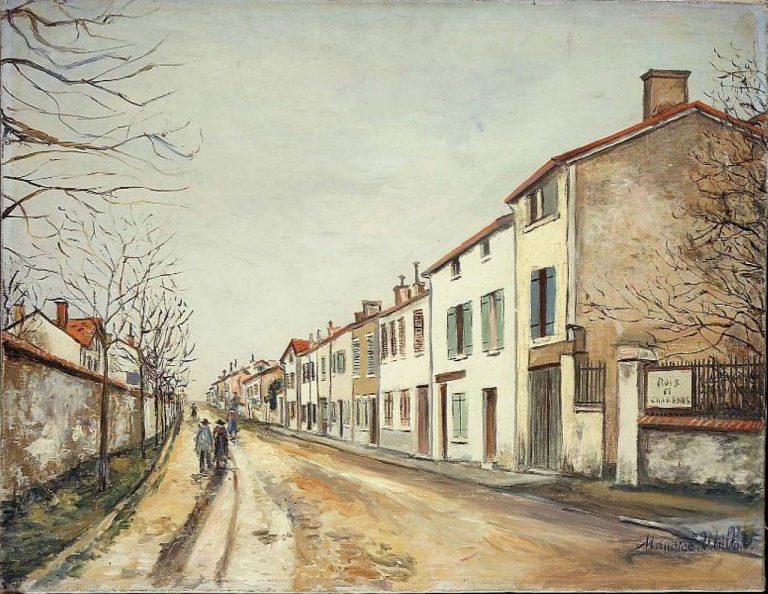
Maurice Utrillo

Last time, we talked about the concept of a solar identity, and hopefully we understand how fundamental this is to the constellation of personality. We have also seen how fundamental the father relationship is to forming that identity. As astrologers, our ideal scenario is to find that our study is uncomplicated; if a person’s identity is profoundly shaped by the paternal relationship, then we need to isolate and understand, through the nativity, the essence of that parent. This is always a challenge, but it is inevitably less so if our subject was born to, grew up with, and related to one paternal figure for their entire life. Increasingly rarely, however, do we find that this scenario is so straightforward.

But what is essential to appreciate is that even complication is absorbed into the persona and becomes a key mechanism of the soul. One father may be easier for the astrologer to grasp, but many fathers have no less implications for identity and its manifestation.

Suzanne Valadon

At 1 p.m. on the day after Christmas in 1883, Marie-Clémentine Valadon gave birth to the infant she named Maurice at 10 Rue du Poteau, at the foot of the Butte Montmartre; no one knows whether it was a relief or a burden for her. Her life was already difficult, and an illegitimate child could not have made her fortunes easier. Marie-Clémentine, herself a love child, had been a circus acrobat and then modelled for renowned painters like (the similarly ill-fated peregrine Pluto native) Henri de Toulouse-Lautrec and Auguste Renoir, before becoming a painter in turn and becoming famous under the name Suzanne Valadon. Even Maurice’s mother had no clue as to who his father might be.

“After Maurice was born, Suzanne Valadon went to Renoir, for whom she had posed as a model nine months prior to that. Renoir looked at the baby and said: ‘He can’t be mine, the color is terrible!’ The next time she went to Degas, for whom she had also posed as a model. He said: ‘He can’t be mine, the form is terrible!’ The odyssey continued for a while, and the young Maurice was ulti­mately given the name of the Spanish art critic Miguel Utrillo, who was offi­cially appointed his step-father but who appar­ently spent very little time with his ‘son.’”
Ruth Bakwin.

The story goes that Suzanne saw an artist she knew, Miguel Utrillo, in a Montmartre cafe, to whom she spilt her woes. The man told her to call the baby Utrillo: 'I would be glad to put my name to the work of either Renoir or Degas!' he proclaimed.

Miguel Utrillo

Maurice went on to become an established artist in his own right, but his road was strewn with difficulty and crisis. He endured a lifetime of alcoholism, and as young as 21, his mother had to lock the wine in a cupboard to keep him from it, nervous breakdowns, months spent locked in asylums, attempted suicides, acts of violence, and trouble with the police.  His creative urge was consid­ered legendary: even when he was picked up again by a police patrol for drunkenness, Utrillo is said to have reached for brush and paint and stood at his easel at the police station. Creativity is another solar imperative, so we begin to see the complexity of the Sun in a chart where there is no father, but also many! Where there is continual trouble with authority figures, but also considerable and inexorable creative talent.

Maurice Utrillo, 26 December 1883, 1300, Paris, France

Maurice Utrillo's chart is highly complex, but rewarding in our quest to glean the signatures of identity and persona. Let us try to break it down a little and see what lessons we can tease out from the seeming confusion of myriad points and stellar entanglements.

First, let us remember that we are studying the formation of identity. In this quest, the Sun is paramount, so we must understand the Sun's condition. Here, the Sun is in the 9th house in Capricorn. This suggests there is already a burden to carry. This is true of all born under Saturn's sign, but some come to rejoice in their responsibilities. And then we have the 9th, Jupiter’s house! Immediately we conceive a conundrum. This is a Sun that feels constraint, difficulty and hardship, but wants to express itself expansively. It seeks improvement and wisdom; it craves a world of excitement and opportunity. The feeling of Jupiter on Saturn is improvement through adversity (alternatively, it can bring hardship through excess); it often, though, gives achievement in spite of hardships, and this is exactly the momentum of Maurice’s life. He started from the lowliest of origins and eventually made of himself a great success, becoming an internationally respected painter. So, on one level, this placement is accurate. On the other archetypal level, we have a burden of illegitimacy, but also the possibility that his father was a great, renowned artist. These are the kinds of conundrums that are often manifest when Jupiter and Saturn combine influences.

Maurice's 'Peregrination' or Feral Chart.

Sun is ruled by a retrograde Saturn in Gemini. Many fathers. Many, disinterested fathers: retrograde Saturn always injects a measure of disinterest into the father relationship. Usually, the father has more important things to do than parent. Saturn is also conjunct Pluto, which deeply intensifies this feeling and creates a great tension and anxiety. Maurice would therefore have been deeply affected by his lack of, and at the same time, multiple paternity. These many fathers, but none interested enough to actually claim him, must have left a deep and painful wound (Chiron is conjunct Pluto). So, there is this aura of heaviness about him, a sense that he is deeply damaged by life, even from the earliest age, and he absorbs this into his idea of himself. Chiron-Pluto, deep pain. Nonetheless, he is determined to improve himself, and he does this through painting, through raw creativity. But why should this be, when his Solar energy doesn't immediately seem so great? That is, until we see the Yod to Sun, from a sextile of Saturn/Pluto/Chiron sextile Jupiter/Ixion. What is Jupiter – Ixion in the 4th house other than the mother’s (4th), many renowned artist (Jupiter) lovers (Ixion)! This compounds easily but painfully with his many disinterested fathers! These combine to make an overwhelming imperative to become a successful (9th) creative man (Sun). He must prove himself their equal. It is a way of saying “see, I am the son of great artists!” Even more remarkable, take a look at his peregrination chart. Sun is feral!

If we now consider planetary strength, we can make a number of observations. Ostensibly, artistic Venus is his strongest planet, but when you factor in the ferality of his unaspected Sun, the picture changes drastically. We can add maybe 30 points to a switched-on feral placement. Note the severe struggle of a 3-point Pluto. Weak Pluto often denotes a destiny that is difficult to control, where powerlessness becomes a feature of the life arc. Contrast this with Donald Trump’s feral Pluto from our last discussion. Maurice is mostly at the mercy of events.

Note too that the Sun rules the 5th house. This suggests that the affairs of the 5th house support the identity. Next, we see that Sun squares Uranus. Maurice was never going to do conventional work (Uranus is in the 6th), and he would have trouble with authority figures. Sun is also conjunct asteroid Dionysus. Drinking wine was part of his identity and was often the reason he would attract the attention of the police. But crucially, being an alcoholic was a key facet of his identity too. And that alcoholism took its toll. His health was compromised to the extent that he was housebound in his later years and could only paint the view from his window, or from a postcard, or from memory. Sun and Dionysus are conjunct Hygeia. With Saturn/Pluto ruling his Sun, it became an inevitable dimension of his very being, drunk, unwell, unorthodox but ultimately passionate, gifted and successful. Every brushstroke that made up his incredible persona is clearly delineated here.

Maurice's health deteriorated drastically in later years.

So, we see many principles reinforced. The persona is defined by the Sun, his placement, aspects and rulerships. Peregrination is paramount. For the Sun, understand the father, because he is the role model even if he does not exist! For Maurice Utrillo, forging his identity was a monumental task because he did not know which great artist to mimic. It was no doubt this exalting pressure (and think of that Saturn-Pluto rulership, pressure which creates diamonds!) which drove his enormous creativity and ultimately rescued him from a life of obscurity and ruin.

11 February 2019 • 9 Min Read Free Essay

Continued: Who is Donald Trump?

Précis & Overview

Expand
In this follow-up piece, I examine Donald Trump’s chart using my dignity and debility scoring system, noting his high 197 total, strong Mercury and Uranus,...

In this follow-up piece, I examine Donald Trump’s chart using my dignity and debility scoring system, noting his high 197 total, strong Mercury and Uranus, top-scoring Orcus, and weak Neptune. Tracing his ruthless drive back to Fred Trump, I also explore how peregrination applies when a planet is unsupported, identifying a feral Pluto in the 12th house with Hybris and parallels to Sun and Pallas. Rooted in his mother Mary Anne’s background and fourth-house Moon, I argue his deepest fear is becoming a non-entity, driving a need to dominate.

11 February 2019 • 9 Min Read Free Essay

Who is Donald Trump?

Précis & Overview

Expand
In this essay, I explore Donald Trump’s chart to look past polarised public opinion, noting that astrology reveals patterns rather than spiritual intention. Examining the...

In this essay, I explore Donald Trump’s chart to look past polarised public opinion, noting that astrology reveals patterns rather than spiritual intention. Examining the synthesis of his Gemini Sun in the tenth house -- where self-ideal meets public reputation -- I contrast him with Clinton, Obama, and Nixon to show how he inevitably divides perception. Tracing his solar identity back to his father, Fred Trump, I unpack the tight Gemini stellium around his Sun: North Node, Orcus, Uranus, Vulcanus, and Atropos. Together, these point to an obsessive, unsentimental drive for power and reputation, setting the stage to examine his inner life.

8 July 2018 • 5 Min Read Members Only

Superpowers and Kryptonite

Précis & Overview

Expand
In this essay, I introduce the concept of astrological "superpowers" and "kryptonite" -- how exceptionally high- and low-scoring placements shape a life's trajectory. Defining scores...

In this essay, I introduce the concept of astrological "superpowers" and "kryptonite" -- how exceptionally high- and low-scoring placements shape a life's trajectory. Defining scores of 30 or above as the superpower zone, I examine Albert Einstein’s 34-point Jupiter in Aquarius, showing how it set a lifelong tone of philosophical and scientific expansion beneath his more famous Mercury and Uranus placements. Conversely, I explain planetary scores as psychological drives or blind spots: while a high-scoring planet creates an urgent inner need, a very low-scoring placement (5 or below) leaves us indifferent to that domain, freeing us from certain burdens while creating blind spots.

4 July 2018 • 6 Min Read Free Essay

The Almuten Conundrum

Précis & Overview

Expand
In this essay, I question the conventional wisdom that a planet in a compatible sign is automatically beneficial, treating dignity instead as a nuanced spectrum...

In this essay, I question the conventional wisdom that a planet in a compatible sign is automatically beneficial, treating dignity instead as a nuanced spectrum shaped by house placement, aspects, and the rising sign. While I admire Hindu *Shadbalas* for measuring strength more systematically than unsubtle Western rules, I also examine why the Ascendant ruler isn't always the true chart ruler and note the limits of ancient Almuten calculations in modern life. Ultimately, I argue that planetary strength brings ease rather than guaranteed goodness, inviting readers to consider what truly dominates their own charts.