Ansel Adams I find that astrology and photography have much in common. They are both concerned with an ongoing attempt to capture the intangible; both...
Ansel Adams
I find that astrology and photography have much in common. They are both concerned with an ongoing attempt to capture the intangible; both rely upon rules that must be learned, subsumed and then transcended in order to attain mastery; they are both concerned with the sublime and perhaps most pertinently of all, neither, whether approached as art or science, can ever be considered finished. To clarify, no photographer ever took a photograph so perfect that they considered they could never take better, and the same siren call to improvement haunts every astrologer no matter his skill.
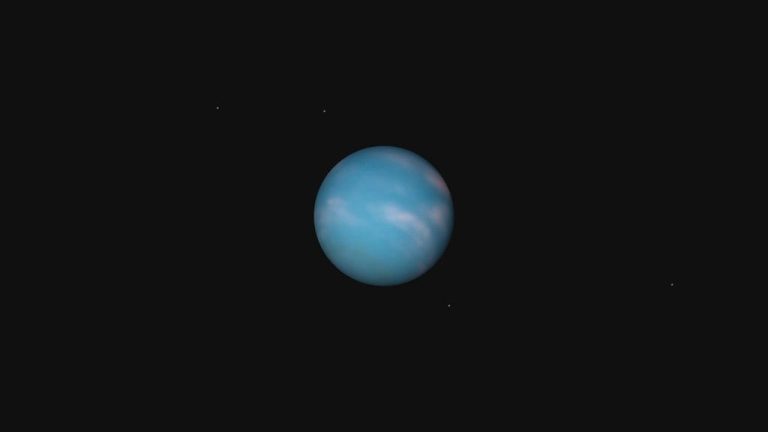
So what of the astrology of photography? The clues are in the immeasurable nature of the pursuit itself, because whilst photographers are required to master some fairly exacting rules of aperture, composition and interpersonal dynamics, the greatest photographs are in some sense boundless, inexact, dreamy or ethereal in an alluring and vaguely mystical manner that is at once immediately arresting and yet almost impossible to define. This is exactly why Neptune has always been thought to be the domain of the photographer and the artist, poet, dancer, and ancient mariner alike. Neptune, sea-god, ruler of dreamy Pisces, is at the polarity point – the very opposite end of the spectrum to Virgo; but of course a spectrum of any type deals in a common currency and where Virgo is obsessed by rules and specifics, Pisces too is obsessed by rules, but by not needing them because they have been transcended. This perfectly describes the artist's need to master the technical disciplines of his craft (Virgo) before he can freely express his boundless art (Pisces). Or, as Adrian Belew said more succinctly: even genius needs method.
Thus, Neptune will be powerfully important to the photographer's fortunes; the 12th house and Pisces must also be considered as the natural domains of photography for this reason.
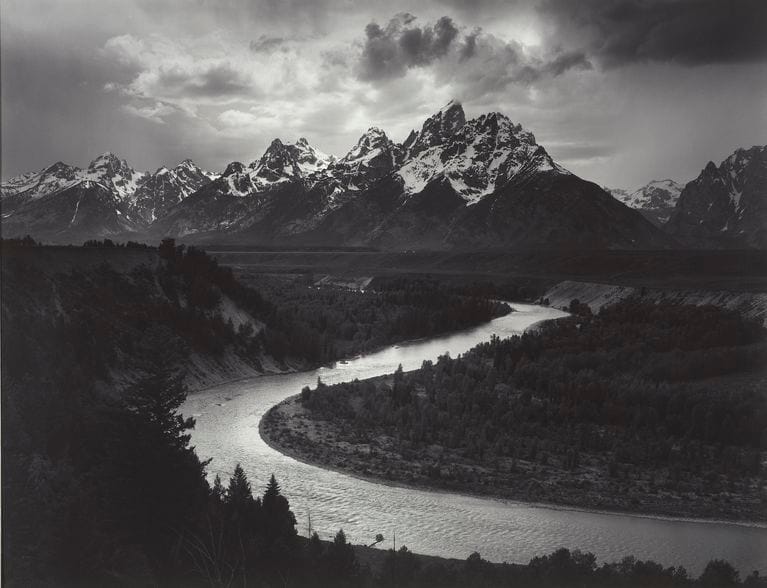
Looking at Ansel Adams's chart, with both Sun and Mars in Pisces, we can immediately see some interesting correlations. Neptune (Gemini/7th), we see straight away, is Quindecile to Chiron (Capricorn/1st). Here then is an obsession with using photography (Neptune) to communicate (Gemini) to others (conjunct descendant) his astonishing sensitivity (Chiron) to form and structure (Capricorn). Indeed, this is the resounding note that is the hallmark of Adams’ photographic style: his near-deification of patterns in nature that he found in aspens and tree roots, rocks and canyons; he raised the natural structures of the world around him up to an art form, which he then communicated to others in photographs. Of course, astrology sounds its note at all different levels, and Chiron in Capricorn is tweaked out of a fear of not being taken seriously, of being ignored or thought too low in status. Perhaps this speaks to the consensus of opinion about photography in those early days; maybe his obsession with proving photography could be taken seriously as an artist's medium was a large part of his motivation. Wherever the Quindecile is found, there is obsession. Furthermore, the ruler of his 12th is in the 2nd, suggesting an ability to earn money from photography, and with Sagittarius and Gemini duplicated, he would have been lent extra power from any 12th-house activities in his life (at the expense of Leonine and Aquarian activities). The Moon-Jupiter opposition strongly suggests marital difficulties that he may have been able to avoid facing because he could travel and take photographs, as suggested by the Sagittarius-Gemini axis. The final point of note talks to structure once again; with a peregrine Saturn in Capricorn, Adams’ power to express structure, in magnificent, awesome depth, would have been, and is to this day perhaps, unparalleled. Here is another example of a planet unaspected in its domicile, creating a giant in the archetypal concerns of that planet’s power. To Alan Watts' Uranus, we can add Ansel Adams’ Saturn.
A second study might be informative, and I shall take a slightly different tack and look now at the chart of Louis Daguerre, who made his name not so much as a photographer, but as someone who changed the very nature of photography itself. Daguerre was one of the principal inventors of a new development process, known as the Daguerreotype, which enabled much faster printing of photographic images. He gave his invention to the French government, which in 1839 made it a ‘free gift’ to the world.
Daguerre was not primarily a photographer but actually carried on two main career paths as a theatre designer and a chemist (and with the Midheaven ruler Jupiter found in the twin sign Gemini, that is hardly a surprise.) If we look to his Neptune, we see that it falls within a mere 4 minutes of the cusp of the 8th, the house of transformation and the natural ruler of the 8th is found peregrine (unaspected) in the 12th, the natural house of photography, in the sign of Aquarius. Is it any wonder, then, that Daguerre transformed (Pluto) the science of photography (12th house) and made it a gift to humanity (Aquarius)? Look too at the conjunction of Mars with Uranus in the 6th, which speaks clearly of a powerful passion (Mars) to revolutionise (Uranus) working practices (6th House), which the Daguerreotype did in spades for photography and then note the Quindeciles from this conjunction to the otherwise unaspected Pluto in the 12th!
The correlations then are quite astonishing when looked at in this way. Once again, the brute power of unaspected planets makes itself felt in the nativity of two very different, but uniquely pioneering individuals in photography.