Study Taxonomy

Nativities

Studies & Essays in Nativities

30 total
30 December 2025 • 12 Min Read Members Only

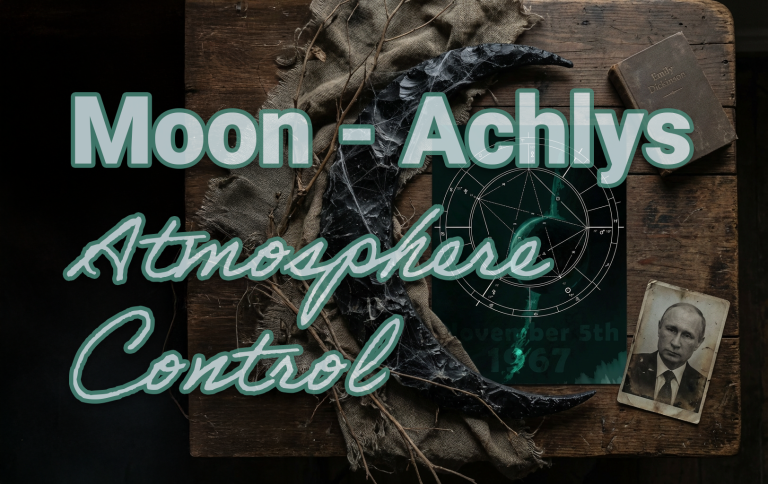
Moon – Achlys: Atmosphere Control

Précis & Overview

Expand
Examining the natal Moon–Achlys conjunction as an early-learned lunar survival skillset, this essay explores how growing up in an emotionally constricted, fragile, or unsafe domestic...

Examining the natal Moon–Achlys conjunction as an early-learned lunar survival skillset, this essay explores how growing up in an emotionally constricted, fragile, or unsafe domestic atmosphere teaches the child that unshielded feeling invites annihilation or loss of belonging. Tracing how this foundational wound bifurcates into two mirror strategies -- the hyper-sensitive retreat into solitude and symbolic containment, exemplified by Emily Dickinson’s "slant" truth, and the "atmosphere-maker" who controls the relational field through affective withholding and freezing fog, illustrated by Vladimir Putin -- it reveals how both poles originate in the visceral discovery that emotion is power. Ultimately, the piece argues that whether one disappears from the storm or becomes it, Moon–Achlys masks the unedited self for emotional survival until crisis calls that hidden power back into conscious authenticity.

8 October 2024 • 4 Min Read Free Essay

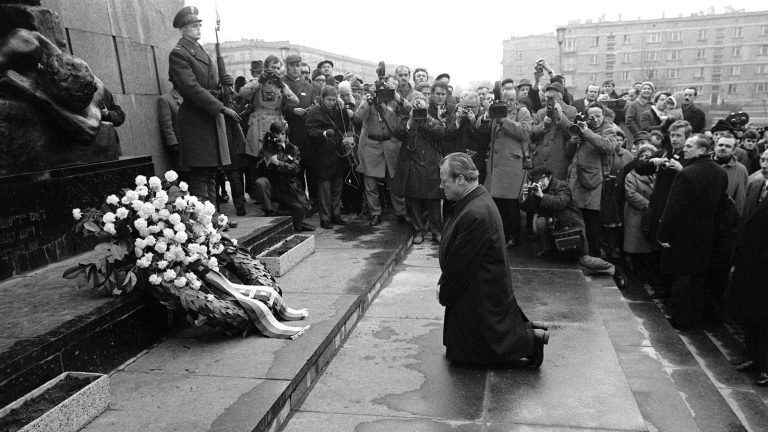
The Kniefall von Warschau and Other Hadean Musings

Précis & Overview

Expand
Examining the generational and biographical impact of overlapping Hadean squares -- when slow-moving trans-Neptunian bodies square their natal positions concurrently or at unusually young ages...

Examining the generational and biographical impact of overlapping Hadean squares -- when slow-moving trans-Neptunian bodies square their natal positions concurrently or at unusually young ages -- this essay traces how specific historical cohorts are compelled into sudden psychological and spiritual reckonings. Illustrating the 1913 cohort’s simultaneous Pluto and Orcus squares through West German Chancellor Willy Brandt’s historic 1970 *Kniefall von Warschau* at the Warsaw Ghetto, alongside the early-life Hadean awakenings of Winston Churchill, Victor Hugo, and Mary Shelley, the analysis maps out how these transits strip away collective and personal facades. Finally, turning toward the 1946–1947 generation and the millennial cohort born around the turn of the century with natal Pluto–Ixion conjunctions in Sagittarius, the piece anticipates how upcoming concurrent Pluto–Ixion squares in midlife will force an abrupt confrontation with curated self-presentation and existential authenticity.

13 September 2022 • 18 Min Read Free Essay

Uranus: The Cosmic Crank

Précis & Overview

Expand
In astrology, Uranus is routinely pigeonholed as the planet of eccentricity, genius, and rebellion. Yet beneath its famously "cool" and detached exterior lies a much...

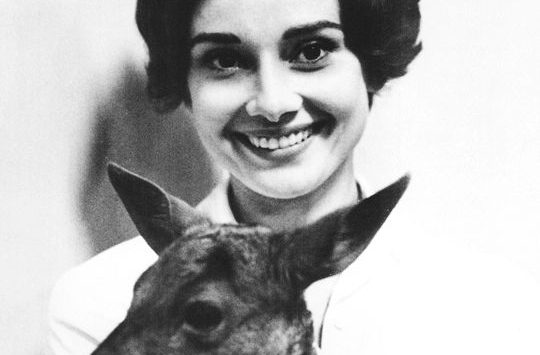
In astrology, Uranus is routinely pigeonholed as the planet of eccentricity, genius, and rebellion. Yet beneath its famously "cool" and detached exterior lies a much deeper psychological mechanism: intellectualisation as a response to trauma. Rather than viewing your Uranus placement simply as a badge of individuality, this essay explores why you became so individuated in the first place -- tracing how early shocks, rejection, or unstable emotional dynamics compel the mind to step back and substitute theory and ideals for emotional intimacy. Along the way, we examine the 70-year astronomical comedy of errors that gave the planet the wrong name, the hidden aloofness behind cultural icons like Grace Kelly and David Bowie, the developmental timeline of Uranus phases, and an in-depth case study of how Audrey Hepburn’s transit cycles mapped onto the traumas of WWII and the Dutch famine.

1 August 2022 • 10 Min Read Members Only

Hard Times – The Astrology of Charles Dickens

Précis & Overview

Expand
Examining the natal chart of Charles Dickens through the mechanics of planetary rulership chains, this essay demonstrates how following dispositors -- from his 5th-house Aquarius...

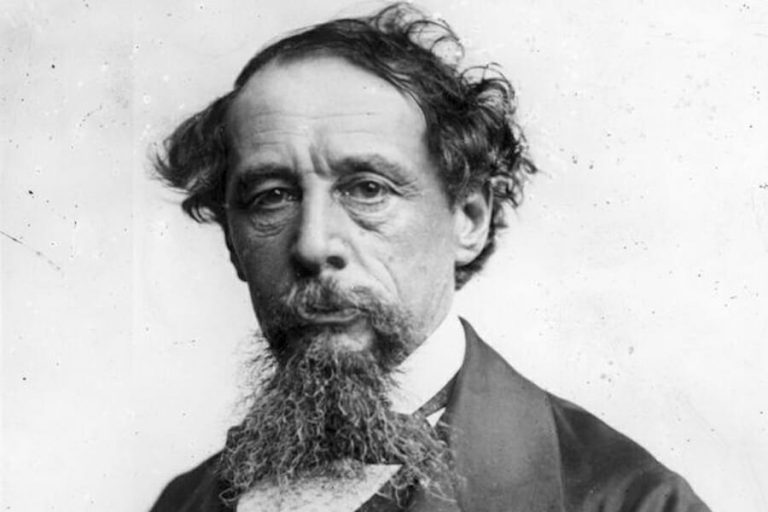
Examining the natal chart of Charles Dickens through the mechanics of planetary rulership chains, this essay demonstrates how following dispositors -- from his 5th-house Aquarius Sun to Uranus in the 3rd house, and onward to Pluto conjunct Venus on the 6th/7th house cusp -- illuminates both his life trajectory and the enduring power of his greatest novels. Tracing how early childhood trauma -- his father’s imprisonment in the Marshalsea, his gruelling labour at Warren’s Blacking Warehouse, and his mother’s refusal to bring him home, mirrored by his close Moon–Neptune conjunction and Moon–Ixion square -- forged his lifelong identification with the abandoned poor, the analysis contrasts his deeply resonant social works (*David Copperfield*, *Hard Times*, *Little Dorrit*) with his more detached historical or upper-class narratives. Ultimately, the piece reveals how Dickens' authentic creative fire was ignited specifically when his revolutionary 3rd-house writing was fed directly by the Venus–Pluto passion and working-class compassion at the root of his solar rulership chain.

23 July 2022 • 7 Min Read Free Essay

The Cancerian Woman

Précis & Overview

Expand
Challenging the textbook reliance on generic sign traits, this essay demonstrates how true astrological individuation emerges by tracing planetary rulership chains rather than treating signs...

Challenging the textbook reliance on generic sign traits, this essay demonstrates how true astrological individuation emerges by tracing planetary rulership chains rather than treating signs as static lists of attributes. Comparing two Sun-in-Cancer figures -- Khloé Kardashian and Liv Tyler -- it illustrates how the condition, house placement, and subsequent dispositor of their ruling Moon radically reshape their solar self-ideal and public presentation. Where Kardashian’s 4th-house Gemini Moon (ruled by Mercury) channels her Cancerian identity into sociable, conversational connection within a family context -- rooted in an early longing for paternal attention -- Tyler’s 7th-house-cusp Capricorn Moon (ruled by Saturn and squared by Pluto) expresses her Cancerian nature through an ethereal, serious devotion to deep one-on-one commitment shaped by maternal secrecy and paternal absence. Ultimately, the piece argues that reducing a placement to a mere sign label amputates the chart's psychological depth, whereas following its rulers reveals the true creative motivations behind how an archetype is lived.

15 June 2022 • 13 Min Read Members Only

Anatomy of the Kite

Précis & Overview

Expand
Examining the astrological Kite configuration as an amalgamation of a defensive Grand Trine and a skill-mediating Talent Triangle, this essay explores how an early psychological...

Examining the astrological Kite configuration as an amalgamation of a defensive Grand Trine and a skill-mediating Talent Triangle, this essay explores how an early psychological refuge can harden into an isolating "golden cage" unless challenged by its central spinal opposition. Tracing the lifecycle of a Grand Trine from childhood sanctuary to midlife comfort zone and eventual penitentiary -- and mapping how the Talent Triangle's sextiles develop innate coping skills around a formative trine threat -- the analysis illustrates these mechanics through a Moon–Saturn–Pluto Kite and a detailed case study of actor Matt Damon. Ultimately, the piece argues that the Kite’s internal opposition serves as a vital relational lifeline, generating the necessary friction to pull the soul out of stagnant self-containment and channel the apex planet's considerable gifts into conscious connection.

29 April 2022 • 6 Min Read Free Essay

Seeing the Astrology with Johnny pt. 2

Précis & Overview

Expand
Continuing the step-by-step chart delineation of Johnny Depp, this essay expands the analytical toolkit beyond major aspects to incorporate minor harmonics—including the quincunx, sesquiquadrate, quintile,...

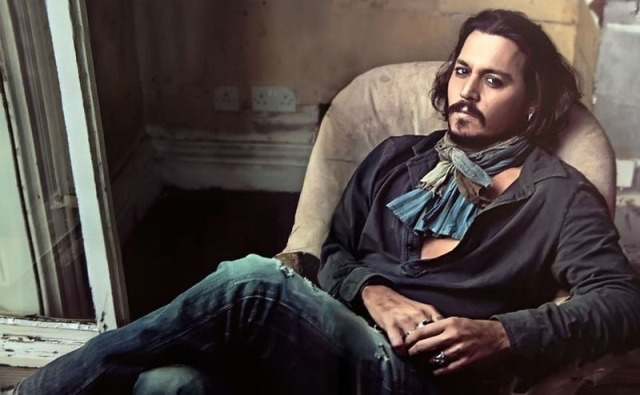
Continuing the step-by-step chart delineation of Johnny Depp, this essay expands the analytical toolkit beyond major aspects to incorporate minor harmonics—including the quincunx, sesquiquadrate, quintile, and biquintile -- in order to uncover closed energetic circuits and latent talents. Tracing two interconnected aspect patterns in Depp’s nativity—a self-sustaining Moon–Jupiter–Pluto circuit that channels inner emotional tension into financial ingenuity, and a quintile-based "Golden Talent Triangle" linking his Gemini Sun, Scorpio Neptune, and Mars–Uranus conjunction into offbeat creative depth—the analysis demonstrates how closed circuits function to resolve internal pressures. Finally, establishing a disciplined hierarchy for progressively introducing Hadean bodies, Chiron, major asteroids, and trans-Neptunians without overwhelming the chart, the piece prepares the ground for the final synthesis of Depp's deeper psychological architecture.

28 April 2022 • 9 Min Read Free Essay

Seeing the Astrology with Johnny

Précis & Overview

Expand
Demonstrating a disciplined, contemplative method for chart interpretation, this essay outlines a step-by-step approach that strips away outer-planet noise to first isolate a chart’s foundational...

Demonstrating a disciplined, contemplative method for chart interpretation, this essay outlines a step-by-step approach that strips away outer-planet noise to first isolate a chart’s foundational human motivations using only the classical planets through Saturn, Hygiea, major aspects, and tight orbs. Applying this stripped-back framework to the natal chart of Johnny Depp -- tracing his detrimented 6th-house Capricorn Moon, its retrograde Saturn dispositor in the 7th, and a 10th-house Mercury–Venus conjunction serving as the chart's final dispositor -- the analysis constructs a core portrait of a polite, self-effacing figure shaped by early parental neglect and emotional reserve. Finally, reintroducing Uranus, Neptune, and Pluto as a secondary layer of transpersonal pressure, the piece shows how Mars conjunct Uranus in the 1st house, Venus square Uranus, and lunar contacts to Neptune and Pluto overlay flashes of volatility and intimacy scars onto an otherwise gentle, Venus-driven temperament.

14 October 2021 • 16 Min Read Free Essay

Mars – Pluto in the Female Chart

Précis & Overview

Expand
Examining the Mars–Pluto contact specifically within the female natal chart, this essay reframes its traditional reputation for "superhuman force" as an outer armour of assertive...

Examining the Mars–Pluto contact specifically within the female natal chart, this essay reframes its traditional reputation for "superhuman force" as an outer armour of assertive confidence forged to mask deep-seated Plutonic existential anxiety (*l’appel du vide*) and early relational trauma. Exploring how patriarchal double standards around female independence, sexuality, and safety complicate an inherently masculine archetype -- illustrated through examples ranging from Oprah Winfrey and Elizabeth Barrett Browning to Mel B. and Hillary Clinton -- the analysis traces how early experiences of male dominance or boundary violation create an exhausting "safety conundrum" that often pulls women toward magnetic, dangerous partners while secretly eroding trust and intimacy. Ultimately, we learn that healing Mars–Pluto requires recognising how hyper-vigilance and control masquerade as strength, taking the courageous leap of faith to lower one’s psychological defences and avoid the intoxicating, self-fulfilling trap of familiar danger.

1 November 2020 • 4 Min Read Members Only

The Peregrine Scores

Précis & Overview

Expand
Examining the classical and modern dimensions of peregrination -- from William Lilly’s definition of essential dignity absence to Noel Tyl’s concept of the unaspected, "feral"...

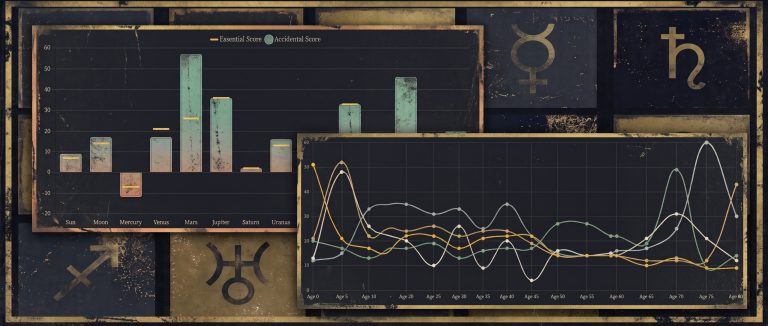
Examining the classical and modern dimensions of peregrination -- from William Lilly’s definition of essential dignity absence to Noel Tyl’s concept of the unaspected, "feral" planet -- this essay explains why peregrine placements defy mechanical chart scoring. Using Nikola Tesla’s chart to illustrate how low-scoring yet unaspected Mercury and Uranus placements can dominate a biography, it outlines a discerning interpretive adjustment for weighting extreme or dormant peregrine energies.

30 September 2020 • 6 Min Read Free Essay

Philosophies of Darkness

Précis & Overview

Expand
Contrasting F. Scott Fitzgerald’s Neptunian portrait of insulated privilege in The Beautiful and the Damned with Nancy MacLean’s Saturnine exposé *Democracy in Chains*, this essay...

Contrasting F. Scott Fitzgerald’s Neptunian portrait of insulated privilege in The Beautiful and the Damned with Nancy MacLean’s Saturnine exposé *Democracy in Chains*, this essay traces how Charles Koch and billionaire-funded think tanks engineered neoliberalism to shield entrenched wealth from democratic accountability. Framing this ideological project -- which narrows political discourse to a rigid Overton window and convinces the disadvantaged to oppose egalitarianism -- as the philosophical signature of the "Age of Ixion," it examines how Hadean self-interest has been elevated into mainstream orthodoxy.

4 March 2020 • 8 Min Read Free Essay

Chiron in Taurus, the Wound of Insecurity

Précis & Overview

Expand
Here, we examine how Chiron in Taurus generates deep-seated struggles with self-esteem, physical appearance, material security, and existential safety. Because Taurus is ruled by Venus,...

Here, we examine how Chiron in Taurus generates deep-seated struggles with self-esteem, physical appearance, material security, and existential safety. Because Taurus is ruled by Venus, this placement operates across both material and spiritual dimensions, where lower awareness equates self-worth with wealth or beauty, while higher consciousness transcends external conditions to find inner contentment. Examining the natal chart of Elizabeth Taylor -- whose Chiron sits on the 5th/6th house cusp, ruled by a Venus-Uranus conjunction square Pluto and squaring Jupiter in the 8th -- illustrates how this placement plays out through early sexualization, studio control, body-image struggles, relentless media intrusion, and turbulent marriages, while showing that healing begins by acknowledging our need for reassurance and communicating our vulnerabilities.

28 February 2020 • 5 Min Read Free Essay

Frida’s Forge

Précis & Overview

Expand
In this piece, I explore the natal chart of Frida Kahlo, examining how the catastrophic bus accident at age 18 -- following a childhood bout...

In this piece, I explore the natal chart of Frida Kahlo, examining how the catastrophic bus accident at age 18 -- following a childhood bout of polio -- sparked her artistic vocation through her astrological placements. By analyzing her Sun-Neptune conjunction opposing Mars-Uranus, alongside a peregrine trine between Chiron and the asteroid Hephaistos, I show how physical impairment, shocking personal narratives, and her unconventional marriage to Diego Rivera became the catalysts for her creative power.

16 October 2019 • 7 Min Read Members Only

The Shadow and the Conundrum of the Luminaries

Précis & Overview

Expand
Using planetary rulerships to unpack the Jungian Shadow, I examine the inner tension between the Sun (our conscious Persona) and the Moon (our instinctual Id)...

Using planetary rulerships to unpack the Jungian Shadow, I examine the inner tension between the Sun (our conscious Persona) and the Moon (our instinctual Id) when they occupy conflicting signs like Capricorn and Aries. By contrasting the birth charts of actor Jon Voight and historian Robert Lacey -- both of whom share a Capricorn Sun and Aries Moon—I show how the deeper chains of dispositorship and mutual reception determine whether an inner conflict erupts into volatile outbursts or channels into measured, dignified expression.

1 July 2019 • 12 Min Read Free Essay

Aspects in Balance

Précis & Overview

Expand
Here is another perspective too on the nature of Jupiter and Saturn, and the received wisdom about those planets. Specifically, it allows us to reframe...

Here is another perspective too on the nature of Jupiter and Saturn, and the received wisdom about those planets. Specifically, it allows us to reframe the simplistic idea that Jupiter is good, and Saturn is bad. It is better to say that Jupiter is easy, and Saturn is hard. But as we all know, a smooth sea never made a skilled sailor, and it is commonly held by almost everyone, that while they did not choose the great hardships and challenges of their lives, they would invariably not choose after the fact, to have not lived through them. Often, the making of us is through the great upheavals that we endure. So, in truth, whilst most of us would vote for ease, we rarely applaud it in retrospect.

20 June 2019 • 10 Min Read Members Only

Vladimir Nabokov: No Rest for the Wicked?

Précis & Overview

Expand
In examining Vladimir Nabokov’s life and chart, I see a man defined not by ease, but by a profound array of tense squares and Grand...

In examining Vladimir Nabokov’s life and chart, I see a man defined not by ease, but by a profound array of tense squares and Grand Crosses. Displaced from his aristocratic Russian homeland by revolution, he spent his life in exile, burdened by the Saturnine weight of early loss -- including his father’s murder and separation from his youthful love, Tamara.

Rather than degenerating, his heavily aspected chart forged extraordinary resilience and genius, yielding monumental literary and scientific success. Ultimately, I view his controversial masterwork Lolita and his fixation on lost youth as manifestations of an exile dynamic where adolescent love became a poignant motif for his vanished world.

11 June 2019 • 10 Min Read Members Only

The Astrology of Healing

Précis & Overview

Expand
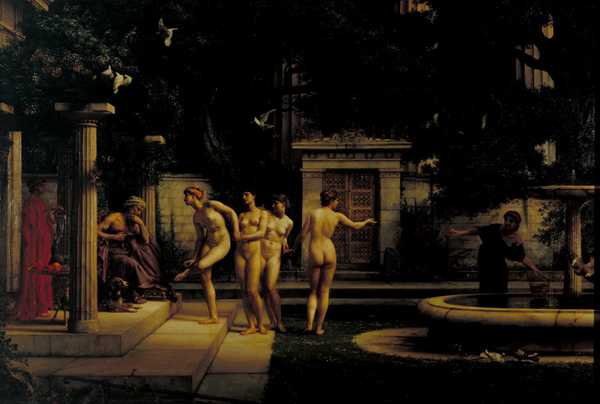
A Visit to Aesculapius 1880 Sir Edward Poynte: Aesculapius is identified by the snake curled around a staff. In a scene from a poem by...

A Visit to Aesculapius 1880 Sir Edward Poynte: Aesculapius is identified by the snake curled around a staff. In a scene from a poem by the Elizabethan Thomas Watson, Poynter shows Venus consulting him, with a thorn in her foot. Venus is identified by the doves, her attributes, and she is accompanied by her handmaidens, the three Graces, who personify grace and beauty. Poynter posed them in the traditional Classical manner, with two of the Graces facing the viewer, while one turns her back. The resulting frieze creates a subtle, elegant rhythm across the composition.

A statue of Asclepius at Epidaurus

Our story begins, naturally enough, in Ancient Greece, whose understanding of medicine and healing was considerably more holistic than the medicine we might recognise today. If a person was sick, and they had the means, they would take themselves to the nearest Asclepion, the equivalent of a hospital, but in practice, more of a healing temple, of which more than 300 were to be found in the varying city-states which made up the Greek nation. The first and most famous of these hospital temples was located at Epidaurus. The Asclepion was named after the god Asclepius, son of Apollo, student of Chiron and father of Hygiea, and the foremost healing deity of the ancient world. Once the patient reached the temple, he or she would undergo a series of purifying rituals designed to prepare the body and mind for what lay ahead. They would eat a simple diet and drink from the mineral-rich, spring-fed pools in the temple precincts. Then, when they were sufficiently rested, they would lie down in the temple itself upon a kline, a bed of sorts (from which we derive the words recline, and clinic), and the healing would begin.

Occasionally, the healing would require some rudimentary surgery, or the equivalent of psychotherapy - conversation with the priests - but the vast majority of the process of healing involved dream work. The Greeks believed that in order to fix the physical body, you first had to heal the ethereal body. After intense preparation, time spent in silence, cleansing the body, making offerings to the Gods, and listening to paeans (musical supplications to the Gods), you would lie down to sleep and, in time, you would receive dream guidance, and hopefully even a miraculous cure, from Asclepius himself.

John William Waterhouse: A Sick Child Brought Into The Temple Of Aesculapius

Many accounts describe such miraculous cures, and the Temple Hospitals endured for many hundreds of years, so we should not lightly dismiss the efficacy of their methods. Indeed, we as astrologers are likely already in sympathy with the method.

Any physical symptom is simply an expression of the astrology at the level of last resort. That psychic impetus that you have not manifested at some level higher-up in the totality of your awareness has – left with no viable alternative – found its way out into the body, and that is the cause of your symptom. Now, you might argue that you did not decide to drink the lead-poisoned water and that it was all the wicked power-company’s fault, but really, you did decide to drink it, because it was an esoteric response to a profound unconscious requirement that you apprehend some vanishingly precise and unique expression of human experience and the only way you could manage it was to move into an area where the water was poisoned by an unscrupulous corporate entity. This, in the astrology, is the cascade effect, which is my own description of it. A single planetary placement evinces a myriad array of vibrational tones, all completely harmonious one with the other, and yet, to the untrained eye, all separate and disconnected. The astrologer sees those gossamer thin filaments that are entirely interconnective however; from the rarefied realms of the peak objective meditational experience, to the most uncomfortable of physical pains, all are contained within the polarities, wellsprings and event-horizons of astrologic placements.

Beyond even this, we have many markers of healing potential beyond the simple manifestations of planetary cause and effect in the soul that, left unchecked, have begun to distort the body. A few of these points are as follows:

Asclepius (4581)

Askalaphus (4946)

Aesculapia (1027)

Hygeia (10)

Chiron (2060)

Hippokrates (14367)

Aegle (96)

Apollo (1862)

Panacea (2878)

Sirona (116)

Feronia (72)

Steve Buscemi, not blessed of Aegle.

The first three, named for Asclepius, represent the propensity toward holistic approaches to healing. Hippokrates seems to imply a more conventional style and is most closely related to doctors as we understand them in our culture. Hygeia has to do with habits, how you approach daily tasks of hygiene and self-care, which have repercussions for health. Chiron often describes a wound or weakness; Aegle is the goddess who bestowed a healthy glow (consider Steve Buscemi, who, to my mind, always looks pale and tired, with Aegle opposing his Sun – Saturn conjunction). Sirona was a later Gallo-Roman healing goddess with the same attributes as Hygeia.

These points tell us different things, although they do not necessarily describe our health issues. Hygeia might give us a clue about the habits that contribute to the eventual manifestation of health problems. Consider here James Gandolfini, whose Hygeia was at the apex of a T-square from Ur/Pl opp. Chiron was ruled by and closely parallel to Jupiter trine the Sun. His diet no doubt contributed to his sudden death. Chiron might give clues to congenital weaknesses in the physiology. Otherwise, the health issues we experience are more likely to be denoted by other placements, and myriad asteroids can relate these fascinating stories.

What these healing-specific points can do, however, is give a picture of healers' beliefs and styles, and how we believe healing should proceed. Where healing has become a vocation, of whatever sort, these placements tell a great deal. For example, Joseph Lister was the first surgeon to link germs and infection and insisted on absolute cleanliness in the operating theatre, especially that scalpels (Mars) be sterile (Hygeia), which are exactly opposed in his chart.

Case Study: Dr Edward Bach

Edward Bach invented the household brand, Bach Flower Remedies. Born in 1886, he spent the spring and summer of 1930, at age 43, discovering and preparing this new healing programme. He also left his wife and children, ditched his Harley Street practice and gave up conventional medicine for good, exactly at his Uranus half-return. The resulting remedies contained no part of the plant, only what Bach claimed was the flower's energy pattern. That winter he treated patients free of charge.

Bach's flower remedies were intuitively derived and based on his perceived psychic connections to the plants. If he felt a negative emotion, he would hold his hand over different plants, and if one alleviated it, he would ascribe to that plant the power to heal that emotional problem. He believed that early morning sunlight passing through dew drops on flower petals transferred the flower's healing power to the water, so he would collect dew drops from the plants and preserve them with an equal amount of brandy to produce a mother tincture, which would be further diluted before use.

While he recognised the role of the germ theory of disease, defective organs and/or tissue, and other known and demonstrable sources of disease, Bach wondered how exposure to a pathogen could make one person sick, while another was unaffected, when to all appearances and analysis they were in equal states of health. He postulated that illness resulted from a conflict between the soul's purposes and the personality's actions and outlooks. According to Bach, this internal war led to emotional imbalances and energetic blockage, causing a lack of harmony and, in turn, physical disease. Bach's remedies focus on treating the patient's personality, which he believed was the ultimate root cause of disease.

Edward Bach: 24 September 1886, 17:20 Birmingham, UK

The astrology is fascinating (selective aspects). You will notice almost immediately the Grand Trine of Flora (the Roman goddess of flowers) with Chloris (the Greek goddess of flowers), and Psyche/Apollo (healing of the spirit). With the inclusion of Chiron, which is precisely parallel to Apollo, this forms a Kite and a Yod with Mars as the apex planet. This denotes a very intense, independent quest, a mission from God, that was ultimately prompted by his close proximity to death in 1917, the year of his Chiron squares, when he had a tumour removed from his spleen and was given three months to live. This is where his quest for alternative approaches to healing began (he developed a prototype homoeopathic medicine in 1919), as 1917 was the year when transiting Uranus squared the Yod’s apex, Mars, and the midpoint of Flora/Chiron. Flora also lies at the midpoint of Pluto and the Ascendant (mortal threat to life). The spleen is sensitised at the 29th degree of Cancer, the exact midpoint of the Sun and Neptune, which is, by Ebertin, the point of sickness in a man. Bach was able to survive this ordeal through holistic self-care, which he carefully nurtured throughout his remaining years. He died at age 50, with Pluto applying to the Sun-Neptune midpoint and Chiron applying to the return.

Chiron the Shaman

Doctor Bach's case underlines the pivotal role of Chiron in his healing paradigm. As the fulcrum planet in two major aspect patterns. Chiron's importance in the chart of a gifted alternative healer should not surprise. If we consider – albeit rather philosophically – the condition of Chiron, we find important correlations that serve our understanding. Chiron is universally known as the Wounded Healer, and while this is commonly understood as a reference to his being struck by a poisoned arrow, causing the mortal wound from which he could not heal, but from which he also could not die due to his immortal nature; he was cursed, therefore, to live in an eternity of pain - I would argue that the woundedness of Chiron was not simply physical. Alone among the entire race of Centaurs, he was wise, self-aware and disciplined, which qualities set him apart from his brethren, to the extent that he lived alone, high up on Mount Pelion. No society was an easy fit, so he lived as one apart. Half man, half animal, he could live as neither one. This outside-ness, this apartness, as is well-known, is the initiating qualification for shamanism. In indigenous cultures, the village knew who the shaman was because he or she was struck by lightning and survived, but any journey into the wilderness (physical or metaphysical) from which one returns changed and deepened might cast one into the role. Chiron was the first astrologer, the first homoeopath and herbalist and used the medicine of the forest to heal the sick. The moment that, like Chiron, we learn to become reconciled with our suffering – whether it be physical, emotional or something else – we are set apart from the vast bulk of humanity who cannot comprehend such a shift. They might suffer, but they are not reconciled, and struggle instead with their ongoing victimhood. The only alternative: acceptance is the Chirotic awakening, the first step on the journey to becoming a shaman.

In Edward Bach’s life, his proximity to death in 1917 was the beginning. Faced every day after with the fragility of his own mortality, he began his Chirotic awakening, and his lifetime’s work – a fundamentally shamanic mission – was born.
27 May 2019 • 8 Min Read Free Essay

The Other Side of Paradise

Précis & Overview

Expand
If it is true to say that there are, in an esoteric, but nonetheless verifiable manner, no ‘easy’ aspects, then this ought to be simply...

If it is true to say that there are, in an esoteric, but nonetheless verifiable manner, no ‘easy’ aspects, then this ought to be simply demonstrable; let us find a chart which evinces no hard aspects, and gaze agog at the cosmic realisation that perhaps we have been looking at the entire puzzle of the nativity from a flawed perspective; that rather than seeing things in a binary manner, as in good versus bad, what we are instead witnessing are stylistically differing itineraries leading to a common destination.

To digress for an instant: in spiritual terms, we are all engaged in the same activity, only some of us are cursed with knowing it. This, of course, is why ignorance is allegedly bliss. Imagine believing that a bazillion dollars would solve all your problems! Then all you would need is to spend your entire precious life slavishly grasping at every opportunity to enrich yourself. <irony> Bliss indeed! </irony> Or that fame would bring relief, somehow. Both of these ego-solutions to the riddle of life seem appealing precisely because they are so very obvious, but they are looking in the wrong place, a phenomenon known as the Streetlight Effect.

This isn’t to say that it is impossible to be rich or famous and stay true to the so-called left-hand path, but it does create a great deal of distraction in the form of a feast for the ego, the very faculty that, for most of us, could do with opting for the salad once in a while. Sustenance for the spirit is rarely so grand, but it’s inordinately more wholesome.

We talked last time about how the Law of Saturn means that we earn nothing of lasting value without hard work, but ‘work’ can mean all sorts of things. It can mean going without; it can mean suffering; it can mean loss. So, there is enormous spiritual value in having it all, and losing it all. In this sense, fame and riches can indeed serve our spirit. There is a principle here too, because if we have restlessly endured the long dark night of the soul, then we understand that our once most coveted aspirations, which now endear us to ourselves in their naïveté, and our once most preciously held beliefs that now seem the swivel-eyed meditations of a Bedlam lifer, are now our most persuasive teachers. These are the measures of a deepening. This mechanism, which I call ‘my karma ran over my dogma ’, is ubiquitous in the human spiritual journey and, in my considered view, the principle of ease. Ease sharpens sensitivity to hardship, making its attentions all the more alarming. It is a spiritualising marinade, if you like, applied before the dread black ovens begin to roar around the age of 40.

To bring this back to the astrology, then, I hope it is possible to see that ease in the chart manufactures dogma. It tends toward entitlement. It raises up what must be torn down for the benefit of our deeper purpose, because this is the only concern of our astrology. This is not to imply sentience, but what is the chart if not a brief and bright reflection of the workings of the mechanism we call God? It is the imprint of creation in a moment of time. And the purpose of all life is to grow closer to that perfect source.

Looked at in this way, then, we can say that easy aspects imply an easy flow. They are Jupiter in style. Hard aspects are Saturn in style. Both are subject to the humanising magnetism of the divine, and therefore we, as astrologers, must learn to consider the underpinning principle of all placements and aspects accordingly.

If this seems like an esoteric philosophy, an example will clarify.

Though born into a well-to-do, middle-class family, F. Scott Fitzgerald grew up on the wrong side of the tracks to be a good marriage prospect to the woman he adored, so he set about making himself into the kind of man that was worthy of Zelda Sayre, the ‘Golden Girl’ of Montgomery, Alabama, where he was stationed while in the army. His method was writing, and after some early successes, he went on to write one of America's truly great novels, The Great Gatsby, in 1925 (published exactly at his Saturn return).

Despite his profound ability, he found himself at 40, drunk and defeated by the financial failure of Tender is the Night, feeling his life as a novelist was over. He retreated to North Carolina, lived in various hotels near the sanatorium where Zelda, his wife, ‘his lost Zelda’ as he once called her, was institutionalised for schizophrenia, and wrote a series of essays for Esquire about his failure and ‘emotional bankruptcy’. Echoing the title of his Esquire essays, the years 1936 and 1937 became known as ‘The Crack-Up’. In September 1936, with a broken shoulder from a diving accident, Fitzgerald was emotionally devastated by an article in the New York Post. The front-page headline read “The Other Side of Paradise. Scott Fitzgerald, 40, Engulfed in Despair, Broken in Health He Spends Birthday Regretting That He Has Lost faith in His Star.”

Within another four years, he was dead, never having recaptured his star. Where did it all go wrong?

This astonishing decline might seem incongruous for a man whose chart showed no major hard aspects between principal planets, but it does not surprise.

The stand-out feature is a Grand Trine; it makes up nearly the whole chart. If we understand a Grand Trine to be a three-sided moat, a refuge offering safety and a sense of security, it is all too easy to not step outside it. The gift of the Grand Trine is easily leveraged, but it becomes degenerative if not challenged by hard aspects (which is why the Kite is much more practical)

Mercury is conjunct a very strong Venus in Libra. Beautiful words, and in the 8th, about wealth, but also the mind is turned toward the ease of money and love. Venus in Libra dominates the whole chart! The ease of great wealth and the great romance is the ultimate goal.

This point trines a conjunction of Mars, Neptune and Juno. So much is involved right here. In the 5th, we have the fantasy of being self-made, myriad sexual encounters, or the joy of flirtation, but Neptune undermines Mars's vigour. An inability to stay the course because of wishing things were better or easier. Choosing less wearying options. The dream of independence.

Also, Juno in Gemini – the fragmented wife. Opposing asteroid Atropos: who deteriorates. His Lost Zelda! Juno conjunct Neptune.

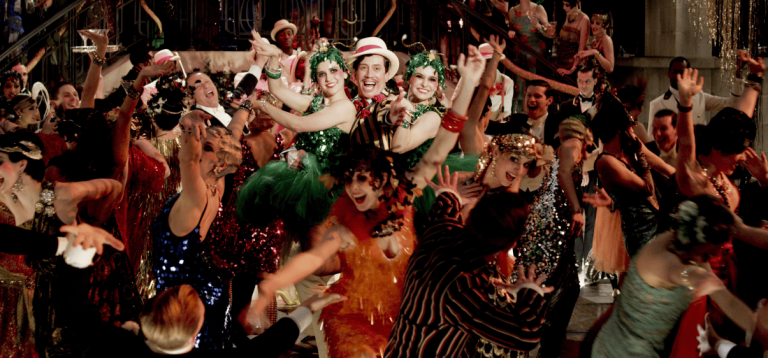
All of these trine the Node: gatherings. You really get a feeling for the great grand parties of the Jazz Age from this particular set of circumstances. The elegance and sophistication of high society with the Libra/8th house planets, the having fun, delightfully chit-chatting and drinking of the Gemini/5th house planets, and the unconventional gatherings of the grand jazz parties of the 1920s, encapsulated in the Aquarius Node. The Grand Trine is more or less the backdrop for Gatsby.

Many other factors are worth considering. Sun in Libra is peregrine. Without this, a debilitated Sun in a succedent house, with the sign of the Sun’s detriment rising, likely does not make for much power, but here the Sun is propelled into special prominence. Gatsby's character was almost certainly autobiographical. A mystery man of uncertain origin who reinvented himself as a rival to Croesus, to win the heart of a girl whose society was far beyond his reasonable aspiration?

Think about the primary exposition of solar energy: the formation of persona. He felt himself defined by Zelda, his wife. Here is a man identified by the great romance that he wrote about so effortlessly, but which degenerated into drink and madness. The Mercury-Venus that rules the Sun is conjunct Chiron and the asteroid Orpheus, thereby being  ‘broken by sadness’.

All the potential is here, and it is put into a slow, deteriorating spiral by the lack of any challenging aspects. The tendency toward ease is dissolution; nothing stiffens it. Look, for example, at the Mars/Neptune conjunction ruling the 2nd house (with Aries intercepted in the 2nd). The undermining (Neptune) of independence (Mars) comes about because of poverty. Fitzgerald died broke, despite his great literary successes. He drank and partied his riches - both material and romantic - away (because of Mars/Neptune in the 5th)

There is always more to say; for example, this chart has almost no fire (motivation), little water (an inability to deal with depression), and not much earth (no roots). This does not help his situation because the great gift is building castles-in-the-air. He could think and write and talk and chit-chat, but he could not build much that was solid and lasting, and the constant easy flow of trines gradually eroded his dreams and ultimately, his resolve to go on living.

Here we then see that despite the almost complete absence of hard aspects (Uranus squares the Node, that’s all), Fitzgerald’s life was an almost total tragedy. His success as a writer, although radiant by any measure, was ephemeral and subjectively fleeting, serving more as a goad to his discontent than as any source of comfort in his final years, and he died in poverty and relative obscurity, of a broken heart, aged only 44.

Next time, we will take the opposite case and see what becomes of the chart with no ease at all.

24 April 2019 • 11 Min Read Free Essay

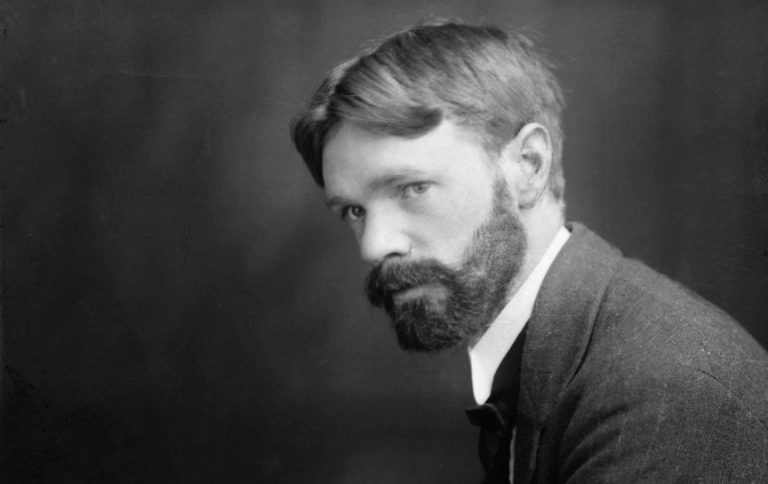
D.H. Lawrence and the Astrology of Outcasts

Précis & Overview

Expand
In examining D.H. Lawrence’s life and chart, I trace his lifelong status as an outcast to a peregrine Orcus on his 4th-house cusp, signalling profound...

In examining D.H. Lawrence’s life and chart, I trace his lifelong status as an outcast to a peregrine Orcus on his 4th-house cusp, signalling profound alienation from home, class, and roots. Raised by an aspirational mother (12th-house Moon–Venus square Mars) who felt she had married beneath her to a coal miner, Lawrence internalised a refinement that set him apart from his working-class community. Because his remarkably strong Uranus squares a weak Saturn in Cancer, radical rebellion consistently triumphed over social orthodoxy—fuelling his taboo-breaking literature, his marriage to German aristocrat Frieda von Richthofen, and the wartime persecution that drove him into permanent exile.

3 April 2019 • 7 Min Read Members Only

Final Thoughts on Planetary Ease

Précis & Overview

Expand
In this concluding piece on dignity and debility, I look past basic scoring rules to examine how planetary ease and blockage are actually felt in...

In this concluding piece on dignity and debility, I look past basic scoring rules to examine how planetary ease and blockage are actually felt in lived experience. While dignity denotes ease, I question whether Saturnian restriction or Jovial abundance is straightforwardly comfortable, propose point adjustments for mutual receptions and feral peregrination, and note how outer-planet aspects complicate traditional rules. Using Venus Williams’s chart as an illustration, I show how factoring in active feral Jupiter and Orcus—alongside psychic compensation for a debilitated Venus -- transforms a chart’s narrative. Ultimately, I argue that pairing technical scoring with biography brings genuine empathy to chart interpretation.