For the past few years, I have been intermittently working on what you might call a back-burner project – a journey through the dark chapters...
For the past few years, I have been intermittently working on what you might call a back-burner project – a journey through the dark chapters of history where societal collapse, depth psychology, and the history of astrology are the main characters. The project is now gaining momentum as I am currently writing the final chapters of this book, and I feel it is the right time to share it with you.
We live in a time that feels increasingly empty of meaning. The old structures that once helped people understand their place in the world – religion, shared myth, stable communities, inherited traditions, even a common sense of truth – have weakened or outright disappeared. In their place has emerged a culture of reaction where unfettered access to information, public performance, outrage, distraction, and opinion provokes almost universal societal division and existential conflict. We are more connected than any civilisation in history, yet many people experience modern life as psychologically scattered and spiritually empty. There are too many voices speaking at once, too many competing explanations of reality, and very little that feels capable of placing our human life inside a larger, meaningful order.
This is not new; throughout history, civilisations have continuously suffered what I term “cathedral collapse.”
A cathedral collapse is not merely the destruction of physical stone walls; it is the systemic shattering of a society's central, guiding myth. It is the moment the axis mundi – the sacred vertical wire pinning heaven to earth – breaks. When the sacred fails to explain experience, humanity is not liberated; it becomes flat. We enter what the poet Robert Bly called the Sibling Society: a godless barren populated by belligerent ideological mobs who have lost their connection to a transcendent mythic principle and are thus left exposed to the raw, unmediated violence of the collective unconscious.
And to add insult to injury, the cathedral collapse of today is absolutely unparalleled. The arrival of the internet, or the “digital swarm” as defined by the philosopher Byung-Chul Han, has created a pervasive perdition that is unprecedented in human history. Never before has a civilisation possessed such immense opportunity for connection while suffering such profound symbolic dislocation. The modern man or woman drifts through an endless ocean of information, stimulation, and manufactured urgency, without any shared vertical structure capable of transforming that experience into meaning. The world is crying out for transcendence and has lost the symbols to transcribe it.
My forthcoming book tracks this recurring cycle through a series of fascinating biographies. It is an exploration of how, at the exact moments history entered its deepest structural crises, the discipline of astrology was re-engineered to act as a new axis mundi – a refuge of meaning and certainty to fall back on when the world was fracturing under immense social, religious, or political pressures.
The book charts the long, arduous development of astrology – showing how it transformed from an ancient, collective, omen-based tool used to predict harvests and the rise and fall of dynasties into the sophisticated personal instrument of deep psychology it is today. We map this development through eight souls, each forged in the chaos of profound civilisational crisis, and view their biographies through the philosophic lenses of Carl Jung, Joseph Campbell, Robert Bly, Byung-Chul Han, and other important thinkers.
Claudius Ptolemy (c. 100 CE) & The Melting Pot of Empire: Alexandria stood at the crossroads of a Roman Empire overflowing with gods, philosophies, mystery cults, sacred traditions, and competing systems of truth. The old local cosmologies of the Mediterranean had not vanished, but they no longer converged into a single shared axis mundi. In response to this symbolic cacophony, Ptolemy transformed astrology into a disciplined mathematical architecture. The Tetrabiblos sought to stabilise celestial meaning within a world becoming saturated by competing explanatory systems, translating the heavens into a universal grammar that was to last more than a thousand years.
Abraham Ibn Ezra (1089–1167) & The Sephardic Dispersion: Set against the unstable world of medieval Iberia – where Islamic courts, Christian kingdoms, and Jewish intellectual communities existed in tense proximity – Ibn Ezra witnessed the destruction of the Andalusian Sephardic order under the Almohads. Forced into decades of exile across Christian Europe, he developed new systems of planetary strength and translated the mathematical and astrological sciences of the Arabic world into Hebrew, preserving a sophisticated cosmological tradition for displaced Jewish communities cut loose from their former institutional centres.
Guido Bonatti (c. 1210–1296) & The Italian Civic Terror: Amid the violent struggles between Guelph and Ghibelline factions in medieval Italy, Bonatti transformed astrology into a disciplined instrument of political and military judgement. In the Liber Astronomiae, he systematised horary and electional practice with exceptional procedural rigour, adapting astrology to a world in which rulers, cities, and alliances shifted constantly beneath the pressure of war and factional instability.
Philipp Melanchthon (1497–1560) & The Protestant Reformation: As the Reformation shattered the sacramental unity of Western Christendom and Europe descended into religious conflict, Melanchthon, a close friend of Martin Luther, incorporated astrology and astronomy into the educational reforms of Wittenberg. He regarded the mathematical regularity of the heavens as evidence of divine providence and rational order at a time when political and religious authority on earth was becoming increasingly unstable.
William Lilly (1602–1681) & The Killing of the King: During the political and symbolic upheaval of the English Civil War, when monarchy, church authority, and inherited hierarchy were violently contested, Lilly transformed astrology into a widely accessible public practice. Writing in vernacular English rather than inaccessible Latin, he used horary astrology to help ordinary readers navigate a world in which older structures of legitimacy no longer appeared stable or unquestionable.
Alan Leo (1860–1917) & The Victorian Spiritual Crisis: As scientific materialism, industrialisation, and evolutionary theory weakened many traditional religious certainties in the modern West, Alan Leo radically reorientated astrology away from fate and prediction and toward character, temperament, and spiritual development. In doing so, he helped transform astrology into a psychological and esoteric discipline capable of surviving within an increasingly secular intellectual world.
Alfred Witte (1878–1941) & The Age of Global War: Driven by the upheavals of industrial warfare, social dislocation, and the rise of totalitarianism in Europe, Witte sought a more precise and technical astrological language capable of describing the increasingly impersonal forces shaping modern life. Through the Hamburg School and Uranian astrology, he introduced planetary midpoints and hypothetical trans-Neptunian points, extending astrology into a highly systematic method for analysing collective and psychological pressures within the new technological age.
What this immense project reveals is an eternal psychological law: human archetypes do not disappear when we dismantle our temples and depose our gods; they return as diseases. Diseases of the mind, the spirit, and ultimately, the collective unconscious. When a society begins to believe it has outgrown its stories, the contents of the unconscious mediated by those stories return in degraded, pathological, and highly compulsive forms. Society’s repressed Shadow begins to infect the collective unconscious, causing mass neurosis.
This brings us directly to our own era. As we navigate the fragmented, digital swarms of the twenty-first century, we are facing an acute phase of civilisational flattening, unprecedented in scope. The smartphone has given the entire planet access to eruptions of unresolved mass trauma, and we daily commune directly with humanity’s Shadow without any mediating symbolic filter.
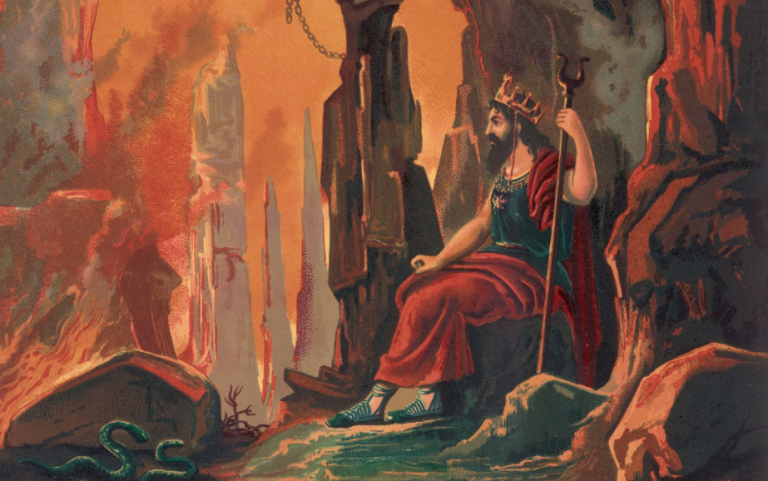
That is why I believe the natural next step in this lineage – and the final frontier explored in the closing chapters of my work – is the study of Hadean astrology.
If the astrology of the ancient world was about preparedness for famine and dynastic upheaval, and the astrology of the twentieth century was about integrating the new psychology into human consciousness, Hadean astrology is the symbolic work of the underworld, both individually and collectively. Hadean symbols give us the language to describe the new pathologies of the digital age: the sicknesses of narcissism, fake personas, compulsive performance, and habitual gaslighting. They also give us tools to understand these dysfunctions that have begun to atrophy into the global psychosis that is unfolding all about us today.
Hadean astrology is not a Cosmo personality quiz; it is not light, soothing, or fun; it is an orientation for coming to terms with the Shadow of today's society and learning its symbols and signs. It is the reclamation of the axis mundi as the only possible salvation in an increasingly fragmented and senseless worldwide drama.
The book is nearing completion. Over the coming days and weeks, as I draft these final chapters, I’ll be sharing deep dives into these specific historical insights, the technical astrological breakthroughs of the past, and the psychological mechanics they reveal.
If you are ready to look past the deafening noise of the modern digital landscape and re-engage with the severe, beautiful geometry of human meaning, what I call the Telos of Orcus, I invite you to join the conversation.