Study Taxonomy

Planets & Asteroids

Studies & Essays in Planets & Asteroids

34 total
11 December 2025 • 8 Min Read Members Only

Achlys Cazimi – the Beautiful Illusion, and its Denouement

Précis & Overview

Expand
Examining the rare Sun–Achlys Cazimi conjunction as an exaltation of mythic self-idealisation, this essay explores how seated illusion at the heart of solar identity confers...

Examining the rare Sun–Achlys Cazimi conjunction as an exaltation of mythic self-idealisation, this essay explores how seated illusion at the heart of solar identity confers magnetic destiny while carrying the inevitable seed of disillusionment. Contrasting the trajectories of Rudyard Kipling and Saddam Hussein -- alongside the Hadean Cazimi signatures of William Blake and Carl Lewis -- it demonstrates how the same configuration can elevate a figure into the persuasive voice of an imperial dream or the violent enforcer of an authoritarian cult of personality. Ultimately, the piece argues that because no illusion built on self-unawareness can endure unchallenged, the true measure of Achlys Cazimi lies in how the native meets the inevitable unveiling: whether inwardly through conscience, grief, and humbled humanity, or outwardly through public ruin and unyielding denial.

31 May 2022 • 10 Min Read Members Only

Eris the Iconoclast, Part 2

Précis & Overview

Expand
Examining Eris through her astronomical classification as a non-resonant Plutoid rather than a Hadean Plutino, this essay distinguishes her compulsive, contrarian agitation from the deep...

Examining Eris through her astronomical classification as a non-resonant Plutoid rather than a Hadean Plutino, this essay distinguishes her compulsive, contrarian agitation from the deep existential anxiety of Pluto, Orcus, and Ixion. Tracing recurring Golden Yod configurations and hard Eris contacts across British populist figures -- including Nigel Farage, Enoch Powell, Boris Johnson, and Michael Gove -- alongside cultural iconoclasts such as Thomas Hardy and Alan Watts, the analysis illustrates how Eris confers a potent gift for discerning collective resentments, challenging established orthodoxies, and provoking societal schisms. Ultimately, supported by an extensive dataset of natal case studies across personal planets and Pluto, the piece argues that while Eris does not dictate ideology, she supplies a destabilising capacity for heterodoxy and divisiveness that can either champion nonconformist truth or be weaponised for political power.

19 December 2020 • 8 Min Read Free Essay

The Once Was Great Conjunction

Précis & Overview

Expand
Stripping away modern apocalyptic hype around the December 2020 Jupiter–Saturn alignment, this essay restores the historical context of classical synodic theory -- clarifying that the...

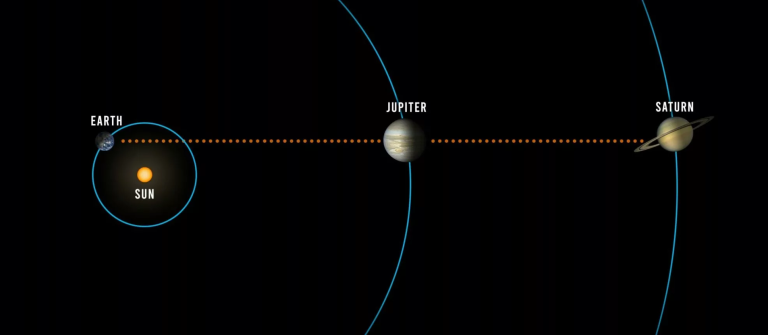
Stripping away modern apocalyptic hype around the December 2020 Jupiter–Saturn alignment, this essay restores the historical context of classical synodic theory -- clarifying that the event is a 240-year "middle conjunction" rather than a millennial "Great Conjunction," and tracing how court astrologers from Theophilus of Edessa to Ibn Ezra tempered its dynastic scope. Reading the chart through a realistic mundane lens, it anticipates an ideological standoff between entrenched establishment power and humanist ideals, economic contraction, and conditional freedoms rather than sweeping systemic transformation.

2 October 2020 • 9 Min Read Free Essay

The (not especially) Harmonic Convergence of Jupiter and Saturn

Précis & Overview

Expand
Challenging popular claims that the December 2020 Jupiter–Saturn conjunction in Aquarius inaugurates the Age of Aquarius, this essay distinguishes cyclical 20-year planetary synods from the...

Challenging popular claims that the December 2020 Jupiter–Saturn conjunction in Aquarius inaugurates the Age of Aquarius, this essay distinguishes cyclical 20-year planetary synods from the 25,000-year precession of the equinoxes -- contrasting the alignment with the far rarer 1987 Harmonic Convergence. Tracing the conjunction's rulership chain through Uranus in Taurus and Venus alongside wider Hadean transits, it reads the signature as a catalyst for financial shocks, the restriction of freedoms, and the systemic exhaustion of predatory capitalism, while highlighting stoicism and personal integrity as its highest antidotes.

4 March 2020 • 8 Min Read Free Essay

Chiron in Taurus, the Wound of Insecurity

Précis & Overview

Expand
Here, we examine how Chiron in Taurus generates deep-seated struggles with self-esteem, physical appearance, material security, and existential safety. Because Taurus is ruled by Venus,...

Here, we examine how Chiron in Taurus generates deep-seated struggles with self-esteem, physical appearance, material security, and existential safety. Because Taurus is ruled by Venus, this placement operates across both material and spiritual dimensions, where lower awareness equates self-worth with wealth or beauty, while higher consciousness transcends external conditions to find inner contentment. Examining the natal chart of Elizabeth Taylor -- whose Chiron sits on the 5th/6th house cusp, ruled by a Venus-Uranus conjunction square Pluto and squaring Jupiter in the 8th -- illustrates how this placement plays out through early sexualization, studio control, body-image struggles, relentless media intrusion, and turbulent marriages, while showing that healing begins by acknowledging our need for reassurance and communicating our vulnerabilities.

28 February 2020 • 5 Min Read Free Essay

Frida’s Forge

Précis & Overview

Expand
In this piece, I explore the natal chart of Frida Kahlo, examining how the catastrophic bus accident at age 18 -- following a childhood bout...

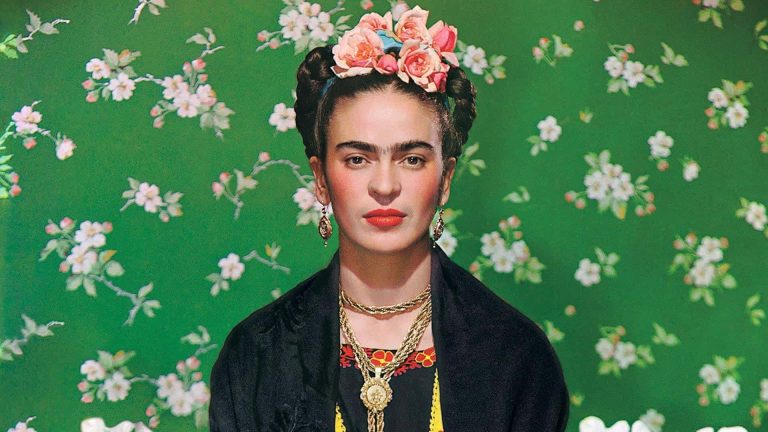
In this piece, I explore the natal chart of Frida Kahlo, examining how the catastrophic bus accident at age 18 -- following a childhood bout of polio -- sparked her artistic vocation through her astrological placements. By analyzing her Sun-Neptune conjunction opposing Mars-Uranus, alongside a peregrine trine between Chiron and the asteroid Hephaistos, I show how physical impairment, shocking personal narratives, and her unconventional marriage to Diego Rivera became the catalysts for her creative power.

14 January 2020 • 12 Min Read Members Only

Hephaistos through the Signs

Précis & Overview

Expand
Acting as a minor chord of Chiron, the asteroid Hephaistos reveals a "can't-win" wound rooted in early parental rejection -- where exhibiting either an excess...

Acting as a minor chord of Chiron, the asteroid Hephaistos reveals a "can't-win" wound rooted in early parental rejection -- where exhibiting either an excess or a lack of a sign's traits becomes justification for not measuring up. Drawing on historical birth charts and biographical examples across all twelve signs, houses, and planetary rulerships, I trace how this early sense of inadequacy drives both compensatory mastery in specific crafts and recurring disparities in adult relationships, where we project our perceived deficiencies onto a partner.

2 January 2020 • 7 Min Read Members Only

Hephaistos, the Misfit Archetype

Précis & Overview

Expand
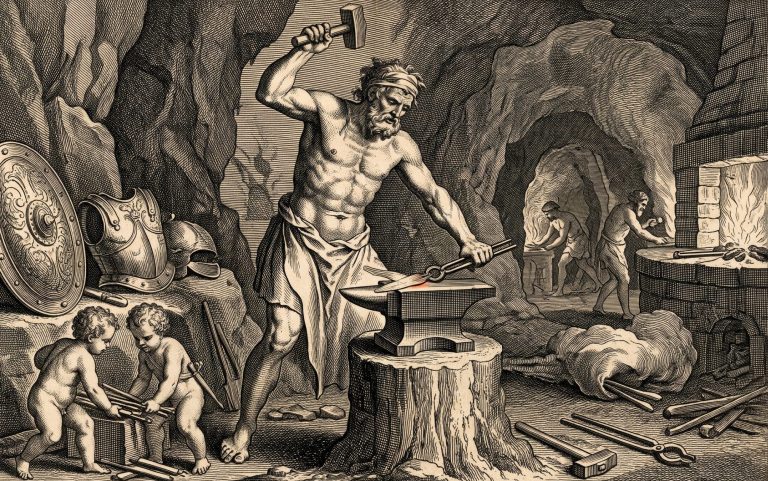
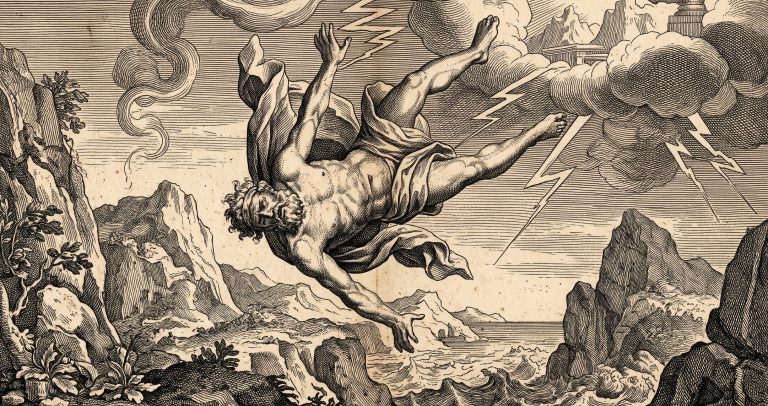
In the opening instalment of a three-part series, I introduce the asteroid Hephaistos as an alternative to Chiron, exploring how the myth of Olympus’s rejected,...

In the opening instalment of a three-part series, I introduce the asteroid Hephaistos as an alternative to Chiron, exploring how the myth of Olympus’s rejected, disabled blacksmith illuminates our experiences of brokenness, family estrangement, and creative mastery. Drawing on Jungian archetypal theory and the turbulent marriage of Hephaistos and Aphrodite, I outline five core astrological themes -- ranging from feelings of inadequacy and paternal uncertainty to spousal inequality and the discovery of our innate domain of craftsmanship.

22 October 2019 • 11 Min Read Members Only

Making Sense of Makemake

Précis & Overview

Expand
Exploring the astrological meaning of the dwarf planet Makemake—named after the Rapa Nui creator god whose sparse surviving mythology centres on protecting Easter Island’s birds...

Exploring the astrological meaning of the dwarf planet Makemake—named after the Rapa Nui creator god whose sparse surviving mythology centres on protecting Easter Island’s birds -- I test the popular hypothesis that it signifies ecological awareness by examining the charts of naturalists, environmentalists, and campaigners like Greta Thunberg and David Attenborough. Finding little correlation among passive nature-lovers, I argue that Makemake’s true archetype is broader: radical activism and the compulsion to alter human behavior or challenge the status quo to make the world a better place, a pattern exemplified by figures as varied as Charles Darwin and anarchist Stuart Christie.

16 October 2019 • 7 Min Read Members Only

The Shadow and the Conundrum of the Luminaries

Précis & Overview

Expand
Using planetary rulerships to unpack the Jungian Shadow, I examine the inner tension between the Sun (our conscious Persona) and the Moon (our instinctual Id)...

Using planetary rulerships to unpack the Jungian Shadow, I examine the inner tension between the Sun (our conscious Persona) and the Moon (our instinctual Id) when they occupy conflicting signs like Capricorn and Aries. By contrasting the birth charts of actor Jon Voight and historian Robert Lacey -- both of whom share a Capricorn Sun and Aries Moon—I show how the deeper chains of dispositorship and mutual reception determine whether an inner conflict erupts into volatile outbursts or channels into measured, dignified expression.

12 July 2019 • 10 Min Read Free Essay

The Story of Vesta: pt. I

Précis & Overview

Expand
Fire is embedded deep in our ancestral memory as the sacred centre of the tribe and the family hearth. In this first part of my...

Fire is embedded deep in our ancestral memory as the sacred centre of the tribe and the family hearth. In this first part of my exploration of Vesta, I look beyond the modern misconception of the goddess as a sterile emblem of chastity to uncover her deeper origins in ancient fertility rites. From the sacred fire-boards of Siberian tribes to the perpetual flame tended by Rome’s Vestal Virgins -- who simultaneously guarded the phallic cult of Fascinus and performed visceral agricultural magic -- I argue that Vesta’s chastity was never an end in itself, but a vessel for stored, procreative power and household fecundity.

1 July 2019 • 12 Min Read Free Essay

Aspects in Balance

Précis & Overview

Expand
Here is another perspective too on the nature of Jupiter and Saturn, and the received wisdom about those planets. Specifically, it allows us to reframe...

Here is another perspective too on the nature of Jupiter and Saturn, and the received wisdom about those planets. Specifically, it allows us to reframe the simplistic idea that Jupiter is good, and Saturn is bad. It is better to say that Jupiter is easy, and Saturn is hard. But as we all know, a smooth sea never made a skilled sailor, and it is commonly held by almost everyone, that while they did not choose the great hardships and challenges of their lives, they would invariably not choose after the fact, to have not lived through them. Often, the making of us is through the great upheavals that we endure. So, in truth, whilst most of us would vote for ease, we rarely applaud it in retrospect.

20 June 2019 • 10 Min Read Members Only

Vladimir Nabokov: No Rest for the Wicked?

Précis & Overview

Expand
In examining Vladimir Nabokov’s life and chart, I see a man defined not by ease, but by a profound array of tense squares and Grand...

In examining Vladimir Nabokov’s life and chart, I see a man defined not by ease, but by a profound array of tense squares and Grand Crosses. Displaced from his aristocratic Russian homeland by revolution, he spent his life in exile, burdened by the Saturnine weight of early loss -- including his father’s murder and separation from his youthful love, Tamara.

Rather than degenerating, his heavily aspected chart forged extraordinary resilience and genius, yielding monumental literary and scientific success. Ultimately, I view his controversial masterwork Lolita and his fixation on lost youth as manifestations of an exile dynamic where adolescent love became a poignant motif for his vanished world.

11 June 2019 • 10 Min Read Members Only

The Astrology of Healing

Précis & Overview

Expand
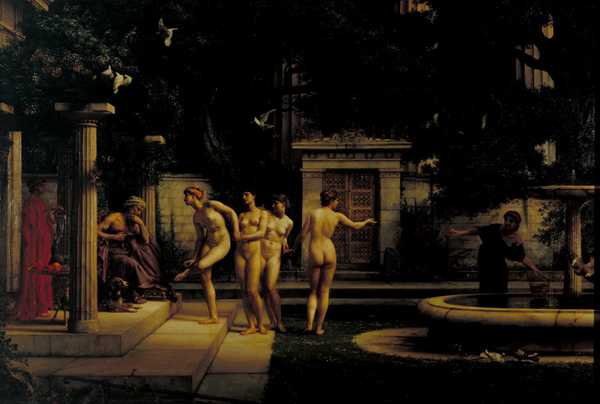
A Visit to Aesculapius 1880 Sir Edward Poynte: Aesculapius is identified by the snake curled around a staff. In a scene from a poem by...

A Visit to Aesculapius 1880 Sir Edward Poynte: Aesculapius is identified by the snake curled around a staff. In a scene from a poem by the Elizabethan Thomas Watson, Poynter shows Venus consulting him, with a thorn in her foot. Venus is identified by the doves, her attributes, and she is accompanied by her handmaidens, the three Graces, who personify grace and beauty. Poynter posed them in the traditional Classical manner, with two of the Graces facing the viewer, while one turns her back. The resulting frieze creates a subtle, elegant rhythm across the composition.

A statue of Asclepius at Epidaurus

Our story begins, naturally enough, in Ancient Greece, whose understanding of medicine and healing was considerably more holistic than the medicine we might recognise today. If a person was sick, and they had the means, they would take themselves to the nearest Asclepion, the equivalent of a hospital, but in practice, more of a healing temple, of which more than 300 were to be found in the varying city-states which made up the Greek nation. The first and most famous of these hospital temples was located at Epidaurus. The Asclepion was named after the god Asclepius, son of Apollo, student of Chiron and father of Hygiea, and the foremost healing deity of the ancient world. Once the patient reached the temple, he or she would undergo a series of purifying rituals designed to prepare the body and mind for what lay ahead. They would eat a simple diet and drink from the mineral-rich, spring-fed pools in the temple precincts. Then, when they were sufficiently rested, they would lie down in the temple itself upon a kline, a bed of sorts (from which we derive the words recline, and clinic), and the healing would begin.

Occasionally, the healing would require some rudimentary surgery, or the equivalent of psychotherapy - conversation with the priests - but the vast majority of the process of healing involved dream work. The Greeks believed that in order to fix the physical body, you first had to heal the ethereal body. After intense preparation, time spent in silence, cleansing the body, making offerings to the Gods, and listening to paeans (musical supplications to the Gods), you would lie down to sleep and, in time, you would receive dream guidance, and hopefully even a miraculous cure, from Asclepius himself.

John William Waterhouse: A Sick Child Brought Into The Temple Of Aesculapius

Many accounts describe such miraculous cures, and the Temple Hospitals endured for many hundreds of years, so we should not lightly dismiss the efficacy of their methods. Indeed, we as astrologers are likely already in sympathy with the method.

Any physical symptom is simply an expression of the astrology at the level of last resort. That psychic impetus that you have not manifested at some level higher-up in the totality of your awareness has – left with no viable alternative – found its way out into the body, and that is the cause of your symptom. Now, you might argue that you did not decide to drink the lead-poisoned water and that it was all the wicked power-company’s fault, but really, you did decide to drink it, because it was an esoteric response to a profound unconscious requirement that you apprehend some vanishingly precise and unique expression of human experience and the only way you could manage it was to move into an area where the water was poisoned by an unscrupulous corporate entity. This, in the astrology, is the cascade effect, which is my own description of it. A single planetary placement evinces a myriad array of vibrational tones, all completely harmonious one with the other, and yet, to the untrained eye, all separate and disconnected. The astrologer sees those gossamer thin filaments that are entirely interconnective however; from the rarefied realms of the peak objective meditational experience, to the most uncomfortable of physical pains, all are contained within the polarities, wellsprings and event-horizons of astrologic placements.

Beyond even this, we have many markers of healing potential beyond the simple manifestations of planetary cause and effect in the soul that, left unchecked, have begun to distort the body. A few of these points are as follows:

Asclepius (4581)

Askalaphus (4946)

Aesculapia (1027)

Hygeia (10)

Chiron (2060)

Hippokrates (14367)

Aegle (96)

Apollo (1862)

Panacea (2878)

Sirona (116)

Feronia (72)

Steve Buscemi, not blessed of Aegle.

The first three, named for Asclepius, represent the propensity toward holistic approaches to healing. Hippokrates seems to imply a more conventional style and is most closely related to doctors as we understand them in our culture. Hygeia has to do with habits, how you approach daily tasks of hygiene and self-care, which have repercussions for health. Chiron often describes a wound or weakness; Aegle is the goddess who bestowed a healthy glow (consider Steve Buscemi, who, to my mind, always looks pale and tired, with Aegle opposing his Sun – Saturn conjunction). Sirona was a later Gallo-Roman healing goddess with the same attributes as Hygeia.

These points tell us different things, although they do not necessarily describe our health issues. Hygeia might give us a clue about the habits that contribute to the eventual manifestation of health problems. Consider here James Gandolfini, whose Hygeia was at the apex of a T-square from Ur/Pl opp. Chiron was ruled by and closely parallel to Jupiter trine the Sun. His diet no doubt contributed to his sudden death. Chiron might give clues to congenital weaknesses in the physiology. Otherwise, the health issues we experience are more likely to be denoted by other placements, and myriad asteroids can relate these fascinating stories.

What these healing-specific points can do, however, is give a picture of healers' beliefs and styles, and how we believe healing should proceed. Where healing has become a vocation, of whatever sort, these placements tell a great deal. For example, Joseph Lister was the first surgeon to link germs and infection and insisted on absolute cleanliness in the operating theatre, especially that scalpels (Mars) be sterile (Hygeia), which are exactly opposed in his chart.

Case Study: Dr Edward Bach

Edward Bach invented the household brand, Bach Flower Remedies. Born in 1886, he spent the spring and summer of 1930, at age 43, discovering and preparing this new healing programme. He also left his wife and children, ditched his Harley Street practice and gave up conventional medicine for good, exactly at his Uranus half-return. The resulting remedies contained no part of the plant, only what Bach claimed was the flower's energy pattern. That winter he treated patients free of charge.

Bach's flower remedies were intuitively derived and based on his perceived psychic connections to the plants. If he felt a negative emotion, he would hold his hand over different plants, and if one alleviated it, he would ascribe to that plant the power to heal that emotional problem. He believed that early morning sunlight passing through dew drops on flower petals transferred the flower's healing power to the water, so he would collect dew drops from the plants and preserve them with an equal amount of brandy to produce a mother tincture, which would be further diluted before use.

While he recognised the role of the germ theory of disease, defective organs and/or tissue, and other known and demonstrable sources of disease, Bach wondered how exposure to a pathogen could make one person sick, while another was unaffected, when to all appearances and analysis they were in equal states of health. He postulated that illness resulted from a conflict between the soul's purposes and the personality's actions and outlooks. According to Bach, this internal war led to emotional imbalances and energetic blockage, causing a lack of harmony and, in turn, physical disease. Bach's remedies focus on treating the patient's personality, which he believed was the ultimate root cause of disease.

Edward Bach: 24 September 1886, 17:20 Birmingham, UK

The astrology is fascinating (selective aspects). You will notice almost immediately the Grand Trine of Flora (the Roman goddess of flowers) with Chloris (the Greek goddess of flowers), and Psyche/Apollo (healing of the spirit). With the inclusion of Chiron, which is precisely parallel to Apollo, this forms a Kite and a Yod with Mars as the apex planet. This denotes a very intense, independent quest, a mission from God, that was ultimately prompted by his close proximity to death in 1917, the year of his Chiron squares, when he had a tumour removed from his spleen and was given three months to live. This is where his quest for alternative approaches to healing began (he developed a prototype homoeopathic medicine in 1919), as 1917 was the year when transiting Uranus squared the Yod’s apex, Mars, and the midpoint of Flora/Chiron. Flora also lies at the midpoint of Pluto and the Ascendant (mortal threat to life). The spleen is sensitised at the 29th degree of Cancer, the exact midpoint of the Sun and Neptune, which is, by Ebertin, the point of sickness in a man. Bach was able to survive this ordeal through holistic self-care, which he carefully nurtured throughout his remaining years. He died at age 50, with Pluto applying to the Sun-Neptune midpoint and Chiron applying to the return.

Chiron the Shaman

Doctor Bach's case underlines the pivotal role of Chiron in his healing paradigm. As the fulcrum planet in two major aspect patterns. Chiron's importance in the chart of a gifted alternative healer should not surprise. If we consider – albeit rather philosophically – the condition of Chiron, we find important correlations that serve our understanding. Chiron is universally known as the Wounded Healer, and while this is commonly understood as a reference to his being struck by a poisoned arrow, causing the mortal wound from which he could not heal, but from which he also could not die due to his immortal nature; he was cursed, therefore, to live in an eternity of pain - I would argue that the woundedness of Chiron was not simply physical. Alone among the entire race of Centaurs, he was wise, self-aware and disciplined, which qualities set him apart from his brethren, to the extent that he lived alone, high up on Mount Pelion. No society was an easy fit, so he lived as one apart. Half man, half animal, he could live as neither one. This outside-ness, this apartness, as is well-known, is the initiating qualification for shamanism. In indigenous cultures, the village knew who the shaman was because he or she was struck by lightning and survived, but any journey into the wilderness (physical or metaphysical) from which one returns changed and deepened might cast one into the role. Chiron was the first astrologer, the first homoeopath and herbalist and used the medicine of the forest to heal the sick. The moment that, like Chiron, we learn to become reconciled with our suffering – whether it be physical, emotional or something else – we are set apart from the vast bulk of humanity who cannot comprehend such a shift. They might suffer, but they are not reconciled, and struggle instead with their ongoing victimhood. The only alternative: acceptance is the Chirotic awakening, the first step on the journey to becoming a shaman.

In Edward Bach’s life, his proximity to death in 1917 was the beginning. Faced every day after with the fragility of his own mortality, he began his Chirotic awakening, and his lifetime’s work – a fundamentally shamanic mission – was born.
14 May 2019 • 6 Min Read Free Essay

The Law of Karma

Précis & Overview

Expand
Life's true satisfactions are forged through struggle rather than ease, and astrology mirrors this fundamental law through Saturn, the Lord of Time, who limits us...

Life's true satisfactions are forged through struggle rather than ease, and astrology mirrors this fundamental law through Saturn, the Lord of Time, who limits us and ensures we pay the price for irresponsibility. Consequently, I argue that all astrological conditions function as squares. While 'benign' aspects like Moon trine Jupiter foster entitlement and eventual degeneration by making life too easy, hard aspects like Moon square Jupiter deliver early lessons that temper expectations and forge an authentic character later in life. Ultimately, astrology offers no shortcuts; accepting our squares allows us to bypass deceptive ease and find genuine depth.

3 April 2019 • 7 Min Read Members Only

Final Thoughts on Planetary Ease

Précis & Overview

Expand
In this concluding piece on dignity and debility, I look past basic scoring rules to examine how planetary ease and blockage are actually felt in...

In this concluding piece on dignity and debility, I look past basic scoring rules to examine how planetary ease and blockage are actually felt in lived experience. While dignity denotes ease, I question whether Saturnian restriction or Jovial abundance is straightforwardly comfortable, propose point adjustments for mutual receptions and feral peregrination, and note how outer-planet aspects complicate traditional rules. Using Venus Williams’s chart as an illustration, I show how factoring in active feral Jupiter and Orcus—alongside psychic compensation for a debilitated Venus -- transforms a chart’s narrative. Ultimately, I argue that pairing technical scoring with biography brings genuine empathy to chart interpretation.

17 March 2019 • 6 Min Read Free Essay

The Retreating Sea of Faith

Précis & Overview

Expand
In this essay, I reflect on the darkening political climate through Matthew Arnold’s *Dover Beach* and the approaching January 2020 Saturn–Pluto conjunction in Capricorn. Speaking...

In this essay, I reflect on the darkening political climate through Matthew Arnold’s *Dover Beach* and the approaching January 2020 Saturn–Pluto conjunction in Capricorn. Speaking from my late-1960s Uranus–Pluto in Virgo perspective, I contrast the rare willingness to embrace uncertainty with humanity’s seductive retreat into rigid orthodoxy. Mapping this tension onto the archetypal clash between conservative Saturn and revolutionary Uranus, I trace how establishment forces, populists, and figures like Corbyn, Sanders, and Trump embody these competing currents. Ultimately, I urge readers to resist sleepwalking into authoritarian certainty by honouring inner inquiry and weathering the coming storm together.

6 March 2019 • 8 Min Read Members Only

Not Enough Pluto

Précis & Overview

Expand
In this discussion, I explore what happens when Pluto is severely weakened rather than overactive, leaving an individual defenceless against overwhelming forces. Contrasting peregrine Pluto...

In this discussion, I explore what happens when Pluto is severely weakened rather than overactive, leaving an individual defenceless against overwhelming forces. Contrasting peregrine Pluto charts like Anne Frank’s with purely debilitated placements, I explain how weak planets lack resilience under difficult transits. Searching 15,000 records for an acutely debilitated, non-peregrine Pluto -- retrograde in Virgo, in a succedent house, and in hard aspect to Saturn -- yielded a single chart: Rodney King. Examining his natal Saturn-Pluto opposition, Virgo stellium, and transits from Toro and Ixion, I show how measurable planetary debility manifests through devastating real-world vulnerability.

26 February 2019 • 9 Min Read Members Only

The Rising Sun of the Montmarte

Précis & Overview

Expand
As we have seen in our recent study of US President Donald Trump, issues of paternity are central to understanding identity. Identity is an ever-evolving...

As we have seen in our recent study of US President Donald Trump, issues of paternity are central to understanding identity. Identity is an ever-evolving and ever-elusive construct that the astrologer must understand to help an individual refine and conceptualise their sense of self. Some argue that there is no greater mission in astrology.

Roman theatre masks.

Carl Jung first coined the term ‘persona’ as a psychological concept. Originally, it was a Latin word for an actor’s mask, presenting the audience with a predetermined face they could identify with and relate to. This definition aligns with Jung’s view that the persona is ‘the mask or appearance that one presents to the world.’

This is always and forever a work in progress, and it is generally acknowledged that from about the age of 21, we are involved in this process as a more or less full-time endeavour; refining, shaping and getting to know our own persona so that we might be more successful at projecting ourselves in the world. Broadly, psychologists view a healthy persona as easing social inclusion and effectiveness, but only up to a point. Once a person becomes overly reliant on their 'ideal self ', it can have adverse effects on their personality. Jungian psychologist James Hillman, for example, believed that once a person loses their identity to a persona, they become an archetypal figure. This raises an important distinction: whilst our persona can elevate and support our sense of identity, if we fail to police our authenticity and keep the persona in check, it can eventually become a caricature of who we are. Thus, we can see that a person with a weak persona fails to project effectively, whilst a person with too strong a persona might become a figure of parody, a paper tiger, if you like. The key skill is to have just enough persona to ease our progress through life.

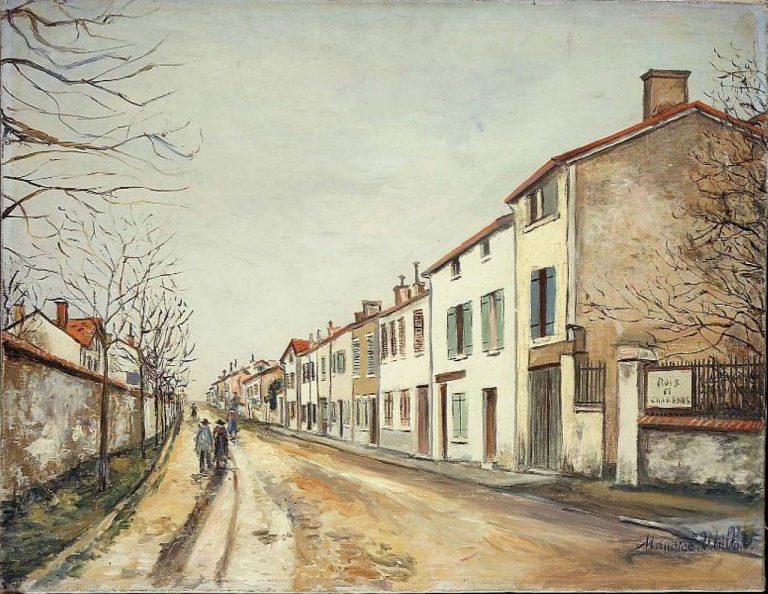
Maurice Utrillo

Last time, we talked about the concept of a solar identity, and hopefully we understand how fundamental this is to the constellation of personality. We have also seen how fundamental the father relationship is to forming that identity. As astrologers, our ideal scenario is to find that our study is uncomplicated; if a person’s identity is profoundly shaped by the paternal relationship, then we need to isolate and understand, through the nativity, the essence of that parent. This is always a challenge, but it is inevitably less so if our subject was born to, grew up with, and related to one paternal figure for their entire life. Increasingly rarely, however, do we find that this scenario is so straightforward.

But what is essential to appreciate is that even complication is absorbed into the persona and becomes a key mechanism of the soul. One father may be easier for the astrologer to grasp, but many fathers have no less implications for identity and its manifestation.

Suzanne Valadon

At 1 p.m. on the day after Christmas in 1883, Marie-Clémentine Valadon gave birth to the infant she named Maurice at 10 Rue du Poteau, at the foot of the Butte Montmartre; no one knows whether it was a relief or a burden for her. Her life was already difficult, and an illegitimate child could not have made her fortunes easier. Marie-Clémentine, herself a love child, had been a circus acrobat and then modelled for renowned painters like (the similarly ill-fated peregrine Pluto native) Henri de Toulouse-Lautrec and Auguste Renoir, before becoming a painter in turn and becoming famous under the name Suzanne Valadon. Even Maurice’s mother had no clue as to who his father might be.

“After Maurice was born, Suzanne Valadon went to Renoir, for whom she had posed as a model nine months prior to that. Renoir looked at the baby and said: ‘He can’t be mine, the color is terrible!’ The next time she went to Degas, for whom she had also posed as a model. He said: ‘He can’t be mine, the form is terrible!’ The odyssey continued for a while, and the young Maurice was ulti­mately given the name of the Spanish art critic Miguel Utrillo, who was offi­cially appointed his step-father but who appar­ently spent very little time with his ‘son.’”
Ruth Bakwin.

The story goes that Suzanne saw an artist she knew, Miguel Utrillo, in a Montmartre cafe, to whom she spilt her woes. The man told her to call the baby Utrillo: 'I would be glad to put my name to the work of either Renoir or Degas!' he proclaimed.

Miguel Utrillo

Maurice went on to become an established artist in his own right, but his road was strewn with difficulty and crisis. He endured a lifetime of alcoholism, and as young as 21, his mother had to lock the wine in a cupboard to keep him from it, nervous breakdowns, months spent locked in asylums, attempted suicides, acts of violence, and trouble with the police.  His creative urge was consid­ered legendary: even when he was picked up again by a police patrol for drunkenness, Utrillo is said to have reached for brush and paint and stood at his easel at the police station. Creativity is another solar imperative, so we begin to see the complexity of the Sun in a chart where there is no father, but also many! Where there is continual trouble with authority figures, but also considerable and inexorable creative talent.

Maurice Utrillo, 26 December 1883, 1300, Paris, France

Maurice Utrillo's chart is highly complex, but rewarding in our quest to glean the signatures of identity and persona. Let us try to break it down a little and see what lessons we can tease out from the seeming confusion of myriad points and stellar entanglements.

First, let us remember that we are studying the formation of identity. In this quest, the Sun is paramount, so we must understand the Sun's condition. Here, the Sun is in the 9th house in Capricorn. This suggests there is already a burden to carry. This is true of all born under Saturn's sign, but some come to rejoice in their responsibilities. And then we have the 9th, Jupiter’s house! Immediately we conceive a conundrum. This is a Sun that feels constraint, difficulty and hardship, but wants to express itself expansively. It seeks improvement and wisdom; it craves a world of excitement and opportunity. The feeling of Jupiter on Saturn is improvement through adversity (alternatively, it can bring hardship through excess); it often, though, gives achievement in spite of hardships, and this is exactly the momentum of Maurice’s life. He started from the lowliest of origins and eventually made of himself a great success, becoming an internationally respected painter. So, on one level, this placement is accurate. On the other archetypal level, we have a burden of illegitimacy, but also the possibility that his father was a great, renowned artist. These are the kinds of conundrums that are often manifest when Jupiter and Saturn combine influences.

Maurice's 'Peregrination' or Feral Chart.

Sun is ruled by a retrograde Saturn in Gemini. Many fathers. Many, disinterested fathers: retrograde Saturn always injects a measure of disinterest into the father relationship. Usually, the father has more important things to do than parent. Saturn is also conjunct Pluto, which deeply intensifies this feeling and creates a great tension and anxiety. Maurice would therefore have been deeply affected by his lack of, and at the same time, multiple paternity. These many fathers, but none interested enough to actually claim him, must have left a deep and painful wound (Chiron is conjunct Pluto). So, there is this aura of heaviness about him, a sense that he is deeply damaged by life, even from the earliest age, and he absorbs this into his idea of himself. Chiron-Pluto, deep pain. Nonetheless, he is determined to improve himself, and he does this through painting, through raw creativity. But why should this be, when his Solar energy doesn't immediately seem so great? That is, until we see the Yod to Sun, from a sextile of Saturn/Pluto/Chiron sextile Jupiter/Ixion. What is Jupiter – Ixion in the 4th house other than the mother’s (4th), many renowned artist (Jupiter) lovers (Ixion)! This compounds easily but painfully with his many disinterested fathers! These combine to make an overwhelming imperative to become a successful (9th) creative man (Sun). He must prove himself their equal. It is a way of saying “see, I am the son of great artists!” Even more remarkable, take a look at his peregrination chart. Sun is feral!

If we now consider planetary strength, we can make a number of observations. Ostensibly, artistic Venus is his strongest planet, but when you factor in the ferality of his unaspected Sun, the picture changes drastically. We can add maybe 30 points to a switched-on feral placement. Note the severe struggle of a 3-point Pluto. Weak Pluto often denotes a destiny that is difficult to control, where powerlessness becomes a feature of the life arc. Contrast this with Donald Trump’s feral Pluto from our last discussion. Maurice is mostly at the mercy of events.

Note too that the Sun rules the 5th house. This suggests that the affairs of the 5th house support the identity. Next, we see that Sun squares Uranus. Maurice was never going to do conventional work (Uranus is in the 6th), and he would have trouble with authority figures. Sun is also conjunct asteroid Dionysus. Drinking wine was part of his identity and was often the reason he would attract the attention of the police. But crucially, being an alcoholic was a key facet of his identity too. And that alcoholism took its toll. His health was compromised to the extent that he was housebound in his later years and could only paint the view from his window, or from a postcard, or from memory. Sun and Dionysus are conjunct Hygeia. With Saturn/Pluto ruling his Sun, it became an inevitable dimension of his very being, drunk, unwell, unorthodox but ultimately passionate, gifted and successful. Every brushstroke that made up his incredible persona is clearly delineated here.

Maurice's health deteriorated drastically in later years.

So, we see many principles reinforced. The persona is defined by the Sun, his placement, aspects and rulerships. Peregrination is paramount. For the Sun, understand the father, because he is the role model even if he does not exist! For Maurice Utrillo, forging his identity was a monumental task because he did not know which great artist to mimic. It was no doubt this exalting pressure (and think of that Saturn-Pluto rulership, pressure which creates diamonds!) which drove his enormous creativity and ultimately rescued him from a life of obscurity and ruin.

5 February 2014 • 6 Min Read Free Essay

The Power of Gentians

Précis & Overview

Expand
Pluto’s dark, elusive nature resists purely intellectual capture, yet his essence centres on the death of form and attachment. In its unrealised state, Pluto drives...

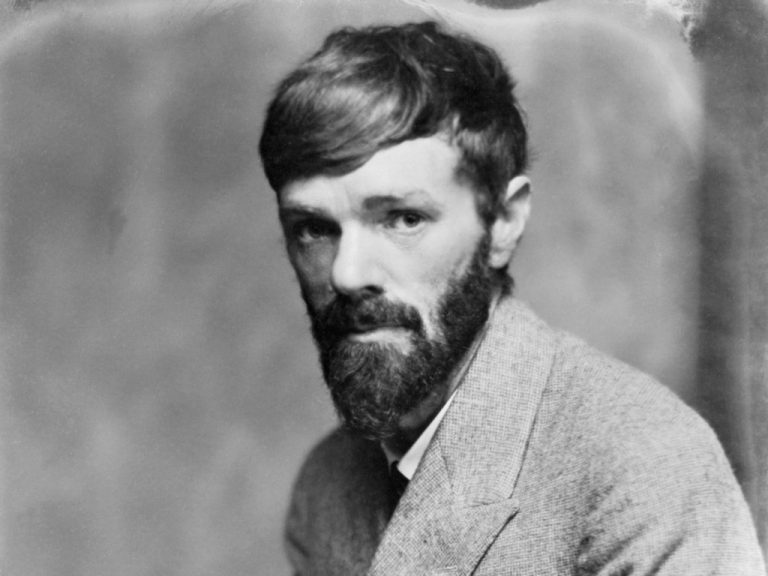
Pluto’s dark, elusive nature resists purely intellectual capture, yet his essence centres on the death of form and attachment. In its unrealised state, Pluto drives insatiable compulsions -- whether wealth, conquest, or control -- that bring fleeting relief rather than genuine satisfaction, much like stepping out of tight shoes only to put them back on. Transformed, however, Pluto offers the hard-won grace of letting go, confronting attachment as the true Hadean battleground. Poetry can carry what prose cannot: D.H. Lawrence’s "Bavarian Gentians" and William Cullen Bryant’s verse use the late-season flower as a dark torch guiding us toward the underworld and mortality, serving as a scrying motif to glimpse and transmute the soul’s depths.