Fire is essential to human life. Water is too, and earth to build all things material, and air to breathe. Of all of these, though, fire is the most ephemeral, because we might live without it. But we cannot live well without it. In earlier times, when fearsome beasts roamed the land, fire ensured light, warmth and safety. Fire is embedded deep in our DNA, because it brought humankind out of the dark and into the sheltering, protective penumbra of the tribe. It was symbolic of belonging. And perhaps only in the last 200 years has fire been relegated from its pinnacle of necessity. We might live a whole life without it, if we are determined to live in a certain place, and in a certain way, but for the entire span of all human life before now, our need of fire was fundamental.
And in more Northerly or Southerly climes, it is still essential to survival. Even in somewhat more temperate regions, it remains desirable. And if you ever venture beyond the urban realm, leaving the conveniences of modernity behind, to live in the woods or the hills for a time, fire is still a necessity, for exactly the same reasons it was millennia ago. Fire is eternal.
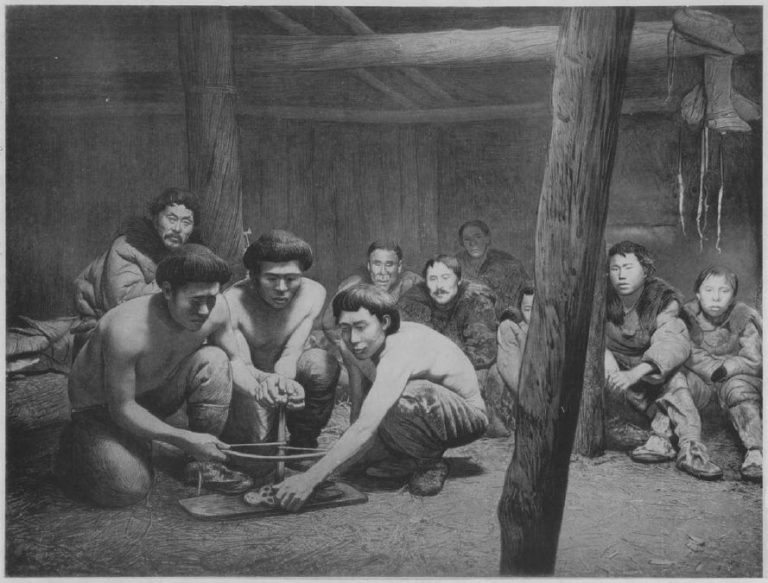
Many indigenous cultures offer clues to the symbolism of fire that so-called civilised man has, for the most part, forgotten. One such remnant of this earlier time is found in the bow-drill, still used today by many Siberian aboriginals, though simpler methods exist. The Koryaks of north-eastern Asia, for example, have fire-boards so full of holes they can no longer be used for kindling, but they keep them anyway and treat them as holy relics on a shrine near the door of the traditional dwelling, the yaranga. A Koryak family sees its expended fire-boards as deities of the sacred fire, guardians of the family hearth, and as guardians of the reindeer. The maritime Koryaks (who are not herders, but fishers and hunters) regard the fire-board as a hunting deity; they call it “father” and feed it with a little fat each time a seal is killed. The nearby Chukchi tribe carve their fire-boards in human form. When these nomadic people move to a new hunting ground, their first act is to take out the sacred fire-board and kindle the sacred fire. In the Chukchi tradition, the fire-board is female and the drill is male; their sacred marriage produces a child of flame. (Kerttula, 2000)
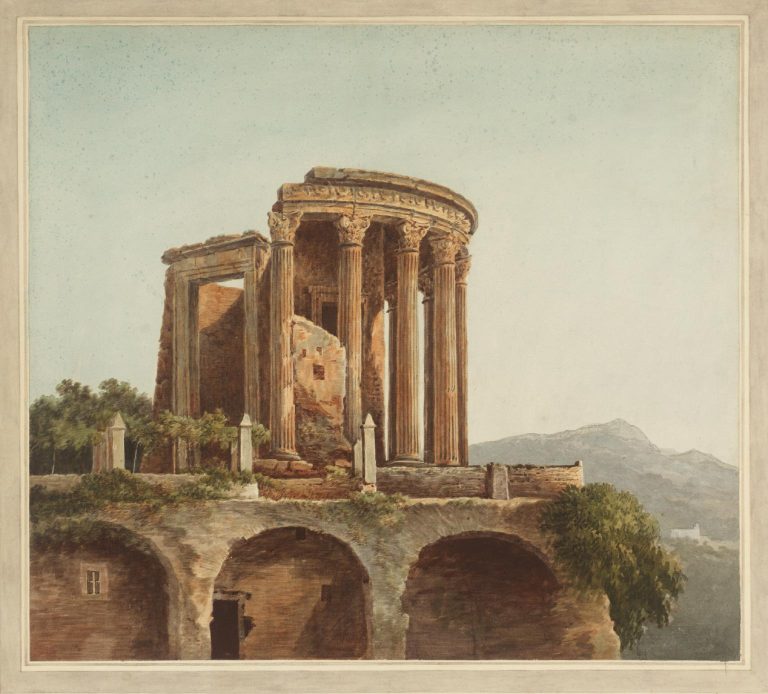
Going back further to ancient Rome, the same respect for the archetypal union of male and female energies was personified in the ever-burning Vestal fire in the Forum to the North of the Palatine, surrounded by the Sacred Grove. It was a literal transposition of the forest fire. In Rome, as in many indigenous cultures, it was an omen of great evil fortune if the fire ever went out. On the few occasions it did, they had to rekindle it by “twirling the point of one stick in the hole of another.” The fire was then fed with oak wood from the Sacred Grove.
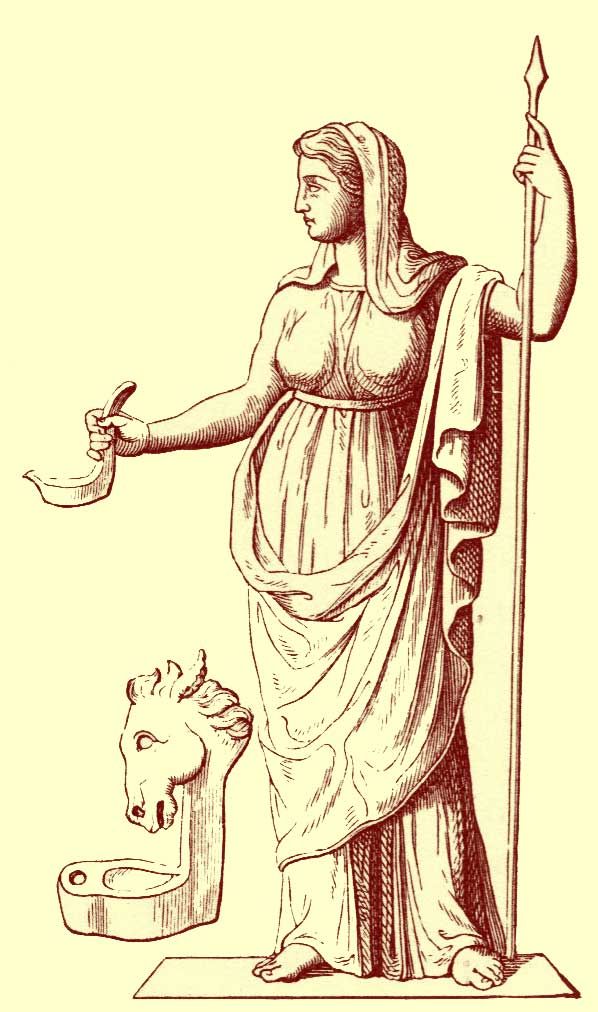
The archetypal communion of masculine and feminine energies underpins the symbolism of the hearth, the central communal space of the tribe and the family, and throughout human history and prehistory, the place where stories were told, family ties were cemented, and food was eaten. It is possibly the holiest of all mundane places, and until relatively recently, every home had its hearth, sacred to many gods across myriad cultures, but in the Western tradition, to Vesta. This foments an appreciation of the cultural significance of Vesta, and her importance in the simple routines of human life; thus, we might appreciate the reverence which she was accorded in past times, and that lives on in many indigenous cultures, but which has been largely forgotten in the Western tradition.
In Rome, the Vestal fire was critical to the well-being of the state, which is why it was considered to be such a bad omen if it went out. Priestesses were charged with keeping the fire burning at all times. These priestesses were unmarried women of noble birth, but under the old Kings of Rome before the Republic, they were likely the King’s daughters. The most famous of the Vestals, Silvia, the mother of Romulus, was said to be a daughter of the King of Alba. In ancient cultures, royal blood was the most powerful magical artefact. On the 15th of April every year, the Vestals would sacrifice pregnant cows to Gaia, tearing the unborn calves from their wombs, burning them, and transporting their ashes to the Parilia, the shepherd’s festival. This early Roman fertility rite mixed the calves’ ashes with the blood of a stallion sacrificed in October the previous year. The resulting paste was used to encourage fertility; it was considered homoeopathic magic to quicken the seed in the ground and the wombs of livestock.
To my mind, this emphasis on fertility jars somewhat with the traditional idea that the Vestals were virginal, until we consider that to the Romans, virginity was not the preserve of those women who had never had sex. Rather, it was used to define married women who did not have sex outside of marriage. This seems to us, in our post-Judeo-Christian culture, to be outlandish, but sexual mores for the Romans were considerably more relaxed than they are today. Many Romans took lovers, and this included married women as much as men; even though adultery was frowned upon in theory, it tended to thrive in practice. So, because it was unremarkable for married women to sleep with men other than their husbands, it became a sign of especial virtue for a wife to refrain from such behaviour.
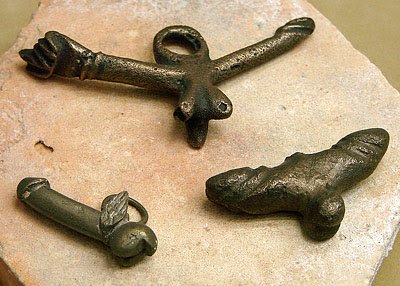
If, then, we are to accept that the Vestal virgins were not a cult of chastity (albeit chastity was an important component of their troth), then what was their function? One reason this question is difficult to answer is that the cult of Vesta grew out of very obscure origins. The worship of Vesta was carried on in the homes of ordinary citizens, a tradition taken from the Greeks and their equivalent goddess Hestia. Few mythological sources mention Vesta, but she seems to have been a direct prototype for the Virgin Mary. In Vesta’s case, a lesser-known god, Fascinus, the embodiment of the divine phallus, magically impregnated her. Fascinus was both the god’s name and the name of his phallic emblems, which were used as amulets to ward off evil. Our word Fascinate derives from this function, since to fascinate originally meant ‘to bewitch’, and the divine phallus protected against such witchcraft. A phallic effigy was hung around the necks of young children, and a model phallus was also placed under the chariots of great generals during their triumph, to avert the evil eye. The Vestal Virgins were responsible for the cult of the phallus in ancient Rome, thus echoing the apparently contradictory nature of Vesta herself, a virgin impregnated by Fascinus, yet closely associated with fertility and procreation. The Vestal Virgins were prized for their chastity, for it “seems as if the virgin was not looked upon as sterile but as a mediator of stored up, potential procreative power” (Beard, 1980). This internal procreative power is represented physically by the sacred, undying fire in their shrine. The flame itself can be seen both as sterile, attested to by Dionysius of Halicarnassus as “incorrupt” and “the purest of divine things” and, at the same time, as procreative, documented by Varro, who states that “mas ignis, quod ibi semen” (fire is male, as is the semen). Fire is also linked to the conception of Roman heroes such as Servius Tullius and Romulus, each conceived from a phallus that emerged from fire. And, as the object occupying the central and most important position of the shrine, fire is “firmly designate[ed]…as the prime object of worship.” (Beard, 1980) The fire, its burning evoking concepts of passion and erotica, in its male and procreative role, in its associations with fertility, finds its parallel and support in the phallic relief on the wall of the temple of Vesta. In Roman religion, the phallus, or fascinus as Pliny refers to it, could take on a religious role. In his Natural Histories, Pliny attests to the presence of a fascinus in the temple of the Vestals, used to ward off evil and protect the sacred shrine; the fascinus was a guardian “which the Vestals worship as a god among the Roman rites.” In this early Roman society, even the goddesses associated with chastity and virginity were closely linked to, and dependent on, the phallus as a protective, apotropaic symbol.
These observations support the hypothesis that, to the Romans, Vesta was worshipped not for her powers of chastity, but for her power to grant fertility. Her chastity was only a part of the magical rite leading to that objective. She was indeed a Goddess of Fecundity who bestowed offspring on both women and livestock.
Associations between the hearth and feminine fertility abound in the bucolic witchery of old. The old Middle Eastern practice of leading the bride thrice around the hearth was ostensibly meant to introduce her to the ancestral spirits of her new household, but its deeper purpose was to promote conception. Croatian brides used to follow the same practice, and the new wife must then stoke the fire with the poker (a phallic symbol), saying “as many sparks spring up, so many cattle, so many male children shall enliven this new home.” (Titelbach, 1900). In Bosnian custom, the bride must sit on a bag of fruit while she pokes the fire three times. Similar customs and practices persist in cultures across the globe, affirming the ancient, mystical links between fire and procreation, which all arise from the wellspring of the early Roman cult of Vesta.
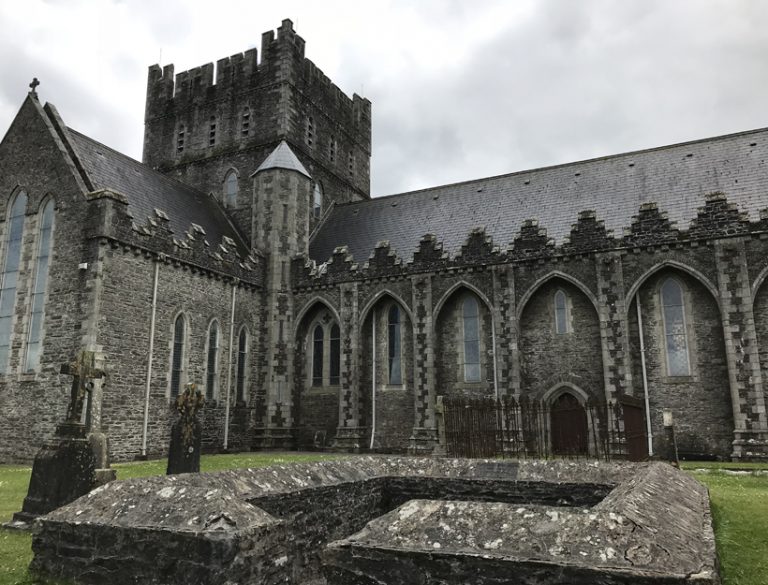
This practice is so ubiquitous in human culture that it persisted even into the Middle Ages in the British Isles. At the monastery of Kildare, it was noted as early as the 12th Century (Cambrensis, 1188), the nuns of St. Brigit tended a perpetual fire up until the dissolution of the monasteries by Henry VIII. The nuns were nineteen in number. Each of them tended the fire for a single night in turn, then they left the fire to their patron on the twentieth night saying “Brigit, take charge of your own fire, for this night belongs to you.” Allegedly, the fire never went out over many decades.
The basis for conceiving of Vesta as the Goddess of an early fertility cult, protectress of the home, and deity of the hearth seems undeniable. In part two, we will begin to explore the symbolism of Vesta and look at how we might incorporate some of that symbolism into our own daily practices, to promote harmony and increase household prosperity.
Thanks for your support.
Until next time,


Beard, M. (1980). The Sexual Status of Vestal Virgins. Journal of Roman Studies, Vol. 70, 12-27.
Cambrensis, G. (1188). The Topography of Ireland.
Kerttula, A. M. (2000). Antler on the Sea: The Yup’ik and Chukchi of the Russian Far East. Cornell University Press.
Titelbach, P. V. (1900). Das Heilige Feuer bei den Balkanslaven. International Archive for Ethnography, 1-2.