Study Taxonomy

aspects

Studies & Essays in aspects

20 total
16 January 2026 • 12 Min Read Members Only

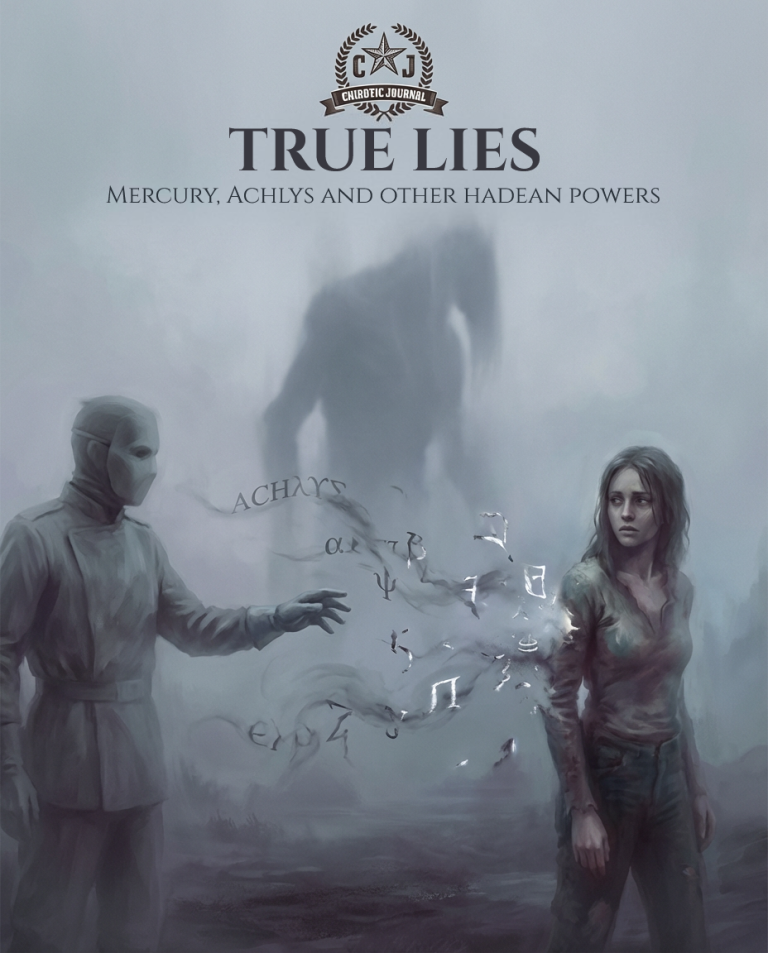
True Lies: Mercury – Achlys, and Renee Good

Précis & Overview

Expand
Examining the January 7th shooting of Renee Nicole Good through symbolic architecture rather than moral judgement or transits, here we focus on a critical natal...

Examining the January 7th shooting of Renee Nicole Good through symbolic architecture rather than moral judgement or transits, here we focus on a critical natal structure, with caveats noted for an unknown birth time, centred on communication, obscuration, judgement, and irreversible consequence. It highlights a likely Sun square Vulcanus and a debilitated Mercury opposed to Zeus alongside two interlocking Thor’s Hammer patterns linking Mercury, Achlys, Orcus, and Pluto. Unlike a single Thor’s Hammer that culminates in concentrated pressure, interlocking hammers form a closed circuit where tension feeds into another crisis without an easy release valve, a dynamic compared to figures such as the Kray twins, Jeffrey Dahmer, Jeremy Clarkson, and Jim Bakker. In Good’s chart, Mercury squared by Achlys with Pluto at the apex, paired with Pluto squared to Orcus with Mercury at the apex, depicts a breakdown of shared meaning and negotiation, where ambiguity and non-negotiable judgement escalate toward finality. The essay links this symbolic anatomy to broader enforcement practices involving unmarked vehicles and masked agents, arguing that obscured identity and authority intensify misinterpretation and reactive danger rather than offering a moral defence of lethal force.

15 June 2022 • 13 Min Read Members Only

Anatomy of the Kite

Précis & Overview

Expand
Examining the astrological Kite configuration as an amalgamation of a defensive Grand Trine and a skill-mediating Talent Triangle, this essay explores how an early psychological...

Examining the astrological Kite configuration as an amalgamation of a defensive Grand Trine and a skill-mediating Talent Triangle, this essay explores how an early psychological refuge can harden into an isolating "golden cage" unless challenged by its central spinal opposition. Tracing the lifecycle of a Grand Trine from childhood sanctuary to midlife comfort zone and eventual penitentiary -- and mapping how the Talent Triangle's sextiles develop innate coping skills around a formative trine threat -- the analysis illustrates these mechanics through a Moon–Saturn–Pluto Kite and a detailed case study of actor Matt Damon. Ultimately, the piece argues that the Kite’s internal opposition serves as a vital relational lifeline, generating the necessary friction to pull the soul out of stagnant self-containment and channel the apex planet's considerable gifts into conscious connection.

29 April 2022 • 6 Min Read Free Essay

Seeing the Astrology with Johnny pt. 2

Précis & Overview

Expand
Continuing the step-by-step chart delineation of Johnny Depp, this essay expands the analytical toolkit beyond major aspects to incorporate minor harmonics—including the quincunx, sesquiquadrate, quintile,...

Continuing the step-by-step chart delineation of Johnny Depp, this essay expands the analytical toolkit beyond major aspects to incorporate minor harmonics—including the quincunx, sesquiquadrate, quintile, and biquintile -- in order to uncover closed energetic circuits and latent talents. Tracing two interconnected aspect patterns in Depp’s nativity—a self-sustaining Moon–Jupiter–Pluto circuit that channels inner emotional tension into financial ingenuity, and a quintile-based "Golden Talent Triangle" linking his Gemini Sun, Scorpio Neptune, and Mars–Uranus conjunction into offbeat creative depth—the analysis demonstrates how closed circuits function to resolve internal pressures. Finally, establishing a disciplined hierarchy for progressively introducing Hadean bodies, Chiron, major asteroids, and trans-Neptunians without overwhelming the chart, the piece prepares the ground for the final synthesis of Depp's deeper psychological architecture.

28 April 2022 • 9 Min Read Free Essay

Seeing the Astrology with Johnny

Précis & Overview

Expand
Demonstrating a disciplined, contemplative method for chart interpretation, this essay outlines a step-by-step approach that strips away outer-planet noise to first isolate a chart’s foundational...

Demonstrating a disciplined, contemplative method for chart interpretation, this essay outlines a step-by-step approach that strips away outer-planet noise to first isolate a chart’s foundational human motivations using only the classical planets through Saturn, Hygiea, major aspects, and tight orbs. Applying this stripped-back framework to the natal chart of Johnny Depp -- tracing his detrimented 6th-house Capricorn Moon, its retrograde Saturn dispositor in the 7th, and a 10th-house Mercury–Venus conjunction serving as the chart's final dispositor -- the analysis constructs a core portrait of a polite, self-effacing figure shaped by early parental neglect and emotional reserve. Finally, reintroducing Uranus, Neptune, and Pluto as a secondary layer of transpersonal pressure, the piece shows how Mars conjunct Uranus in the 1st house, Venus square Uranus, and lunar contacts to Neptune and Pluto overlay flashes of volatility and intimacy scars onto an otherwise gentle, Venus-driven temperament.

28 March 2022 • 6 Min Read Free Essay

The Hidden Trauma of Trines

Précis & Overview

Expand
Challenging the conventional assumption that harmonious aspects signify an effortless life, this essay reframes the astrological trine -- traditionally linked to Jupiter’s preservative nature --...

Challenging the conventional assumption that harmonious aspects signify an effortless life, this essay reframes the astrological trine -- traditionally linked to Jupiter’s preservative nature -- as a proactive, protective life-skill forged to anticipate and neutralise looming formative threats before they harden into open trauma. Illustrating how easy aspects operate as pre-emptive adaptations rather than mere unearned luck -- from Sun trine Jupiter disarming paternal judgement through appealing bonhomie, to personal examples of Moon trine Jupiter and Sun trine Orcus developed in response to maternal criticism and early self-reliance -- the analysis distinguishes the proactive skill-building of trines from the reactive trauma processing of hard aspects. Ultimately, inviting readers to reverse-engineer their own harmonious placements, the piece demonstrates that uncovering what a trine was designed to protect us from reveals the hidden psychological history behind our most natural gifts.

19 January 2022 • 6 Min Read Free Essay

Sun with Neptune: Letting Go

Précis & Overview

Expand
Examining the astrological blend of the Sun and Neptune through their structural principles rather than simple keyword lists, this essay explores how Neptune’s dissolving, sensitising...

Examining the astrological blend of the Sun and Neptune through their structural principles rather than simple keyword lists, this essay explores how Neptune’s dissolving, sensitising currents steadily erode solar vitality, clear self-definition, and worldly ego ambition. Tracing how the Sun’s foundational themes of self-ideal, father figures, and projected male partners interact with Neptune’s oceanic undertow -- manifesting in mysterious health complaints, disillusionment with paternal role models, or relational projections that unravel at midlife -- the analysis underscores Neptune’s fundamentally non-human, undermining nature. Ultimately, we see that integrating a Sun–Neptune contact requires relinquishing the pursuit of external validation and ego-glorification, transforming repeated worldly disappointments into spiritual acceptance and the hard-won grace of "letting go."

19 January 2022 • 6 Min Read Free Essay

Blending Planetary Archetypes

Précis & Overview

Expand
Addressing the central interpretive challenge of astrological synthesis, this essay compares the blending of planetary archetypes to mixing colours into a unique palette rather than...

Addressing the central interpretive challenge of astrological synthesis, this essay compares the blending of planetary archetypes to mixing colours into a unique palette rather than adding up static textbook definitions. Demonstrating how to reason from first principles -- starting with the feisty, philosophically forthright blend of Mars and Jupiter before introducing Saturn’s restraining, structuring, or enervating weight -- the analysis maps out the spectrum of psychological outcomes shaped by each planet's relative dignity, aspect geometry, and developmental timing (contrasting Saturn’s early difficulty with Jupiter’s later ease). Ultimately, we learn that true interpretive mastery comes from contemplating core planetary metaphors and structural laws rather than relying on mechanical cookbook descriptions.

14 October 2021 • 16 Min Read Free Essay

Mars – Pluto in the Female Chart

Précis & Overview

Expand
Examining the Mars–Pluto contact specifically within the female natal chart, this essay reframes its traditional reputation for "superhuman force" as an outer armour of assertive...

Examining the Mars–Pluto contact specifically within the female natal chart, this essay reframes its traditional reputation for "superhuman force" as an outer armour of assertive confidence forged to mask deep-seated Plutonic existential anxiety (*l’appel du vide*) and early relational trauma. Exploring how patriarchal double standards around female independence, sexuality, and safety complicate an inherently masculine archetype -- illustrated through examples ranging from Oprah Winfrey and Elizabeth Barrett Browning to Mel B. and Hillary Clinton -- the analysis traces how early experiences of male dominance or boundary violation create an exhausting "safety conundrum" that often pulls women toward magnetic, dangerous partners while secretly eroding trust and intimacy. Ultimately, we learn that healing Mars–Pluto requires recognising how hyper-vigilance and control masquerade as strength, taking the courageous leap of faith to lower one’s psychological defences and avoid the intoxicating, self-fulfilling trap of familiar danger.

19 December 2020 • 8 Min Read Free Essay

The Once Was Great Conjunction

Précis & Overview

Expand
Stripping away modern apocalyptic hype around the December 2020 Jupiter–Saturn alignment, this essay restores the historical context of classical synodic theory -- clarifying that the...

Stripping away modern apocalyptic hype around the December 2020 Jupiter–Saturn alignment, this essay restores the historical context of classical synodic theory -- clarifying that the event is a 240-year "middle conjunction" rather than a millennial "Great Conjunction," and tracing how court astrologers from Theophilus of Edessa to Ibn Ezra tempered its dynastic scope. Reading the chart through a realistic mundane lens, it anticipates an ideological standoff between entrenched establishment power and humanist ideals, economic contraction, and conditional freedoms rather than sweeping systemic transformation.

6 February 2020 • 4 Min Read Members Only

The Hard Healing of Saturn-Pluto

Précis & Overview

Expand
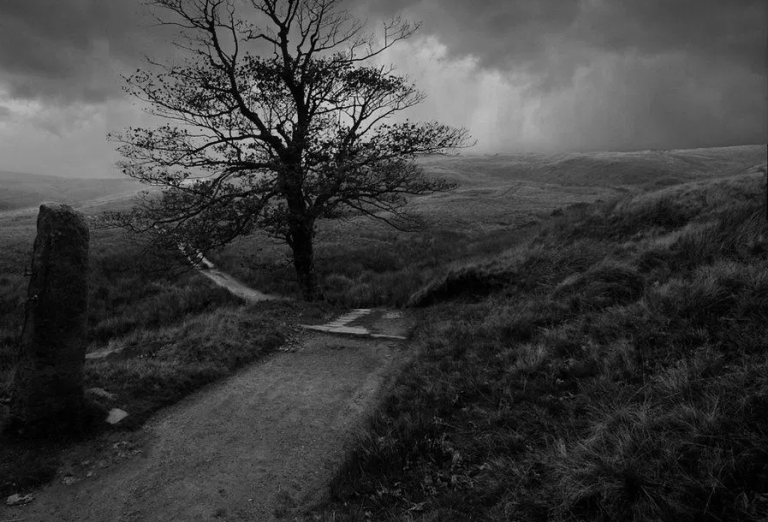
In this essay, I examine the 8th-house Saturn–Pluto conjunction during a solo walk across the abandoned lead-mining landscape of Blanchland Moor, using the symbolism of...

In this essay, I examine the 8th-house Saturn–Pluto conjunction during a solo walk across the abandoned lead-mining landscape of Blanchland Moor, using the symbolism of lead (Saturn) and mining (Pluto) to work through three years of unresolved anger and delayed grief following the death of my stepfather.

25 November 2019 • 5 Min Read Free Essay

Degrees of Separation

Précis & Overview

Expand
Introducing a streamlined approach to Solar Arc directions based on the symbolic principle that one degree of arc equals one year of life, I show...

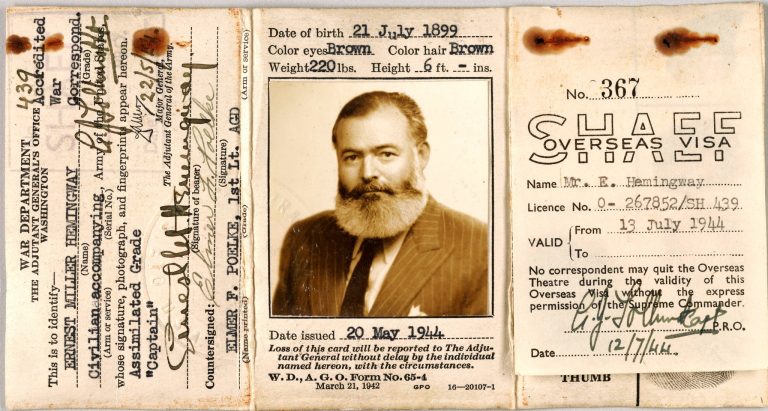
Introducing a streamlined approach to Solar Arc directions based on the symbolic principle that one degree of arc equals one year of life, I show how major biographical milestones can be read directly from a natal chart using simple mental arithmetic. Using Ernest Hemingway’s chart as a case study, I match the exact degree separations between key planets, angles, and even minor points like the asteroid Agnes to pivotal turning points in his life -- from the publication of his first novel and the end of his marriages to his Nobel Prize win and early wartime heartbreak.

1 July 2019 • 12 Min Read Free Essay

Aspects in Balance

Précis & Overview

Expand
Here is another perspective too on the nature of Jupiter and Saturn, and the received wisdom about those planets. Specifically, it allows us to reframe...

Here is another perspective too on the nature of Jupiter and Saturn, and the received wisdom about those planets. Specifically, it allows us to reframe the simplistic idea that Jupiter is good, and Saturn is bad. It is better to say that Jupiter is easy, and Saturn is hard. But as we all know, a smooth sea never made a skilled sailor, and it is commonly held by almost everyone, that while they did not choose the great hardships and challenges of their lives, they would invariably not choose after the fact, to have not lived through them. Often, the making of us is through the great upheavals that we endure. So, in truth, whilst most of us would vote for ease, we rarely applaud it in retrospect.

27 May 2019 • 8 Min Read Free Essay

The Other Side of Paradise

Précis & Overview

Expand
If it is true to say that there are, in an esoteric, but nonetheless verifiable manner, no ‘easy’ aspects, then this ought to be simply...

If it is true to say that there are, in an esoteric, but nonetheless verifiable manner, no ‘easy’ aspects, then this ought to be simply demonstrable; let us find a chart which evinces no hard aspects, and gaze agog at the cosmic realisation that perhaps we have been looking at the entire puzzle of the nativity from a flawed perspective; that rather than seeing things in a binary manner, as in good versus bad, what we are instead witnessing are stylistically differing itineraries leading to a common destination.

To digress for an instant: in spiritual terms, we are all engaged in the same activity, only some of us are cursed with knowing it. This, of course, is why ignorance is allegedly bliss. Imagine believing that a bazillion dollars would solve all your problems! Then all you would need is to spend your entire precious life slavishly grasping at every opportunity to enrich yourself. <irony> Bliss indeed! </irony> Or that fame would bring relief, somehow. Both of these ego-solutions to the riddle of life seem appealing precisely because they are so very obvious, but they are looking in the wrong place, a phenomenon known as the Streetlight Effect.

This isn’t to say that it is impossible to be rich or famous and stay true to the so-called left-hand path, but it does create a great deal of distraction in the form of a feast for the ego, the very faculty that, for most of us, could do with opting for the salad once in a while. Sustenance for the spirit is rarely so grand, but it’s inordinately more wholesome.

We talked last time about how the Law of Saturn means that we earn nothing of lasting value without hard work, but ‘work’ can mean all sorts of things. It can mean going without; it can mean suffering; it can mean loss. So, there is enormous spiritual value in having it all, and losing it all. In this sense, fame and riches can indeed serve our spirit. There is a principle here too, because if we have restlessly endured the long dark night of the soul, then we understand that our once most coveted aspirations, which now endear us to ourselves in their naïveté, and our once most preciously held beliefs that now seem the swivel-eyed meditations of a Bedlam lifer, are now our most persuasive teachers. These are the measures of a deepening. This mechanism, which I call ‘my karma ran over my dogma ’, is ubiquitous in the human spiritual journey and, in my considered view, the principle of ease. Ease sharpens sensitivity to hardship, making its attentions all the more alarming. It is a spiritualising marinade, if you like, applied before the dread black ovens begin to roar around the age of 40.

To bring this back to the astrology, then, I hope it is possible to see that ease in the chart manufactures dogma. It tends toward entitlement. It raises up what must be torn down for the benefit of our deeper purpose, because this is the only concern of our astrology. This is not to imply sentience, but what is the chart if not a brief and bright reflection of the workings of the mechanism we call God? It is the imprint of creation in a moment of time. And the purpose of all life is to grow closer to that perfect source.

Looked at in this way, then, we can say that easy aspects imply an easy flow. They are Jupiter in style. Hard aspects are Saturn in style. Both are subject to the humanising magnetism of the divine, and therefore we, as astrologers, must learn to consider the underpinning principle of all placements and aspects accordingly.

If this seems like an esoteric philosophy, an example will clarify.

Though born into a well-to-do, middle-class family, F. Scott Fitzgerald grew up on the wrong side of the tracks to be a good marriage prospect to the woman he adored, so he set about making himself into the kind of man that was worthy of Zelda Sayre, the ‘Golden Girl’ of Montgomery, Alabama, where he was stationed while in the army. His method was writing, and after some early successes, he went on to write one of America's truly great novels, The Great Gatsby, in 1925 (published exactly at his Saturn return).

Despite his profound ability, he found himself at 40, drunk and defeated by the financial failure of Tender is the Night, feeling his life as a novelist was over. He retreated to North Carolina, lived in various hotels near the sanatorium where Zelda, his wife, ‘his lost Zelda’ as he once called her, was institutionalised for schizophrenia, and wrote a series of essays for Esquire about his failure and ‘emotional bankruptcy’. Echoing the title of his Esquire essays, the years 1936 and 1937 became known as ‘The Crack-Up’. In September 1936, with a broken shoulder from a diving accident, Fitzgerald was emotionally devastated by an article in the New York Post. The front-page headline read “The Other Side of Paradise. Scott Fitzgerald, 40, Engulfed in Despair, Broken in Health He Spends Birthday Regretting That He Has Lost faith in His Star.”

Within another four years, he was dead, never having recaptured his star. Where did it all go wrong?

This astonishing decline might seem incongruous for a man whose chart showed no major hard aspects between principal planets, but it does not surprise.

The stand-out feature is a Grand Trine; it makes up nearly the whole chart. If we understand a Grand Trine to be a three-sided moat, a refuge offering safety and a sense of security, it is all too easy to not step outside it. The gift of the Grand Trine is easily leveraged, but it becomes degenerative if not challenged by hard aspects (which is why the Kite is much more practical)

Mercury is conjunct a very strong Venus in Libra. Beautiful words, and in the 8th, about wealth, but also the mind is turned toward the ease of money and love. Venus in Libra dominates the whole chart! The ease of great wealth and the great romance is the ultimate goal.

This point trines a conjunction of Mars, Neptune and Juno. So much is involved right here. In the 5th, we have the fantasy of being self-made, myriad sexual encounters, or the joy of flirtation, but Neptune undermines Mars's vigour. An inability to stay the course because of wishing things were better or easier. Choosing less wearying options. The dream of independence.

Also, Juno in Gemini – the fragmented wife. Opposing asteroid Atropos: who deteriorates. His Lost Zelda! Juno conjunct Neptune.

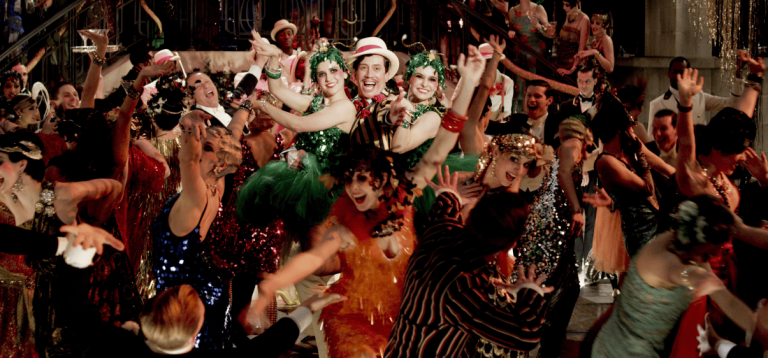
All of these trine the Node: gatherings. You really get a feeling for the great grand parties of the Jazz Age from this particular set of circumstances. The elegance and sophistication of high society with the Libra/8th house planets, the having fun, delightfully chit-chatting and drinking of the Gemini/5th house planets, and the unconventional gatherings of the grand jazz parties of the 1920s, encapsulated in the Aquarius Node. The Grand Trine is more or less the backdrop for Gatsby.

Many other factors are worth considering. Sun in Libra is peregrine. Without this, a debilitated Sun in a succedent house, with the sign of the Sun’s detriment rising, likely does not make for much power, but here the Sun is propelled into special prominence. Gatsby's character was almost certainly autobiographical. A mystery man of uncertain origin who reinvented himself as a rival to Croesus, to win the heart of a girl whose society was far beyond his reasonable aspiration?

Think about the primary exposition of solar energy: the formation of persona. He felt himself defined by Zelda, his wife. Here is a man identified by the great romance that he wrote about so effortlessly, but which degenerated into drink and madness. The Mercury-Venus that rules the Sun is conjunct Chiron and the asteroid Orpheus, thereby being  ‘broken by sadness’.

All the potential is here, and it is put into a slow, deteriorating spiral by the lack of any challenging aspects. The tendency toward ease is dissolution; nothing stiffens it. Look, for example, at the Mars/Neptune conjunction ruling the 2nd house (with Aries intercepted in the 2nd). The undermining (Neptune) of independence (Mars) comes about because of poverty. Fitzgerald died broke, despite his great literary successes. He drank and partied his riches - both material and romantic - away (because of Mars/Neptune in the 5th)

There is always more to say; for example, this chart has almost no fire (motivation), little water (an inability to deal with depression), and not much earth (no roots). This does not help his situation because the great gift is building castles-in-the-air. He could think and write and talk and chit-chat, but he could not build much that was solid and lasting, and the constant easy flow of trines gradually eroded his dreams and ultimately, his resolve to go on living.

Here we then see that despite the almost complete absence of hard aspects (Uranus squares the Node, that’s all), Fitzgerald’s life was an almost total tragedy. His success as a writer, although radiant by any measure, was ephemeral and subjectively fleeting, serving more as a goad to his discontent than as any source of comfort in his final years, and he died in poverty and relative obscurity, of a broken heart, aged only 44.

Next time, we will take the opposite case and see what becomes of the chart with no ease at all.
12 May 2019 • 9 Min Read Free Essay

When Love is Not Enough: Venus-Pluto in the Male Chart

Précis & Overview

Expand
While astrology routinely scrutinises women with Venus–Pluto aspects, I argue that men bearing hard Venus–Pluto contacts often escape scrutiny while projecting their inner contradictions onto...

While astrology routinely scrutinises women with Venus–Pluto aspects, I argue that men bearing hard Venus–Pluto contacts often escape scrutiny while projecting their inner contradictions onto their partners. Driven by an unconscious craving for both public purity and private abandon, the untransformed Venus–Pluto man erodes his partner’s boundaries and self-worth -- a dynamic I illustrate through actor Sean Bean. Rooted in childhood shame where affection required performance, he withholds approval to coerce intimacy, yet fails to offer the emotional security a woman needs to feel safe. Ultimately, healing requires resisting his coercion so he can unlearn transactional love and mature into genuine devotion.

27 April 2018 • 8 Min Read Free Essay

Ikigai and the Earth Houses

Précis & Overview

Expand
In this essay, I explore how the Japanese concept of Ikigai -- a harmonious "reason for being" -- maps onto the astrological earth houses: the...

In this essay, I explore how the Japanese concept of Ikigai -- a harmonious "reason for being" -- maps onto the astrological earth houses: the 2nd, 6th, and 10th. Explaining how we gradually outgrow house tenants in favour of house rulers over time, I examine how the aspects between those rulers shape both livelihood and life quality. Contrasting harmonious examples like Wordsworth and Freddie Mercury with the burdensome wealth of Bob Marley and Jackie Kennedy, I show that hard aspects still generate resources but carry heavy conditions. Finally, I offer a cautionary example in Heinrich Himmler, whose earth-house Grand Trine enabled meteoric rise without moral resistance.

14 May 2014 • 7 Min Read Free Essay

A Change of Perspective

Précis & Overview

Expand
Progressed sign changes remain one of astrology’s most underappreciated yet transformative forces, reshaping our inner drives and sense of self. Because adjacent signs are inherently...

Progressed sign changes remain one of astrology’s most underappreciated yet transformative forces, reshaping our inner drives and sense of self. Because adjacent signs are inherently incongruous -- much like the awkwardness of semi-sextile and inconjunct aspects -- a planet progressing into a new sign demands a profound adjustment, layering fresh priorities onto our natal baseline rather than erasing it. While personal planets shift frequently or gradually, like the Sun moving roughly a degree per year, outer planets crossing critical boundaries via progressed retrogradation trigger dramatic life turning points. Ultimately, tracking these sign transitions reveals how our motivations evolve across a lifetime.

7 March 2011 • 10 Min Read Members Only

Pluto: Enslavement or Self-Mastery, the Choice is Yours (Part 3)

Précis & Overview

Expand
In this essay, I use Shakespeare’s Shylock to explore how Pluto distorts Jupiter into pettiness, vengeance, and status anxiety. Rather than treating Jupiter as purely...

In this essay, I use Shakespeare’s Shylock to explore how Pluto distorts Jupiter into pettiness, vengeance, and status anxiety. Rather than treating Jupiter as purely benign or neutral, I examine how Plutonic compulsion twists generosity into spite and masks deep-seated feelings of inferiority behind outward displays of wealth, prestige, or moral superiority.

I also challenge the temptation to fight over resources or project superiority onto others, pointing instead toward Portia’s call to mercy and the discipline of personal integrity as the true antidote. Drawing on real-world observations of status-driven compulsions, I show how clinging to appearances raises the stakes until everything can be lost. Ultimately, I invite you to test your own attachments against a simple Plutonic question: can you truly let it go -- and if not, why?

18 February 2011 • 7 Min Read Free Essay

Pluto: Enslavement or Self-Mastery, the Choice is Yours (Part 2)

Précis & Overview

Expand
Building on how Plutonic compulsion channels anxiety-driven control through personal planets, I expand the picture to the wider "Plutonic matrix" of a chart. Beyond major...

Building on how Plutonic compulsion channels anxiety-driven control through personal planets, I expand the picture to the wider "Plutonic matrix" of a chart. Beyond major aspects, I look at subtler conduits: rulerships, mutual receptions, declinations, and midpoint pictures like Pluto = Sun/Moon -- using figures from Captain William Bligh to Warren Buffett to show how hidden wiring shapes real-world expression. I also challenge the habit of calling trines "easy" and squares "hard," comparing them instead to a smooth highway versus a seasonal mountain pass. A wide road to Pluto simply means more frequent exposure and comfort with power, which brings its own traps rather than automatic virtue. Finally, I preview the next instalment on Pluto's ties to Jupiter, Saturn, and Uranus, inviting you to spot where Pluto pulls your own strings.

9 November 2010 • 11 Min Read Free Essay

On Shame

Précis & Overview

Expand
Starting from a musician I once knew known as "Pete Woolly-Hat" for hiding his baldness, I explore how shame shapes identity, both when we conceal...

Starting from a musician I once knew known as "Pete Woolly-Hat" for hiding his baldness, I explore how shame shapes identity, both when we conceal perceived flaws and when we flaunt physical traits to seek external validation. I controversially argue that boastful display is often inverted shame, masking insecurity rather than expressing true confidence. Connecting these observations to astrology, I pair the Sun with self-belief and Saturn with shame, explaining how essential and accidental dignity scores reflect innate patterns and early paternal influence. While acknowledging how authority figures or a harsh upbringing can leave a lasting mark, I reflect on my own father's gentle, forgiving example and urge fathers to guide without ever making a child feel not good enough.

10 July 2008 • 4 Min Read Free Essay

Hitler and the Golden Yod

Précis & Overview

Expand
Exploring the fifth harmonic quintile and biquintile—including the "Golden Yod" and "Golden T-square" -- through the lens of John Addey and Bill Tierney's frameworks, I...

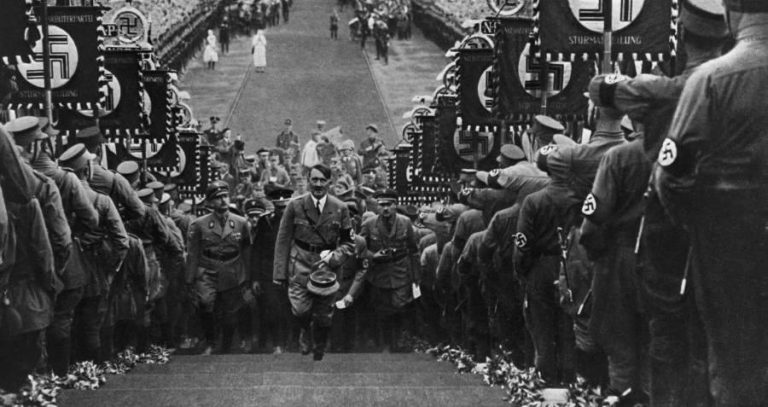
Exploring the fifth harmonic quintile and biquintile—including the "Golden Yod" and "Golden T-square" -- through the lens of John Addey and Bill Tierney's frameworks, I examine how these configurations operate across both creative expression and extreme power dynamics. Using Adolf Hitler's nativity alongside public figures, artists, and historical examples, the essay considers how fifth-harmonic patterns interact with conventional chart factors such as Moon–Saturn and midheaven placements, while noting how elusive they can be in everyday astrological practice without hindsight.