Study Taxonomy

Orcus

Studies & Essays in Orcus

34 total
20 November 2026 • 13 Min Read Free Essay

Orcus opposite Neptune: then and now

Précis & Overview

Expand
Originally published in The Mountain Astrologer (2015) Around the Saturn–Neptune square cycle, I turn to the deeper undercurrent of the Orcus–Neptune opposition, examining how detached,...

Originally published in The Mountain Astrologer (2015) Around the Saturn–Neptune square cycle, I turn to the deeper undercurrent of the Orcus–Neptune opposition, examining how detached, implacable Orcan force collides with spiritual ideals and orthodoxy. With Orcus in Virgo pushing institutions, rules, and literal interpretations to extremes, I trace how this dynamic fuels religious fanaticism and militant schisms like ISIS, while echoing the sixteenth-century Protestant and English Reformations under Henry VIII and Cromwell. Woven through Saturn’s formalising pressure and demanding effort, I argue that when Orcus enters the mix, ideological divisions harden into ruthless conflict that calls for sober caution.

13 November 2026 • 11 Min Read Members Only

Orcus in Cancer in the Third House

Précis & Overview

Expand
Examining the psychological and relational dynamics of Orcus in Cancer in the Third House, this essay explores the tension between conditional familial approval and intellectual...

Examining the psychological and relational dynamics of Orcus in Cancer in the Third House, this essay explores the tension between conditional familial approval and intellectual sovereignty. Tracing how the maternal line enforces an unspoken cognitive code through the natal Moon, it details the alienation of self-censorship alongside the liberation found in reclaiming an uncompromised, authentic voice; illustrated through the chart of Joe Rogan.

12 June 2026 • 7 Min Read Members Only

Orcus in Cancer in the First House

Précis & Overview

Expand
Examining Orcus in Cancer in the First House as an unspoken tribal bargain governing physical presence, body language, and self-presentation, this analysis reveals how conditional...

Examining Orcus in Cancer in the First House as an unspoken tribal bargain governing physical presence, body language, and self-presentation, this analysis reveals how conditional family acceptance -- often brokered through the maternal line and illuminated by the natal Moon -- compels the native to perform an approved identity rather than risk quiet exile. Tracing how challenging aspects to Orcus expose structural fault-lines between family loyalty and authentic adult relationships, it illustrates the internal flattening and emotional distancing -- at times resembling "grey rocking" -- that arise when one's immediate manner is traded for insider status. Ultimately, the telos of this placement reframes banishment from a compromised family system not as a punishment, but as a liberation into quiet self-containment, unvarnished sincerity, and the sovereign gravitas of no longer managing the room's emotional temperature to earn belonging.

3 June 2026 • 10 Min Read Members Only

Orcus in Cancer: Antigone’s Greater Law

Précis & Overview

Expand
Drawing on Sophocles’ tragedy Antigone alongside the philosophical insights of Aristotle and Shakespeare, this essay explores Orcus in Cancer as a moral and psychological crucible...

Drawing on Sophocles’ tragedy Antigone alongside the philosophical insights of Aristotle and Shakespeare, this essay explores Orcus in Cancer as a moral and psychological crucible pitting inherited tribal conformity against a higher, unwritten law of conscience. Both within personal family systems—where unspoken codes and conditional belonging can demand quiet self-negation as the price of inclusion -- and across the wider generational struggle (1954–1979) over national identity, borders, and collective care, the placement asks whether our obligations genuinely serve truth and human wholeness or merely enforce punitive control. Contrasting Orcus’ lower expression of rigid, retributive judgement with its higher expression of justice tempered by mercy and equity, the text shows how true maturity lies in refusing to abandon one's inner truth for tribal approval -- developing instead an independent emotional backbone and a quiet, self-contained integrity that honours only what is sacred and sincere.

30 April 2026 • 23 Min Read Members Only

Paradise Lost, Paradise Found – Pluto and the Alchemy of the Ashlar

Précis & Overview

Expand
Synthesising Jungian depth psychology, stonemasonry symbolism, and the four Hadean archetypes -- Pluto, Achlys, Ixion, and Orcus -- this essay maps the journey of individuation...

Synthesising Jungian depth psychology, stonemasonry symbolism, and the four Hadean archetypes -- Pluto, Achlys, Ixion, and Orcus -- this essay maps the journey of individuation from superficial conformity to authentic selfhood. Contrasting the vast, amorphous Shadow Ocean of Pluto with the twin defensive strategies we build to avoid drowning in our own depths -- Achlys’ subtractive self-erasure and Ixion’s additive grandiosity -- it shows how prolonged repression breeds neurosis and internal division. Through the teleological pull of Orcus, life’s rejections, midlife Hadean squares, and periods of isolation act as the sculptor’s chisel, stripping away false personas and transforming the jagged "Rough Ashlar" of the ego into a perfected, transparent instrument for the Divine Spark.

24 April 2026 • 15 Min Read Members Only

Orcus and the Night Sea

Précis & Overview

Expand
Tracing the ancient motif of the Night Sea journey from Egyptian and Mesopotamian myth to the depth psychology of Carl Jung and Joseph Campbell, this...

Tracing the ancient motif of the Night Sea journey from Egyptian and Mesopotamian myth to the depth psychology of Carl Jung and Joseph Campbell, this essay explores the astrological archetype of Orcus as the Lord of the Oath and guardian of the non-negotiable. Through personal dreams, transits, and periods of solitary pilgrimage, it examines what happens when the external world fails to mirror our inner depth and the social self dissolves. Stripping away the need for audience, validation, and borrowed identities, the initiation of Orcus confronts the seeker with a single, uncompromising question -- who are you when no one is watching? -- and reveals the hard-won sovereignty of standing by an inviolable truth without witness or reward.

5 January 2026 • 7 Min Read Members Only

She’s not There: Achlys and the False Self

Précis & Overview

Expand
Exploring the structural resonance between Donald Winnicott’s theory of the True and False Self and the astrological archetype of Achlys, this essay grounds the "mist...

Exploring the structural resonance between Donald Winnicott’s theory of the True and False Self and the astrological archetype of Achlys, this essay grounds the "mist of non-existence" in early developmental experience. Tracing how an unattuned or emotionally dangerous caregiving environment forces a child to suppress spontaneous gesture in order to preserve attachment, it shows how the False Self—and Achlys’ atmospheric camouflage -- functions not as moral deception or compensatory grandiosity (like Ixion), but as a necessary ornament placed upon a protective shield. Ultimately, the piece clarifies that what presents in adulthood as competence, composure, and social acceptability often conceals an inward sense of unreality, inviting the slow, compassionate work of understanding why the mask was once required so the hidden True Self can safely re-emerge.

22 December 2025 • 7 Min Read Members Only

Illusion’s Half-Life: Achlys, Orcus, and the Moment of Exposure

Précis & Overview

Expand
Examining how Achlysian illusions are seeded in the parental field and inherited as identity, this essay uses the natal charts and transits of Bernie Madoff...

Examining how Achlysian illusions are seeded in the parental field and inherited as identity, this essay uses the natal charts and transits of Bernie Madoff and his father, Ralph Madoff, to illustrate the Hadean interplay between protective mirage and enforced integrity. Tracing how Ralph’s Moon–Achlys square and Jupiter–Pluto tension forged a family script aimed at concealing immigrant poverty and thwarted financial ambition, the analysis shows how that unpalatable truth was perfected in Bernie’s chart via a rare Sun–Achlys Cazimi conjunction embedded within a Taurus stellium alongside Uranus and Kronos -- granting an effortless mastery in projecting the image of the brilliant financier over a hollow fraud. Ultimately, by mapping the 2008–2009 collapse of Madoff’s Ponzi scheme against transiting Orcus crossing his Ascendant alongside hard Pluto–Ixion and Achlys–Orcus contacts, the piece demonstrates the uncompromising Hadean law: while defensive illusions are permitted for survival, once they harden into identity, Orcus inevitably intervenes to dissolve the mist and compel a reckoning with reality.

11 December 2025 • 8 Min Read Members Only

Achlys Cazimi – the Beautiful Illusion, and its Denouement

Précis & Overview

Expand
Examining the rare Sun–Achlys Cazimi conjunction as an exaltation of mythic self-idealisation, this essay explores how seated illusion at the heart of solar identity confers...

Examining the rare Sun–Achlys Cazimi conjunction as an exaltation of mythic self-idealisation, this essay explores how seated illusion at the heart of solar identity confers magnetic destiny while carrying the inevitable seed of disillusionment. Contrasting the trajectories of Rudyard Kipling and Saddam Hussein -- alongside the Hadean Cazimi signatures of William Blake and Carl Lewis -- it demonstrates how the same configuration can elevate a figure into the persuasive voice of an imperial dream or the violent enforcer of an authoritarian cult of personality. Ultimately, the piece argues that because no illusion built on self-unawareness can endure unchallenged, the true measure of Achlys Cazimi lies in how the native meets the inevitable unveiling: whether inwardly through conscience, grief, and humbled humanity, or outwardly through public ruin and unyielding denial.

8 October 2024 • 4 Min Read Free Essay

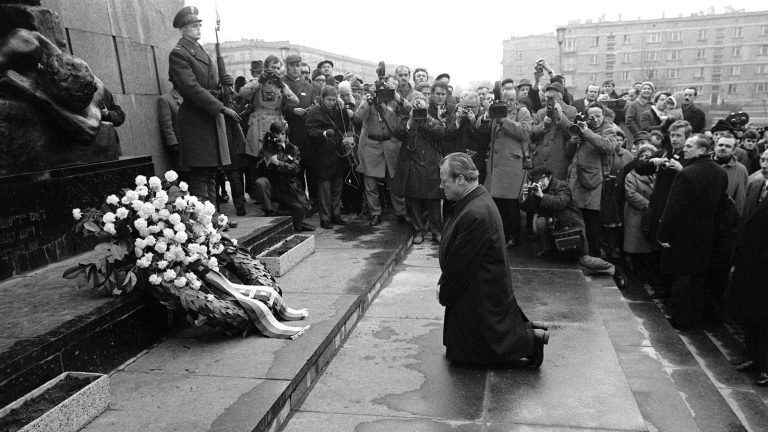
The Kniefall von Warschau and Other Hadean Musings

Précis & Overview

Expand
Examining the generational and biographical impact of overlapping Hadean squares -- when slow-moving trans-Neptunian bodies square their natal positions concurrently or at unusually young ages...

Examining the generational and biographical impact of overlapping Hadean squares -- when slow-moving trans-Neptunian bodies square their natal positions concurrently or at unusually young ages -- this essay traces how specific historical cohorts are compelled into sudden psychological and spiritual reckonings. Illustrating the 1913 cohort’s simultaneous Pluto and Orcus squares through West German Chancellor Willy Brandt’s historic 1970 *Kniefall von Warschau* at the Warsaw Ghetto, alongside the early-life Hadean awakenings of Winston Churchill, Victor Hugo, and Mary Shelley, the analysis maps out how these transits strip away collective and personal facades. Finally, turning toward the 1946–1947 generation and the millennial cohort born around the turn of the century with natal Pluto–Ixion conjunctions in Sagittarius, the piece anticipates how upcoming concurrent Pluto–Ixion squares in midlife will force an abrupt confrontation with curated self-presentation and existential authenticity.

7 October 2024 • 8 Min Read Members Only

Vocations IV

Précis & Overview

Expand
Examining how vocational direction evolves across the lifespan through the astrology of the earth houses (2, 6, and 10) and their natural rulers -- Venus,...

Examining how vocational direction evolves across the lifespan through the astrology of the earth houses (2, 6, and 10) and their natural rulers -- Venus, Mercury, and Saturn -- this essay maps the shift from early-life house placements to the deeper, more nuanced engagement with house rulers that emerges after midlife. Framing the midlife transits of Uranus, Neptune, and Pluto -- alongside the later Hadean squares of Ixion and Orcus -- as a series of existential validity checks, it explores how these outer-planet passages confront the sunk-cost fallacy, expose hollow facades, and test whether our careers reflect authentic soul-purpose rather than mere habit. Ultimately, the piece argues that navigating this transition requires the courage to strip away what has grown stale and realign one’s craftsmanship with genuine passion and meaning.

28 May 2024 • 4 Min Read Free Essay

Walls and Curtains: the Trial of Donald Trump

Précis & Overview

Expand
Examining Donald Trump’s progressed chart and transits during his criminal trial, this essay interprets his progressed Scorpio Ascendant -- ruled by Pluto positioned on the...

Examining Donald Trump’s progressed chart and transits during his criminal trial, this essay interprets his progressed Scorpio Ascendant -- ruled by Pluto positioned on the progressed Midheaven -- as a stark public exposure of private impulses, power dynamics, and hidden behaviours. Tracing how transiting Chiron conjunct natal Hygiea activates his natal Chiron in Libra in the 2nd house, the analysis connects his ongoing grievances over legal fairness to his lifelong progressed Uranus–Orcus conjunction in the 8th house of sex, money, and secrecy -- an aspect rooted in his natal 10th-house Sun opposition to the 4th-house Moon. Ultimately, invoking Marcus Aurelius’ warning against desiring anything that requires "walls and curtains," the piece argues that regardless of the courtroom verdict, Orcus enforces an inescapable reckoning with public accountability whenever privilege is mistaken for exemption from integrity.

16 May 2024 • 13 Min Read Members Only

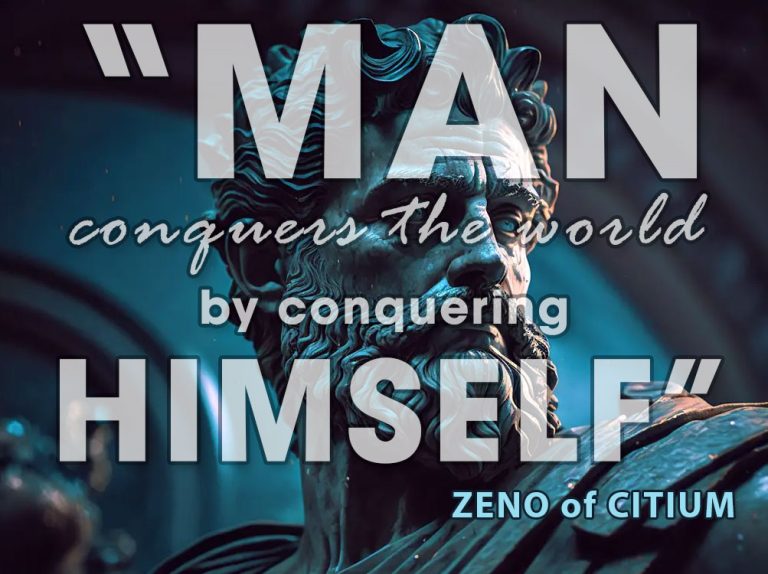
Orcus the Stoic, Ixion the Epicure

Précis & Overview

Expand
Bridging Hadean astrology with classical philosophy, this essay maps the polarity between Orcus and Ixion onto the enduring tension between Stoic self-command and Epicurean indulgence....

Bridging Hadean astrology with classical philosophy, this essay maps the polarity between Orcus and Ixion onto the enduring tension between Stoic self-command and Epicurean indulgence. Contrasting Ixion’s craving for audience, novelty, and sensual excess -- which inevitably leads to satiation, jadedness, and joylessness -- with Orcus’ ascetic simplicity, gratitude, and inward integrity, it illustrates how these opposing currents manifest through the natal chart of Roman Emperor Marcus Aurelius, whose Sun–Orcus opposition and Moon–Saturn mutual reception embodied the discipline of earned rewards. Ultimately, the piece argues that neither rigid puritanism nor unrestrained hedonism serves the soul; true maturity lies in consciously balancing self-discipline with self-tolerance, discovering richness in wanting what one already has rather than exhaustively chasing what one lacks.

11 October 2022 • 13 Min Read Members Only

The Astrology of Addiction

Précis & Overview

Expand
Challenging the astrological cliché that Neptune alone is responsible for alcoholism and substance abuse, this essay explores addiction through the deeper philosophical lens of attachment...

Challenging the astrological cliché that Neptune alone is responsible for alcoholism and substance abuse, this essay explores addiction through the deeper philosophical lens of attachment and intentional living. Illustrating how any planetary dynamic -- from a Venus–Neptune idealisation of love to a Mars–Pluto need for confidence -- can drive dependency when reality feels unendurable, it defines addiction not merely by social dysfunction, but by any reliance on an external substance, habit, or device to regulate inner contentment. Ultimately, contrasting the drift of unconscious attachment with a synergistic philosophy of intention and focus, the piece argues that true meaning and authenticity emerge not from chasing fleeting external relief, but from deliberately aligning every dimension of life with conscious purpose.

1 August 2022 • 10 Min Read Members Only

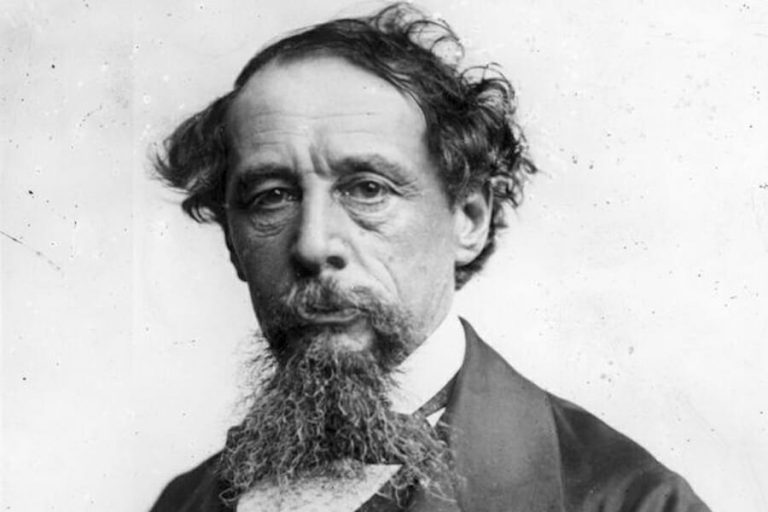
Hard Times – The Astrology of Charles Dickens

Précis & Overview

Expand
Examining the natal chart of Charles Dickens through the mechanics of planetary rulership chains, this essay demonstrates how following dispositors -- from his 5th-house Aquarius...

Examining the natal chart of Charles Dickens through the mechanics of planetary rulership chains, this essay demonstrates how following dispositors -- from his 5th-house Aquarius Sun to Uranus in the 3rd house, and onward to Pluto conjunct Venus on the 6th/7th house cusp -- illuminates both his life trajectory and the enduring power of his greatest novels. Tracing how early childhood trauma -- his father’s imprisonment in the Marshalsea, his gruelling labour at Warren’s Blacking Warehouse, and his mother’s refusal to bring him home, mirrored by his close Moon–Neptune conjunction and Moon–Ixion square -- forged his lifelong identification with the abandoned poor, the analysis contrasts his deeply resonant social works (*David Copperfield*, *Hard Times*, *Little Dorrit*) with his more detached historical or upper-class narratives. Ultimately, the piece reveals how Dickens' authentic creative fire was ignited specifically when his revolutionary 3rd-house writing was fed directly by the Venus–Pluto passion and working-class compassion at the root of his solar rulership chain.

1 November 2020 • 4 Min Read Members Only

The Peregrine Scores

Précis & Overview

Expand
Examining the classical and modern dimensions of peregrination -- from William Lilly’s definition of essential dignity absence to Noel Tyl’s concept of the unaspected, "feral"...

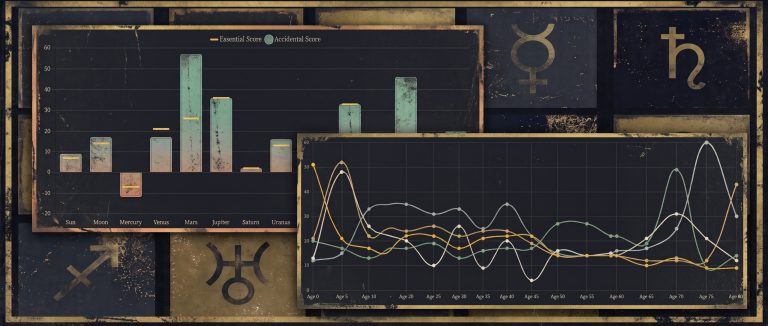
Examining the classical and modern dimensions of peregrination -- from William Lilly’s definition of essential dignity absence to Noel Tyl’s concept of the unaspected, "feral" planet -- this essay explains why peregrine placements defy mechanical chart scoring. Using Nikola Tesla’s chart to illustrate how low-scoring yet unaspected Mercury and Uranus placements can dominate a biography, it outlines a discerning interpretive adjustment for weighting extreme or dormant peregrine energies.

5 October 2020 • 6 Min Read Free Essay

The Power of Composure

Précis & Overview

Expand
Challenging the convention that outer planets operate solely at a generational level, this essay maps a three-stage spiritual alchemy -- moving from raw anxiety through...

Challenging the convention that outer planets operate solely at a generational level, this essay maps a three-stage spiritual alchemy -- moving from raw anxiety through practiced composure to authentic faith -- across the Hadean triad of Pluto, Orcus, and Ixion. By detailing how each archetype’s core existential dread (annihilation, rejection, and suffering) can either calcify into hollow ego defenses or be contained like nuclear fuel to forge the magician, the shaman, and the stoic philosopher, it establishes a framework for reading outer-planet sign placements personally.

6 November 2019 • 7 Min Read Members Only

Communion with Hades

Précis & Overview

Expand
Using the metaphor of a deep mountain tarn, I explore the Hadean underworld of the psyche through the plutino Ixion, suggesting that suffering stems from...

Using the metaphor of a deep mountain tarn, I explore the Hadean underworld of the psyche through the plutino Ixion, suggesting that suffering stems from self-interest and resentment, and that true liberation comes from accepting pain rather than resisting it. Reflecting on past treks to Llyn Idwal in Snowdonia -- a bleak, tempest-swept landscape resonant with the austere solitude of Orcus -- I consider how inhospitable wild places mirror the uncomfortable depths of Hadean placements, closing with Rainer Maria Rilke’s counsel on embracing the creative solitude of one's own inner growth.

20 June 2019 • 10 Min Read Members Only

Vladimir Nabokov: No Rest for the Wicked?

Précis & Overview

Expand
In examining Vladimir Nabokov’s life and chart, I see a man defined not by ease, but by a profound array of tense squares and Grand...

In examining Vladimir Nabokov’s life and chart, I see a man defined not by ease, but by a profound array of tense squares and Grand Crosses. Displaced from his aristocratic Russian homeland by revolution, he spent his life in exile, burdened by the Saturnine weight of early loss -- including his father’s murder and separation from his youthful love, Tamara.

Rather than degenerating, his heavily aspected chart forged extraordinary resilience and genius, yielding monumental literary and scientific success. Ultimately, I view his controversial masterwork Lolita and his fixation on lost youth as manifestations of an exile dynamic where adolescent love became a poignant motif for his vanished world.

24 April 2019 • 11 Min Read Free Essay

D.H. Lawrence and the Astrology of Outcasts

Précis & Overview

Expand
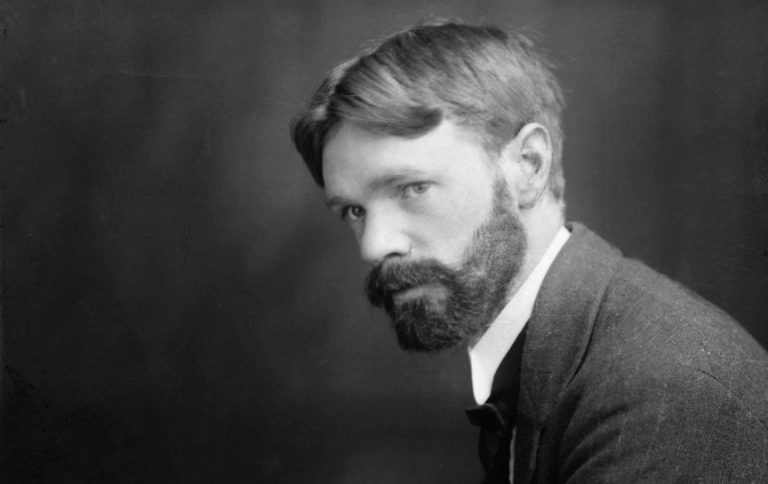
In examining D.H. Lawrence’s life and chart, I trace his lifelong status as an outcast to a peregrine Orcus on his 4th-house cusp, signalling profound...

In examining D.H. Lawrence’s life and chart, I trace his lifelong status as an outcast to a peregrine Orcus on his 4th-house cusp, signalling profound alienation from home, class, and roots. Raised by an aspirational mother (12th-house Moon–Venus square Mars) who felt she had married beneath her to a coal miner, Lawrence internalised a refinement that set him apart from his working-class community. Because his remarkably strong Uranus squares a weak Saturn in Cancer, radical rebellion consistently triumphed over social orthodoxy—fuelling his taboo-breaking literature, his marriage to German aristocrat Frieda von Richthofen, and the wartime persecution that drove him into permanent exile.