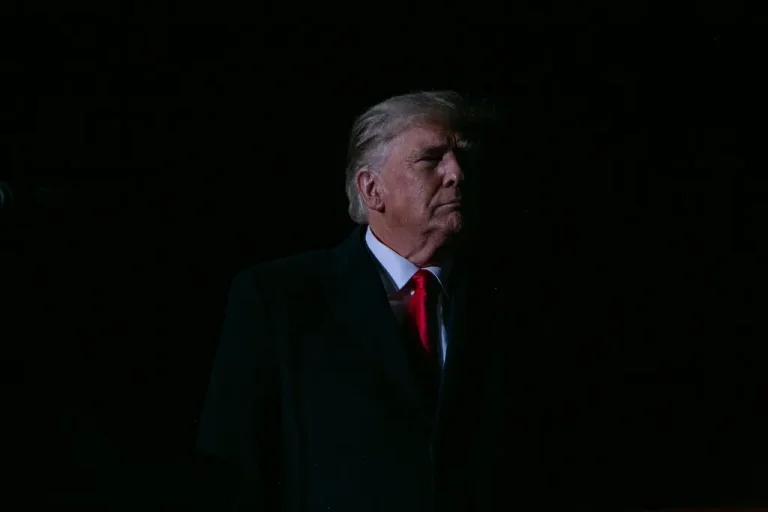
As we have seen in our recent study of US President Donald Trump, issues of paternity are central to understanding identity. Identity is an ever-evolving...
As we have seen in our recent study of US President Donald Trump, issues of paternity are central to understanding identity. Identity is an ever-evolving and ever-elusive construct that the astrologer must understand to help an individual refine and conceptualise their sense of self. Some argue that there is no greater mission in astrology.
Roman theatre masks.
Carl Jung first coined the term ‘persona’ as a psychological concept. Originally, it was a Latin word for an actor’s mask, presenting the audience with a predetermined face they could identify with and relate to. This definition aligns with Jung’s view that the persona is ‘the mask or appearance that one presents to the world.’
This is always and forever a work in progress, and it is generally acknowledged that from about the age of 21, we are involved in this process as a more or less full-time endeavour; refining, shaping and getting to know our own persona so that we might be more successful at projecting ourselves in the world. Broadly, psychologists view a healthy persona as easing social inclusion and effectiveness, but only up to a point. Once a person becomes overly reliant on their 'ideal self ', it can have adverse effects on their personality. Jungian psychologist James Hillman, for example, believed that once a person loses their identity to a persona, they become an archetypal figure. This raises an important distinction: whilst our persona can elevate and support our sense of identity, if we fail to police our authenticity and keep the persona in check, it can eventually become a caricature of who we are. Thus, we can see that a person with a weak persona fails to project effectively, whilst a person with too strong a persona might become a figure of parody, a paper tiger, if you like. The key skill is to have just enough persona to ease our progress through life.
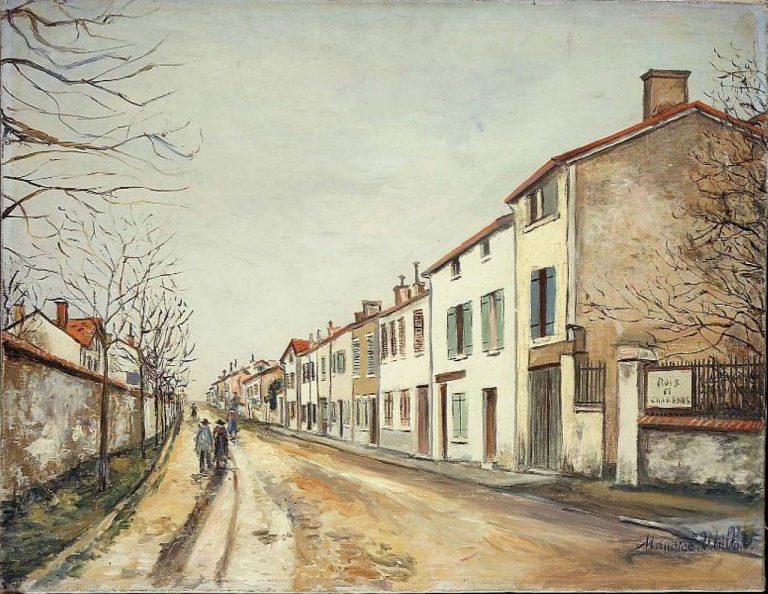
Maurice Utrillo
Last time, we talked about the concept of a solar identity, and hopefully we understand how fundamental this is to the constellation of personality. We have also seen how fundamental the father relationship is to forming that identity. As astrologers, our ideal scenario is to find that our study is uncomplicated; if a person’s identity is profoundly shaped by the paternal relationship, then we need to isolate and understand, through the nativity, the essence of that parent. This is always a challenge, but it is inevitably less so if our subject was born to, grew up with, and related to one paternal figure for their entire life. Increasingly rarely, however, do we find that this scenario is so straightforward.
But what is essential to appreciate is that even complication is absorbed into the persona and becomes a key mechanism of the soul. One father may be easier for the astrologer to grasp, but many fathers have no less implications for identity and its manifestation.
Suzanne Valadon
At 1 p.m. on the day after Christmas in 1883, Marie-Clémentine Valadon gave birth to the infant she named Maurice at 10 Rue du Poteau, at the foot of the Butte Montmartre; no one knows whether it was a relief or a burden for her. Her life was already difficult, and an illegitimate child could not have made her fortunes easier. Marie-Clémentine, herself a love child, had been a circus acrobat and then modelled for renowned painters like (the similarly ill-fated peregrine Pluto native) Henri de Toulouse-Lautrec and Auguste Renoir, before becoming a painter in turn and becoming famous under the name Suzanne Valadon. Even Maurice’s mother had no clue as to who his father might be.
“After Maurice was born, Suzanne Valadon went to Renoir, for whom she had posed as a model nine months prior to that. Renoir looked at the baby and said: ‘He can’t be mine, the color is terrible!’ The next time she went to Degas, for whom she had also posed as a model. He said: ‘He can’t be mine, the form is terrible!’ The odyssey continued for a while, and the young Maurice was ultimately given the name of the Spanish art critic Miguel Utrillo, who was officially appointed his step-father but who apparently spent very little time with his ‘son.’”
Ruth Bakwin.
The story goes that Suzanne saw an artist she knew, Miguel Utrillo, in a Montmartre cafe, to whom she spilt her woes. The man told her to call the baby Utrillo: 'I would be glad to put my name to the work of either Renoir or Degas!' he proclaimed.
Miguel Utrillo
Maurice went on to become an established artist in his own right, but his road was strewn with difficulty and crisis. He endured a lifetime of alcoholism, and as young as 21, his mother had to lock the wine in a cupboard to keep him from it, nervous breakdowns, months spent locked in asylums, attempted suicides, acts of violence, and trouble with the police. His creative urge was considered legendary: even when he was picked up again by a police patrol for drunkenness, Utrillo is said to have reached for brush and paint and stood at his easel at the police station. Creativity is another solar imperative, so we begin to see the complexity of the Sun in a chart where there is no father, but also many! Where there is continual trouble with authority figures, but also considerable and inexorable creative talent.
Maurice Utrillo, 26 December 1883, 1300, Paris, France
Maurice Utrillo's chart is highly complex, but rewarding in our quest to glean the signatures of identity and persona. Let us try to break it down a little and see what lessons we can tease out from the seeming confusion of myriad points and stellar entanglements.
First, let us remember that we are studying the formation of identity. In this quest, the Sun is paramount, so we must understand the Sun's condition. Here, the Sun is in the 9th house in Capricorn. This suggests there is already a burden to carry. This is true of all born under Saturn's sign, but some come to rejoice in their responsibilities. And then we have the 9th, Jupiter’s house! Immediately we conceive a conundrum. This is a Sun that feels constraint, difficulty and hardship, but wants to express itself expansively. It seeks improvement and wisdom; it craves a world of excitement and opportunity. The feeling of Jupiter on Saturn is improvement through adversity (alternatively, it can bring hardship through excess); it often, though, gives achievement in spite of hardships, and this is exactly the momentum of Maurice’s life. He started from the lowliest of origins and eventually made of himself a great success, becoming an internationally respected painter. So, on one level, this placement is accurate. On the other archetypal level, we have a burden of illegitimacy, but also the possibility that his father was a great, renowned artist. These are the kinds of conundrums that are often manifest when Jupiter and Saturn combine influences.
Maurice's 'Peregrination' or Feral Chart.
Sun is ruled by a retrograde Saturn in Gemini. Many fathers. Many, disinterested fathers: retrograde Saturn always injects a measure of disinterest into the father relationship. Usually, the father has more important things to do than parent. Saturn is also conjunct Pluto, which deeply intensifies this feeling and creates a great tension and anxiety. Maurice would therefore have been deeply affected by his lack of, and at the same time, multiple paternity. These many fathers, but none interested enough to actually claim him, must have left a deep and painful wound (Chiron is conjunct Pluto). So, there is this aura of heaviness about him, a sense that he is deeply damaged by life, even from the earliest age, and he absorbs this into his idea of himself. Chiron-Pluto, deep pain. Nonetheless, he is determined to improve himself, and he does this through painting, through raw creativity. But why should this be, when his Solar energy doesn't immediately seem so great? That is, until we see the Yod to Sun, from a sextile of Saturn/Pluto/Chiron sextile Jupiter/Ixion. What is Jupiter – Ixion in the 4th house other than the mother’s (4th), many renowned artist (Jupiter) lovers (Ixion)! This compounds easily but painfully with his many disinterested fathers! These combine to make an overwhelming imperative to become a successful (9th) creative man (Sun). He must prove himself their equal. It is a way of saying “see, I am the son of great artists!” Even more remarkable, take a look at his peregrination chart. Sun is feral!
If we now consider planetary strength, we can make a number of observations. Ostensibly, artistic Venus is his strongest planet, but when you factor in the ferality of his unaspected Sun, the picture changes drastically. We can add maybe 30 points to a switched-on feral placement. Note the severe struggle of a 3-point Pluto. Weak Pluto often denotes a destiny that is difficult to control, where powerlessness becomes a feature of the life arc. Contrast this with Donald Trump’s feral Pluto from our last discussion. Maurice is mostly at the mercy of events.
Note too that the Sun rules the 5th house. This suggests that the affairs of the 5th house support the identity. Next, we see that Sun squares Uranus. Maurice was never going to do conventional work (Uranus is in the 6th), and he would have trouble with authority figures. Sun is also conjunct asteroid Dionysus. Drinking wine was part of his identity and was often the reason he would attract the attention of the police. But crucially, being an alcoholic was a key facet of his identity too. And that alcoholism took its toll. His health was compromised to the extent that he was housebound in his later years and could only paint the view from his window, or from a postcard, or from memory. Sun and Dionysus are conjunct Hygeia. With Saturn/Pluto ruling his Sun, it became an inevitable dimension of his very being, drunk, unwell, unorthodox but ultimately passionate, gifted and successful. Every brushstroke that made up his incredible persona is clearly delineated here.
Maurice's health deteriorated drastically in later years.
So, we see many principles reinforced. The persona is defined by the Sun, his placement, aspects and rulerships. Peregrination is paramount. For the Sun, understand the father, because he is the role model even if he does not exist! For Maurice Utrillo, forging his identity was a monumental task because he did not know which great artist to mimic. It was no doubt this exalting pressure (and think of that Saturn-Pluto rulership, pressure which creates diamonds!) which drove his enormous creativity and ultimately rescued him from a life of obscurity and ruin.