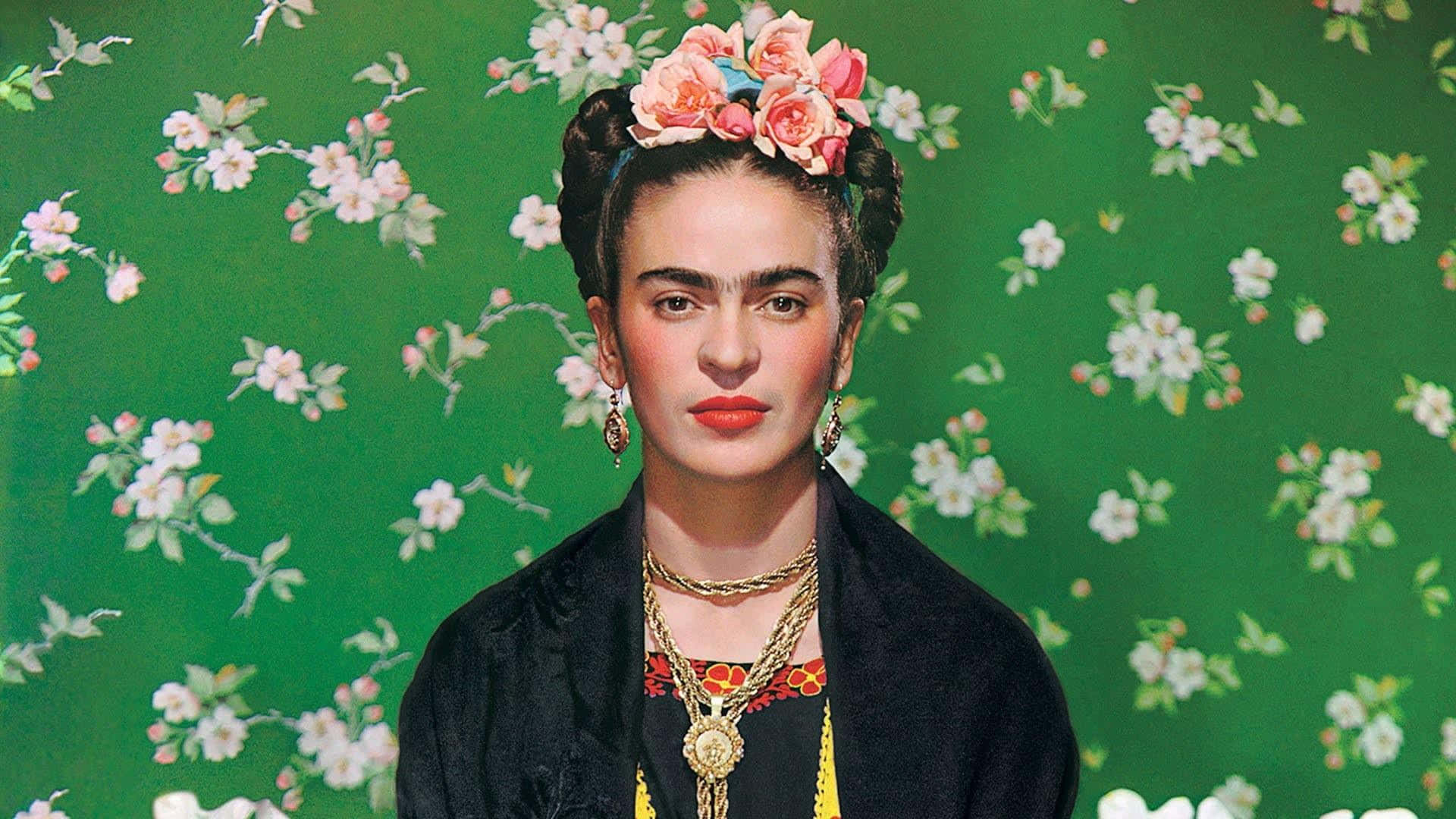
Frida Kahlo is a well-known trailblazing artist. For example, she was the first Mexican artist to have a painting displayed in the Louvre. But she discovered her passion for painting almost by accident. Well, literally because of an accident that nearly killed her. In 1922, a bus she was on collided with a car, and she was flung clear of the wreckage and impaled on a metal handrail. She later claimed that the length of steel entered her flank and exited through her vagina; this was perhaps untrue. She also broke her collarbone, two ribs, her leg in eleven places, and her spine and pelvis, each in three separate places. It was a horrific and life-changing injury. She was 18 years old.
Strangely, a fellow passenger had been carrying a pot of paint. When she was lying in the street, dying, she was bright gold.
Let’s take a glance at her astrology.
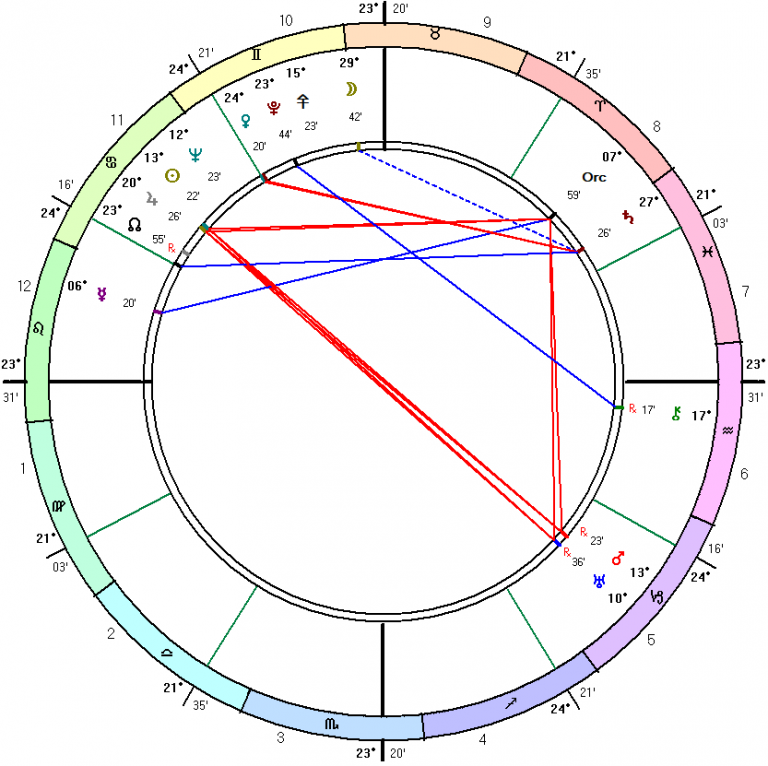
She was born in 1907 and contracted polio at age 6. This kind of illness, or, if you like, delicacy of vitality, is common in those born with the Sun closely configured to Neptune. In some sense, the identity is configured with an impairment. It’s interesting to note that polio misshapen her foot and right leg. That’s the reason she wore long skirts her entire life. Saturn is at 27 Pisces, the degree for the right foot. She compensated for this limitation (Saturn) by wearing 3 or 4 socks on her right foot and a high-heeled right shoe.
Here’s what is interesting too, note the placement of Chiron, six degrees from the 4th harmonic with every angle of the chart. Age six would be critical in manifesting (Asc) disability (Chiron). Technically, Chiron is peregrine (no major aspect (within 5 or 6 degrees)) to any major personal planet. This archetype therefore has no means of natural expression. It must either wither and die or become extremely strong to come out into the light. Think of a tree far under the forest canopy; it will either die away or must grow very tall and strong to reach the light above. That is peregrination.
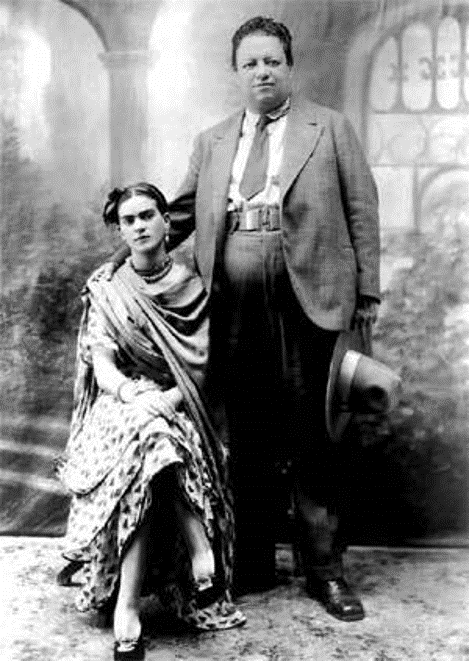
Then perhaps you can notice the separation between Venus/Pluto and Sun/Neptune opposing Mars/Uranus? Yes, about 18 degrees. So, at age 18, a shocking accident (Mars/Uranus) confirmed her status as an invalid (Sun/Neptune), but it also unleashed her deep passion for art (Venus/Pluto). We will think about that momentarily.
Perhaps you can grasp the impetus to tell her “shocking” story about the injury to her vagina. We can see Sun/Neptune as the invalid identity, opposing Mars and Uranus, as the impetus to shock, to be very bold. And wherever Uranus is found, there is this rejection of the qualities of sign and house. With Uranus in Capricorn and the 5th, the rejection is in the light-hearted conventions of things. “How are you, Frida? I heard about your accident; what happened?” You can imagine the scene. “Well, you’ll never believe what happened…” She would have said, with a Uranian glint in her eye.
And of course, with Uranus in the 5th and Capricorn, you reject the conventions of love. Frida married Diego Rivera, Mexico’s most famous painter and 20 years her senior. People called them “the elephant and the dove”.
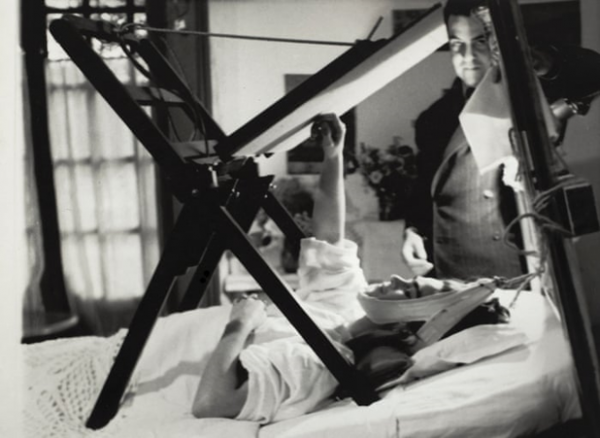
But her passion for art – and artists – came about as a direct result of her accident. She took up painting only to pass the long months of convalescence. Her father, a clever German, built her an easel for her sickbed, and she painted every day in an intense outpouring of feeling, expressing her grief and anguish at what had happened, and her fears about a far more uncertain future.
We could say very much more; her astrology is fascinating and rich with possibility. What I very much want to allude to in this sketch, however, is the potentiality of asteroid Hephaistos, as we understand it in our astrological lexicon.
- She suffered an injury to her foot, causing her to have a lifelong limp.
- She married someone who, in looks and attractiveness, was far below her own standard. Indeed, this was true in both directions. She was a poor Mexican girl; he was probably the most respected man in Mexico. A great artist. She was unknown, so with Hephaistos in the 10th, there was an enormous disparity in success, public standing and respectability.
- Her disability became the catalyst for her creativity.
You may have noted that, like Chiron, Hephaistos is technically peregrine and therefore can go ‘off the reservation’ at any time. The fact that these points are in trine gives them a standalone peregrine conduit of power, meaning that the entire circuit is, in a sense, in a space of its own and can, in a very real way, run the whole chart. This is an important principle to keep in mind: if you find a similar configuration in your chart, it may explain much.
Hopefully, it is clear that the extant themes of Hephaistos became so exaggerated in Frida’s short life that she manifested outright, overt Hephaistean qualities! Her death at the age of 47 came within 72 hours of Pluto’s transit to her Ascendant, a mortal health crisis.
Thanks for your support.
Until next time,

What about the role of Orcus being so prominent in the chart?
The story is in the placement, but informed by the ruler, so if we look at Mars and all that entails, then there is a need to endure (Orcus is conjunct asteroid Admete, which exacerbates this signature) to an extreme degree, the issue of mortality, life and death, and the depths of her fragility, her mortality. Her artistic work is profoundly resonant with the Mexican Dia de los Muertos, for example, and this has an Orcus in the 8th feel to it.
I am not adequately familiar with her biography though to make too many assertions about this placement, I am sure further study would yield a wealth of correlations.