Hermeneutics · Depth Psychology · Technical Astrology
The Hidden Life is Symbolic
Astrology is neither fatalism nor fortune-telling. It is the discipline of separating the defensive strategies that kept you safe in the past from the deeper purpose calling you forward.
Core Philosophy
All Astrology Is Defensive
The caveat is that “all astrology is defensive” while we are unconscious. We become who we are largely through adaptation — to our early environment, to unspoken family demands, and to the shocks and passages of a life. Seen this way, the birth chart is a moment in time that captures that moment’s quality. It maps our survival strategies: the defensive architecture we built to navigate the crucible of early experience.
What works in the early family, however, often becomes a handicap in the wider world. We cannot understand our real motives, our recurring blocks, or what we are genuinely here to do until we recognise those formative pressures for what they are. In this way, we see two formative forces at work:
I. shadow
Early conditioning, family negotiation, and protective armour — the automatic reflexes that once ensured survival but can stall later development.
II. telos
The deeper vocation, mission, and developmental necessity asking to be lived once defensive scripts are made conscious and worked through.
My work helps people separate the two. When formative reflexes run unchecked, they hold us back from our telos, our conscious life and direction. Once those patterns enter consciousness, the chart stops being a script of repetition and becomes an instrument of deliberate choice.
01 · Inheritance
My Salad Days
My introduction to the specialist branch of hermeneutics called ‘astrology’ began long before I knew the discipline had a name, in my grandfather Allan Markham’s (1920–1981) library. An art dealer by day and an astrologer by night, he was also a Kabbalist and a member of Dion Fortune’s Society of the Inner Light. To him, art, mythology, astrology, and the esoteric traditions were simply different dialects of the same underlying inquiry. I have a large collection of his charts and writings that illuminate his contemplations.
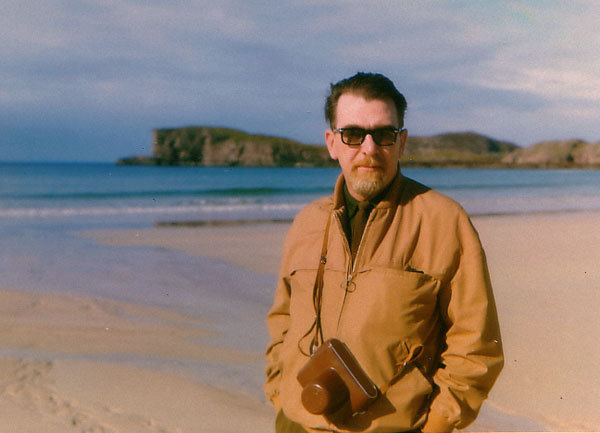
At eleven, I pulled his copy of Reinhold Ebertin’s The Combination of Stellar Influences from the shelf and experienced a sudden recognition. In that instant, I immediately knew my purpose! It was a living language of symbols. I devoured his dog-eared volumes of Alan Leo, Alexandre Volguine, and Isabel Hickey — and when he died, that library passed to me.
Alongside the ephemerides were poetry books. Robert Bly and D. H. Lawrence were my favourites. Reading poetry taught me that symbols are never exhausted by a literal reading; they speak through image, tension, and resonance. That early immersion in the poetic imagination naturally led me to read Carl Jung at university and to a lifelong conviction that astrological interpretation, like all hermeneutic inquiry, is an act of depth-psychological excavation rather than mechanical rule-following.
02 · Craft & Calculation
The Iron Cage Days
My first paid chart interpretation dates to 1984, at seventeen — exchanged for two bottles of Bordeaux, which my client generously stayed to help me drink. Shortly afterwards, I answered a local newspaper advert for an astrological service, expecting to meet a fellow practitioner, only to find a funny little man who sheepishly admitted he knew nothing about astrology; he had simply bought new software and a printer because it looked like a promising business opportunity.
That encounter framed a problem that has defined modern astrology ever since. Calculating charts by hand with ephemerides and tables of houses was slow, yet the labour itself created a contemplative space — a contemplation which I loved and valued for its revelation. A chart was encountered rather than merely generated. Instant computation threatened that reflective space, turning interpretation into an afterthought.

By the late 1990s, my working life placed me squarely inside that paradox. As a web developer for Green Cathedral (one of the UK’s earliest new media startups) and later at St John’s College, Cambridge — where I built a world-first e-learning portal — I learned how analytical systems behave at scale. The experience began to direct itself toward astrology: how do we recover contemplation within computation, making the digital paradigm serve the symbolic imagination rather than replace it? Indeed, this is a core tenet of my new book, Cathedral Collapse.
That inquiry eventually took concrete form in The Dignity Engine — a quantitative and depth-psychological workbench designed to isolate which planetary forces genuinely govern a chart and translate that hierarchy into meaningful psychological insight.
03 · Vocation
Returning Home
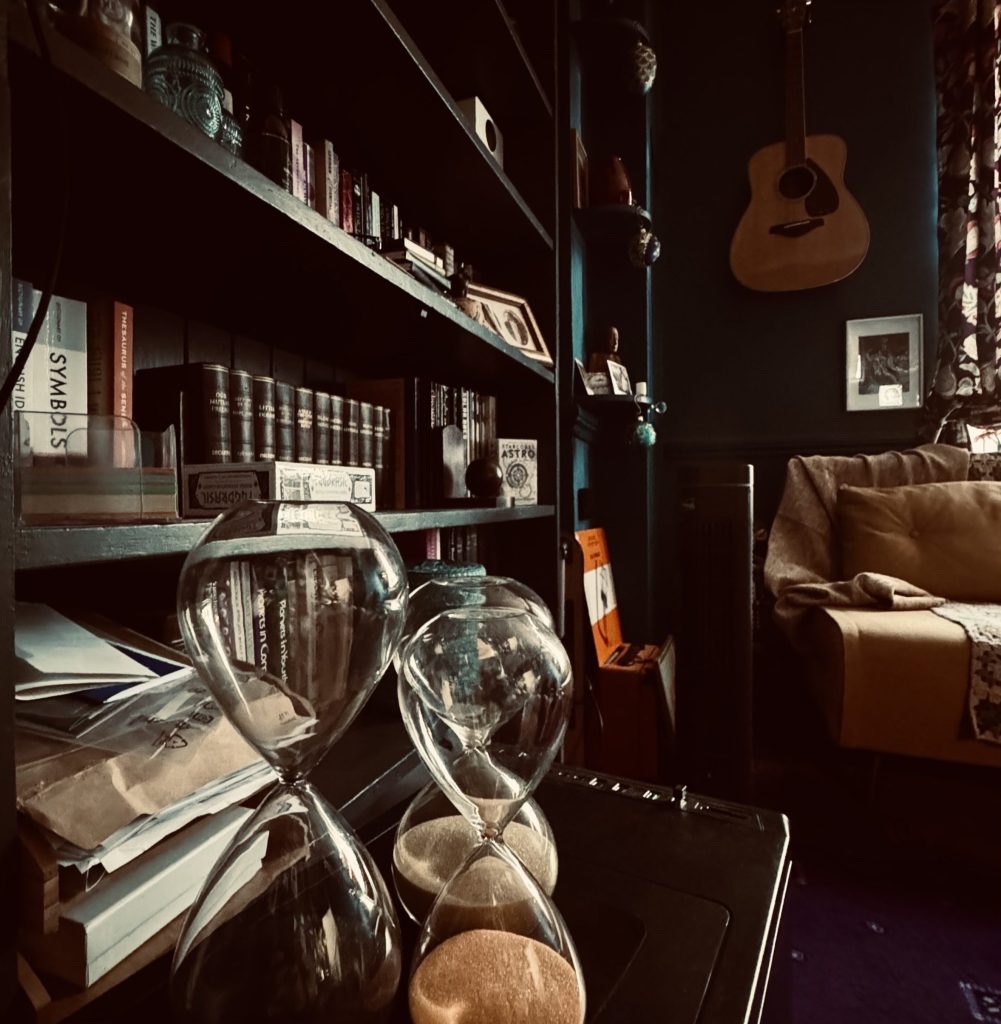
By the mid-2000s, my Neptune and Pluto squares were operating precisely as advertised. Building complex web architectures for multinational organisations paid well, but it had begun to feel like a carefully engineered enclosure, like Max Weber’s Iron Cage of absolute utility. I was desperately starved of meaning. Stepping away from the corporate world to commit fully to astrological practice, writing, and teaching was a terrifying, decisive turning point — the moment I stepped out of my formative defensiveness and into the teleology of genuine vocation.
Since then, I have written hundreds of client interpretations, taught students one-to-one, and published three books tracing the mythic and psychological architecture of the outer solar system and Western history:
Orcus
A hermeneutic and astrological investigation into the mythic and astrological significance of the oath and psychological isolation.
Ixion
An exploration of inflation, transgression, and the compensatory armour of the persona.
Cathedral Collapse
A synthesis of history, depth psychology, mythology, hermeneutics, and astrology as axis mundi in a disenchanted age.
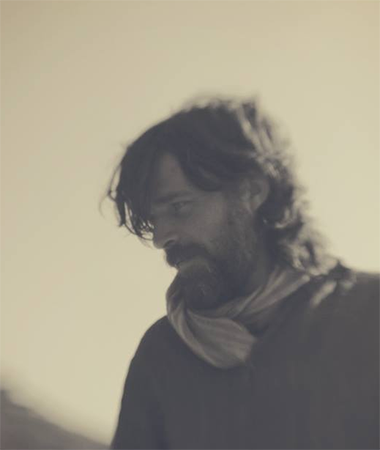
I live on the East Coast of Suffolk in the UK with my wife, Alice, a knitwear designer; two of my five sons; and my granddaughter.