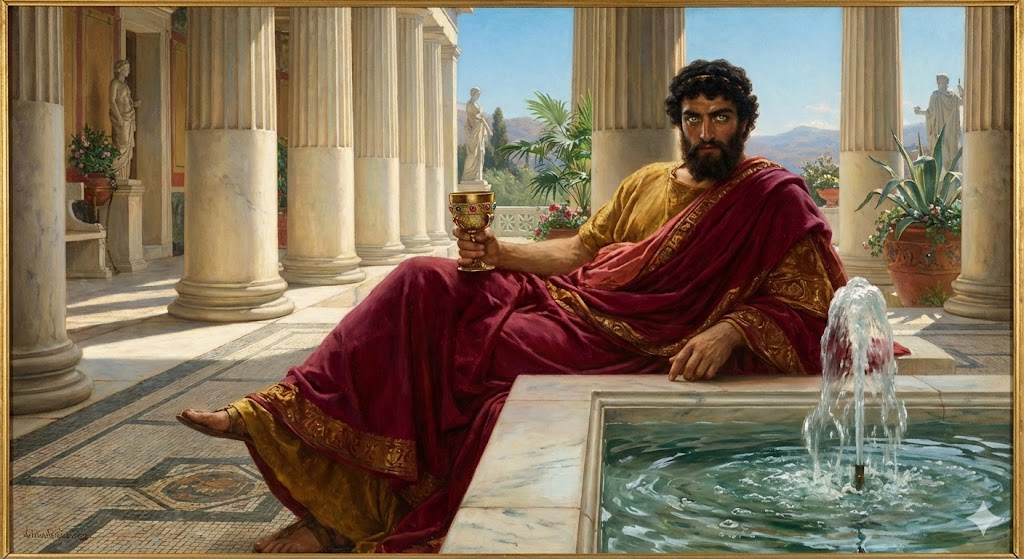
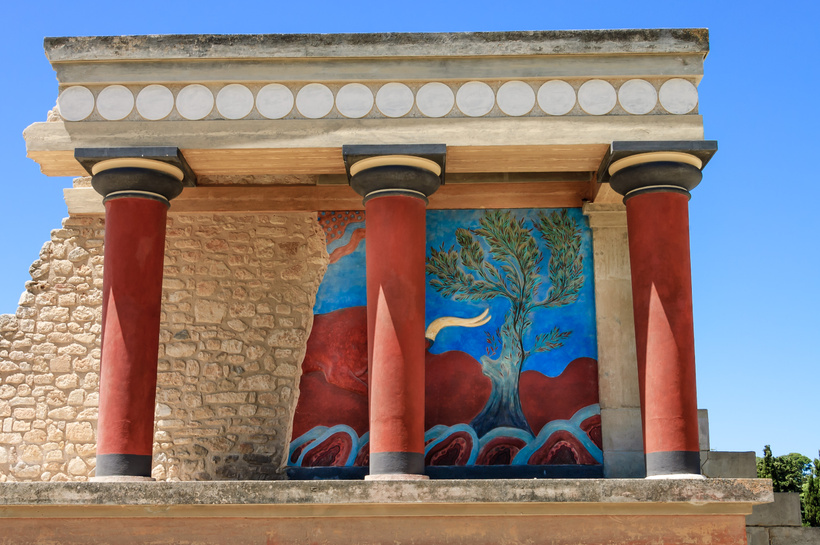
I have been away, exploring the subterranean places. This is not a pleasure cruise. It is a field of Orcus, or, if you prefer, one of the myriad and shadowy demesnes of Hades. For the most part, this consists of an exploration of the Ixion archetype. I am putting the book together now. Some of it is planned, some of it still vague, but I know mostly how it will be laid out. Rolled out, like a Persian carpet, in fact. You see, I do not write the book. The book writes itself. I only channel the book. That is how it worked with Orcus, and though I spent many months researching and writing, it still did not feel as though I had done any part of it. It just happened somewhere “out there” and came to rest in me, and I just spelt it out, rather slowly and clumsily. So already I am in a relationship with Ixion. I can picture him very well. He is, I should add, very dark and handsome. The ladies would have loved him, of course, although, in keeping with his typology, he was not tall. Perhaps he was tall for an ancient Greek. He lived in the area of Greece we now call Thessaly, under the shadow of Olympus, in a city that was called Gyrton. I only discovered that he lived in Gyrton by reading some of Strabo’s Geographica. It is a sentence no more, but no source anywhere mentions otherwise that Ixion had his palace there. And what a palace it would have been, for this was a time even before Troy, so it would have felt somehow similar to the Palace of Minos. I visited Minos once, many years ago, and it was a fragment of its former glory, but what a fragment! The stunning azure of the sky, the columns and murals of Taurean import. The heat and the dust. So this would have been part of Ixion’s experience too. The cool fountain in the courtyard at the heart, the shadowy colonnades, the sharp division of light and shadow, in the untrammelled Greek sun of ancient days. And therein, Ixion, a handsome and dark king. I can see the spare planes of his face, his coarse black hair, his black beard, and the glittering intensity of his eyes. He is truly a handsome man and strong. Strong not just in body, but in self-assurance. He is untroubled by judgment or the pursuits of lesser men. He is a world unto himself, entire, unperturbed, unperturbable. In a sense we would all understand, he is quite magnificent and seems almost made of an immortal thing. But then he is descended from the immortals. Resplendent Apollo is of his line, as is the tragic Daphne, exquisite and fragile, and everything that Ixion is not, but that is perhaps the source of his beauty. And somewhere far back, mighty Oceanus himself, husband of the dreamy Tethys. I see him sitting, drinking blood-dark wine from his golden goblet, the lord of the Magnesian Plain, unassailable. And so very complex and difficult.
Part of the challenge has been finding the seam of gold in the coal-dark of the Ixion myth. That is always the challenge, for what use is suffering and toil without redemption? And yet this is exactly the expanse of the Ixion tale. What use is suffering and toil without redemption? That is the question.
Such imponderables, which must nonetheless be weighed and measured, are our object and our travail. We must map it. That is why I must leave it to intelligences higher than mine. So, I simply plug into the eternal truth, whatever that is and however it is done, and download it. Quite a thing. That is how I get to watch Ixion, though he is thousands of years gone from Thessaly, because he is still there, in some timeless fragment of awareness in the eye of eternity. Can you see him? He looks back at you steadily, doesn’t he? With unreadable eyes and an inscrutable smile.
Thanks for your support.
Until next time,