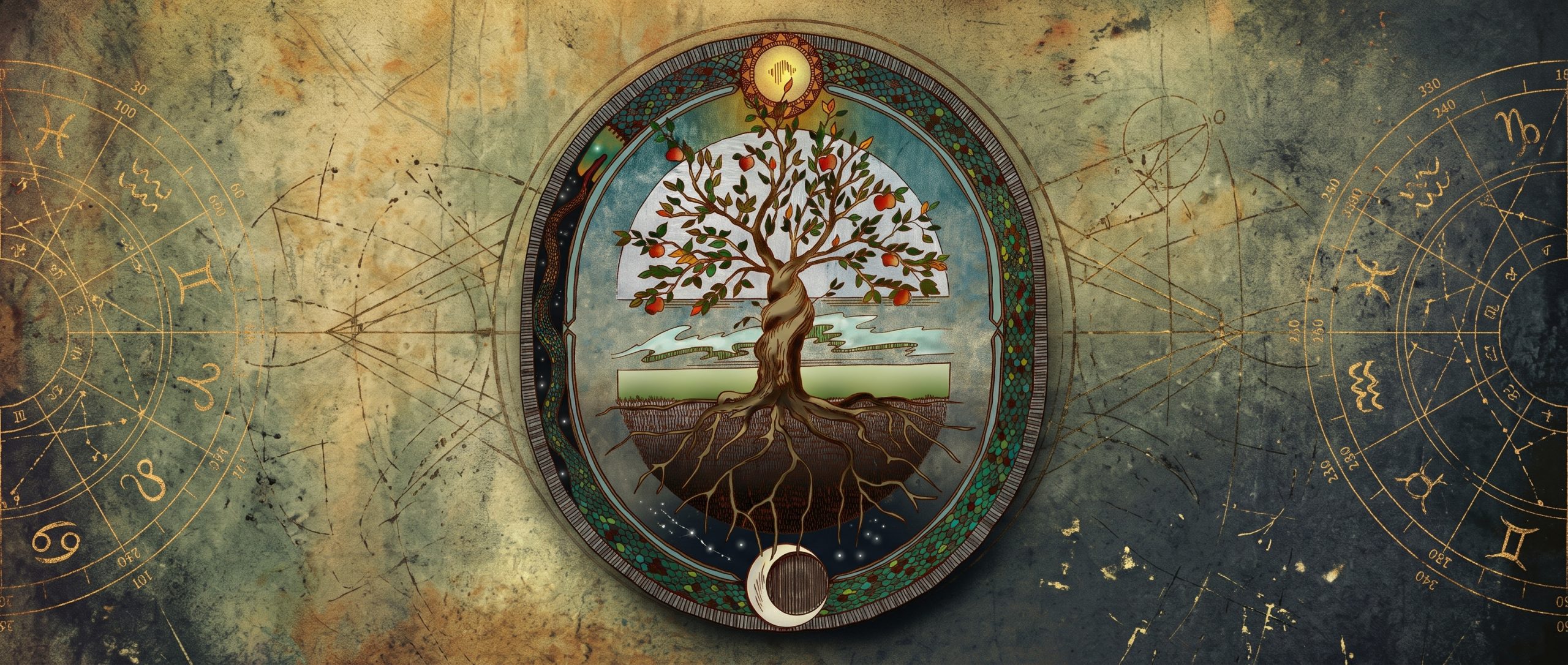

One of the fundamental challenges of our lives is that we are habituated to living in existential dread. That is to say that we are all, to one extent or another, aware of the blissful consequence of living in the moment, and every one of us, at some time or another, has experienced those happy glimpses of eternity wherein there is no future and no past, and we find ourselves bathed in contentment, without a care in the world. As children, assuming a certain quality of care and comfort, we retain few memories, because trauma aside, our sense impressions are adequate testimony to that ability to just be, without anxiety about what happened last week, and what repercussions it might manifest come next week. As our ego accelerates to overtake our instinctive nature with the passing years, this fundamental state of wellbeing is gradually superseded by one of anxiety. The anxiety might be large or small, but it is there for every unenlightened being on earth. Perhaps one in every ten million is immune. Furthermore, this state of anxiety is a spectrum, and the greater the refinement of one’s personal consciousness, the more tranquil it becomes. I draw this conclusion not only subjectively, but also as an inference from extensive reading and discussion on the subject. It is a broad consensus that less spiritual perspectives – therefore more material perspectives – confer increasing levels of existential anxiety.
This anxiety is easily apprehended because if we were to envisage a future free of want, sickness, suffering and death, it would miraculously vanish!

Once we can appreciate this, we can further comprehend that so many human endeavours are specifically designed to mitigate this anxiety. Robbed of the easy vitality of youth, the middle-aged embark on healthy lifestyle makeovers, jogging and salad consumption for all they’re worth as insurance against the encroaching threat of age and its ravages. They give up the cigarettes and cut down on the alcohol intake (excepting that alcohol has some pedigree too in alleviating anxiety). Once again, if Djinn were to appear to us all and guarantee good health and good looks forevermore, these pursuits would lose their appeal overnight, and entire industries would founder.
Underlying the sense of anxiety, then, is an all-pervading contention with uncertainty. If things were certain, then our anxiety would be less. This is why apocryphal stories of sudden and unexpected death are always so compelling. (My favourite of these is that of Aeschylus, the great Athenian tragedian, who, according to legend, was killed by a tortoise dropped by an eagle that had mistaken his bald head for a rock suitable for shattering its shell).
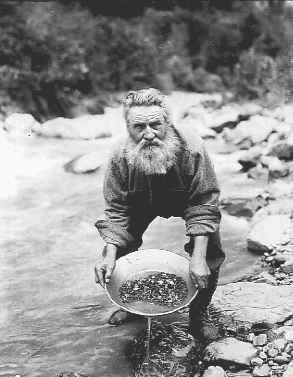
It is here that our old friend Pluto enters the fray, for this is the bedrock on which his purview of both wealth and annihilation is founded. Think of it thus: in the world of material values, the best insurance against uncertainty is wealth. With wealth we might have to work less for others’ advantage and more for our own. With wealth, we can eat the most nutritious food, pay the best doctors, and otherwise offset the various ravages of ageing, whether through having time to exercise, getting a facelift, or paying for hypnotherapy to aid our quest to quit smoking. Our declining years might be padded out with a measure of comfort, and we might retire instead of having to work, we think, when our energy levels are at their lowest ebb. To say this in simple terms is to say that wealth confers an intimation of certainty, Aeschylus, notwithstanding, in a future devoid of very much at all.
But there is a terrible conundrum in this logic, and in order to see it, we must be immune to it. The problem with this equation only becomes evident if we concur that the purpose of human life (or indeed any life) is to grow closer to God, in whatever sense you understand that to be. If you become more spiritual, then your anxiety decreases, but in order to grow spiritually, you must experience suffering. The cure for suffering, therefore, is suffering.
Or, put another way that is perhaps easier to work with, the cure for anxiety is uncertainty. The key insight is that Pluto arbitrates both processes. Pluto is existential dread and anxiety, and he responds to that sense of threat by trying to control outcomes; one of the most effective means is accumulating wealth. The irony is that Pluto’s cure does nothing to alleviate the symptoms of the affliction; indeed, it worsens it.
In our society, wealth is a refuge from so much that would harm us, but also from so much that might heal us. Money itself is a neutral concept, so there is nothing bad about having it, but it becomes bad if we use it as a hiding place and fail to do the work. In truth, it is very difficult to do the work from a position of great affluence, a truth to which we are accustomed. After all, it is “easier for a camel to go through the eye of a needle than for a rich man to enter the kingdom of God.” Jesus did not tell us it is impossible for a rich man to enter the kingdom of God, but he certainly intimated it would not be a walk in the park.
On an esoteric level, we are all doing the work of transforming Pluto, whether we know it or not. In my view, this is the key consideration of human life, and all other work is secondary. In a world that fervently believes that personal wealth is power, it is sometimes hard to turn this belief on its head and to live as though personal power is wealth, but this is exactly what Pluto requires. And we can develop personal power only by being exposed to uncertainty, a possibility that diminishes rapidly in an environment of privilege and ease.
This is not to say that we should abandon all comforts. A place of safety is essential for all of us, fragile as we are, and we require sustenance and security. Rather, we should learn to recognise the trepidation around want and the craving for material security as an echo of Pluto’s siren call, and that heeding it will not lead to emancipation, but only to further craving. Investors and speculators are inclined to talk about their “first” million after all. But neither should we condemn or judge it just because it is not our choice; it is not money, but the love of it that is the root of all evil. We are pursuing a different wealth, and while we do need some money to live, we need very little to live well in truth. Pluto’s authentic riches are enough to buy contentment no matter our challenges; we might otherwise lose sight of our goal if too dazzled by gold.
Thanks for your support.
Until next time,
As always, insightful and to the point, dear Jem. The moment-by-moment discernment between Power and Force, Awareness and Unconsciousness.
Power vs. Force is exactly right my friend!