



Today I would like to look in some detail at the various dynamics of the relating planets – Venus and Mars – in their applications to Neptune. Whilst not nearly as abrasively uncomfortable as Venus and Mars to Pluto connections, this blend does create its own unique difficulty and with understanding, there is certainly enormous potential for progress.
I could of course talk in the abstract about these energies, but it would be better in my view to use the example of Venus Williams, the American tennis sensation who has won, with her sister, every major title and honour in the sport. Let us begin by looking at her chart for reference:


Of course, what can be seen right away is the enormous number of correlations to her sister Serena: here are just a few:
- Vesta (at one level, the sister) is on the Aries Point, thus public projection and prominence are the result in relation to the female sibling.
- The only real connection that Vesta makes though – at a subjective level – is its conjunction to Sun, thus the father is the common ground, and pretty much the only common ground.
- The asteroid Isis (42) is exactly conjunct the Midheaven: a career configured with a sibling, (Isis also relates to sibling relationships), and with the sign Cancer there is tenacity and loyalty here, but crucially, the conjunction is squared by Icarus (1566), and this is a square from Isis to Icarus of only 7 minutes of arc, so there is astonishing adrenaline-producing tension between them; a big part of her drive to the top is based upon her need to beat her sister, to be faster, better, in Icarus’ terms, to fly higher!
- Mercury is at the apex of a tee-square from Pluto opposition Pallas. If we take Mercury to signify sibling relationships, what we have here is in fact sibling rivalry, Pallas speaks of behaviours and strategies that are developed to please others, and learned (most especially in a female nativity) through the daughter role; thus pleasing father is the key. Imagine how that feels when opposed by Pluto; it’s not going to be comfortable; there’s a real desperate, gun-to-the-head quality at work here, must be what father wants, and that tension gets channelled into Mercury, into the sibling dynamic. Note how Pluto is ruled by Venus and Pallas by Mars, and these planets are square to each other and both in hard aspect to Neptune, there’s essentially a competition here based on a need to be more attractive than the sibling, to be more lovable, to be preferable to father. This is echoed by a conjunction of the asteroid Lilith (1181) to Pluto, selection or favouritism, being the chosen one is a life or death issue.

Now let’s consider, in this context, the tee-square of Mars, Venus and Neptune. Mars is the focus of the tee-square from Venus opposition Neptune and is therefore squared by both and importantly ruled by Mercury, echoing the key motivator in the pattern, being more attractive to father than the sibling. Confusing messages about sexuality would have begun here, love would have begun to unravel as a concept, and very early on this would have been a feature of the family dynamic. All the groundwork for later psychological imprints is done between the ages of 3 and 5 when the hard aspects of Mars to Venus/Neptune and Pluto to Pallas are perfected by Solar Arc, these early childhood years are formative in terms of the sibling dynamic and an awareness of what it means to compete for and win father’s attention begins to make itself felt. In any case, Neptune configured with the Venus-Mars square is profoundly significant, and this is the timing that we can isolate through Solar Arc measurement. We can project these timings forward and look for applications to angles to determine major transition points in relation to these early dynamics. We note the following:

1999 was Venus’ breakthrough year, and it marked a period when both herself and her sister Serena were in the zenith of their sport, Venus was ranked in the world’s top 3 for the first time and she faced her sister in a major final for the first time too. The sibling rivalry dynamic was lit up by the Sun’s presence at the zenith of the chart, and with Sun in Gemini, ruling Mercury therefore, it was inevitable that her sister would be configured.
Moving ahead to 2003, the Venusian quality is illuminated by the Arc to the Midheaven. The date here is 5th August and exactly 40 days later, her sister Yetunde Price was murdered by mistake (Venus is opposed to Neptune) in a drug-related drive-by shooting (squared to Mars which is profoundly conjunct Zeus, which rules firearms) near the tennis courts where the sisters used to practise when younger. Note too that Yetunde was a half-sister, and half-siblings are very often a feature of hard Mercury-Pluto contacts. 2004 was inevitably a hard year, Venus lost much of her previous form and struggled to make her usual impact in part because of a persistent abdominal injury which first troubled her at the time of her sister’s shooting. Note then that Mars (violence) conjunct Zeus (firearms) falls at 17 Virgo, the degree that corresponds to the abdominal muscles.
What we glean from the general tone and dynamic of the nativity is that this tee-square is profoundly powerful, most especially when it is activated by Solar Arc in this way. Let us try to understand the energy at work here, because these planetary relationships do manifest in very specific ways. When we understand and recognise these patterns we begin to be released from their unconscious directives.
The theory of tee-squares is very simple. The opposition creates a pattern of dissatisfaction, inability to find peace because of contrary drives, and the tension this creates is expressed through the apex planet; it fuels the apex point, and in the nature of the square aspect is a tense, driven, challenging and experientially uncomfortable force; it is the channel through which the internal tension is cathartised. Thus, when we understand the opposition, we can begin to speculate as to the motive force behind the external expression of drive.
So, Venus opposition Neptune. We can tell right away that there is a problem balancing (opposition) the themes of love (Venus) and reality (Neptune); in a nutshell it describes a condition whereby the experience of love never quite matches up to the ideal. There is a longing and a yearning – at a very deep level – for perfect romantic union, and the usual pattern for the individual with this aspect is to fall in love very quickly, and for a time everything is perfect, wonderful, a transport of the most exalted kind; the new partner is delightful in every way, it is a rapture, a deep and rapturous soul-union and all is well with the world. Neptune creates enormously high expectations, indeed, it creates impossible expectations, and this is the mechanism by which the innate spirituality of the planet is awakened, regardless of what planets it contacts. The expectations of impersonal Neptune are designed to be so perfect that they have to be beyond the reach of any mere mortal being, so the inevitable conclusion is disappointment (another profoundly Neptunian theme), and with time and repeated episodes of disillusionment in relation to the contacting archetype (in this case Venus, thus romantic disappointment), the transcending process is awakened. The soul learns that no other human can fulfill the dreamy expectations of Neptune, so the love nature begins to focus on transcendent objects of love, the divine, the spiritual, a love of humanity; impersonal love is awakened, the soul begins to focus on spiritual rather than personal desires and themes. Neptune uses divine discontent to fuel the journey toward transcendence.
Mundanely, the pattern is nearly always identical; I call this the ‘One Who Got Away’ Syndrome. Usually, there was a figure from the past with whom the individual didn’t quite consummate a relationship. There may have been a brief fling, or even no fling at all, just a desire for one, but crucially, the relationship never progressed beyond the first rapturous days and weeks of divine contentment. The relationship may have lasted long enough to have been in some way meaningful, but never so long for the mundane and unpleasant realities to impinge upon Neptune’s awareness. The personal hygiene issues and tendency to be a real grump on Monday mornings never quite registered, so the relationship still holds the promise of perfection, even after it is over. Often the reason that the relationship ended is considered to be in some way tragic, as befits Neptune, perhaps they were forced apart by external circumstances and loss and sorrow are bound up in the story, but crucially, it is important to recognise that had the relationship managed to progress, then it would inevitably have fallen into the disappointment trap: because that is what Neptune does.
Now we should consider in this exact context the fact that Mars also squares Neptune. You can put this together yourself, because as the other major component of relationship, Mars concerns itself with sexual (as opposed to romantic) love and this then is also pushed to be the focus of the Neptunian disappointment trap. Typically, Mars – Neptune has very vivid sexual fantasizes that – again – cannot be satisfied by mundane reality and so sex becomes a disappointment too. The wish is to be transported into a state of sexual Nirvana, but it cannot happen, the woman with this aspect especially tends to project it onto the man in her life, his sexual performance doesn’t therefore match up: it is always disappointing. The man is of course perfectly aware of this (albeit at an unconscious level) and this is why he often takes refuge from the self-doubt that is engendered by the projection in Neptunian themes, alcohol, drugs, pornography and illicit affairs. Deception becomes a key component of the projected dynamic. It is astoundingly common for Mars – Neptune women to discover that their husband has been having an affair behind their back, often for many years! The dynamic is quite compelling, knowing (deep-down) that he can never satisfy his wife’s sexual needs, he protects himself from emasculation and ego-collapse by finding somebody whose sexual needs he can satisfy. He is not ostensibly being unfaithful even, or at least that was never his objective, it is invariably an act of self-defence (although understandably it is extremely difficult for the deceived partner to see it this way).
Finally, Venus squares Mars, and here there is no transcendent conundrum, this is simply an inability to reconcile love and sex, the two feel uncomfortable because there is a competition dynamic at play where love is concerned. Love (Venus) becomes confused with winning (Mars), indeed, all Venusian themes are given dynamic tension through the competitive, physical, go-getting drive of Mars. This dynamic again plays out in Venus Williams’ nativity: with Venus in Gemini (siblings), there is a competitive edge to the need to be loved. Competing for love, might be the watchword of this aspect, and remember that this square rule the Pallas-Pluto/Lilith opposition, which says “if I’m not father’s favourite, then I’ll die”. It was her father who pushed the sister’s to become tennis players and his ruthless determination that they be the best that has provided much of the energy for their astonishing rise to prominence.
There is so much more of interest here (if I had the time I’d write it all out), but suffice to say:
- Consider how the tee-square expresses. Mars is in Virgo, so power is combined with precision. Ed Moses had Cazimi Venus conjunct Mars in Virgo, perfect precision of movement, economy of movement, here force is applied with skill.
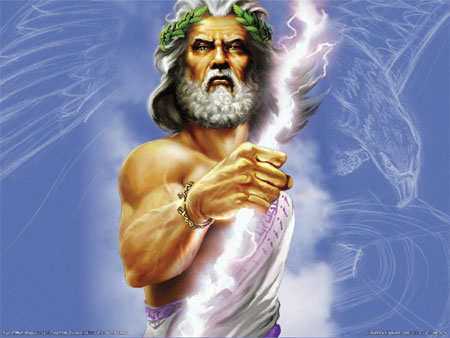
- Then Mars is in an absolutely partile conjunction (10 minutes!) with Zeus, the Transneptunian associated with firearms and sports! (Archie Griffin has a Cazimi Zeus!) Zeus threw thunderbolts right? Venus Williams has the fastest serve in women’s tennis:
[From Wikipedia] She holds the record for the fastest serve struck by a woman in a main draw event. At the Zurich Open, she recorded 130 mph (210 km/h). She also holds the record for fastest serve in all four Grand Slam tournaments: 2003 Australian Open quarterfinal – 125 mph (201 km/h), 2007 French Open second round, 2008 Wimbledon final, 2007 US Open first round – 129 mph.At Wimbledon in 2008, her average first serve speed was 115 mph (185 km/h) in the quarterfinal, 116 mph (187 km/h) in the semifinal, and 111 mph (179 km/h) in the final. She also had a higher average serving speed than then World No.1 Roger Federer as well as eventual men’s champion Rafael Nadal.
- Mars is at the halfsum of Uranus and the Midheaven, so unusual authority, career individuation is realised through precision and power (and throwing thunderbolts).
- Venus’ boyfriend Hank Kuehne has (wait for it) Zeus conjunct Sun, with Sun at 18° of Virgo, mere minutes from Venus’ Mars/Zeus conjunction. It’s impossible without knowing his birth time to say how exact this might be, certainly it’s within a few minutes at most. That’s one relationship that was certainly written in the stars!
That’s plenty for this article, please bear in mind that I can apply this same insight (and much greater detail) to your own nativity, so please check Astrology Hour if you would like more information.
Hank Kuehne


